Likely Outcome of UK General Election!!!

stuart yeomans - uk election

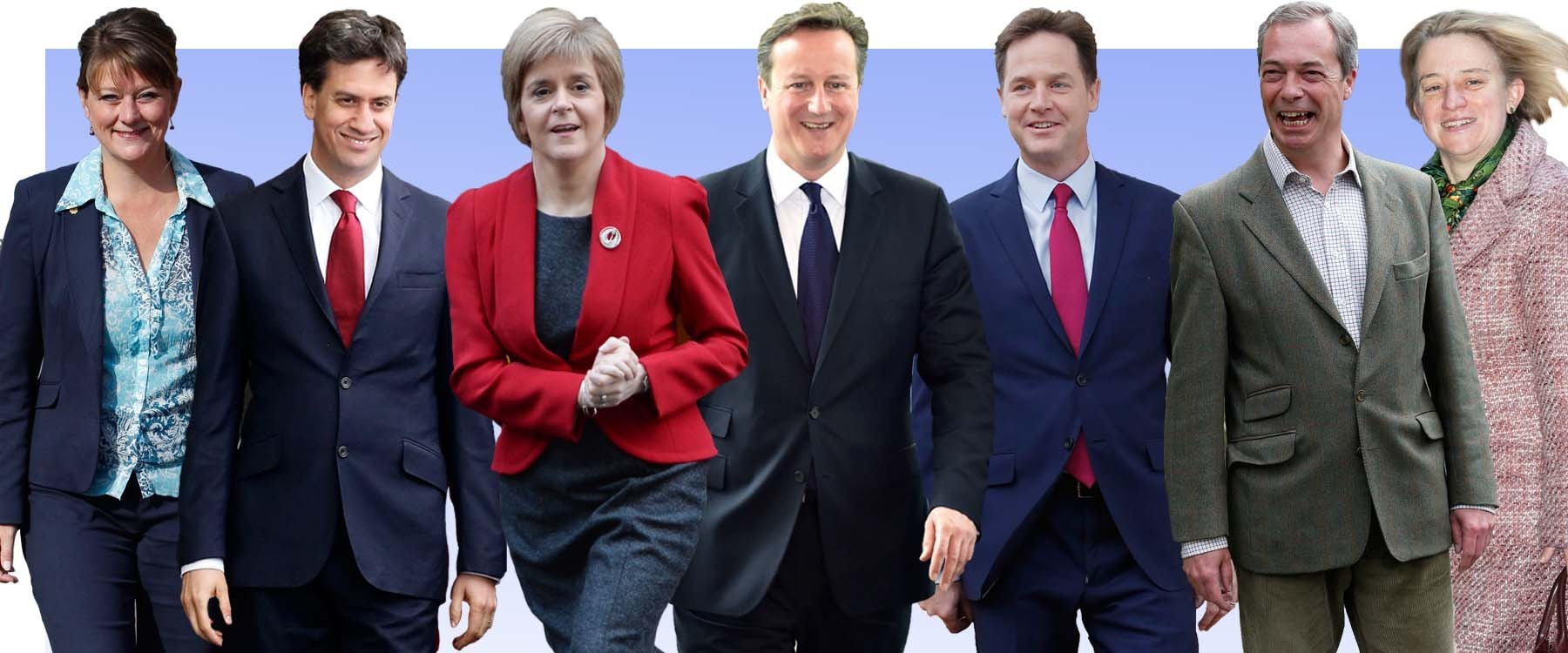
With Labour and Conservatives neck and neck in the polls, it seems likely that the UK will be headed for another coalition government very soon. The big question for the markets, is….

“What will this coalition government look like and what will be its impact on the UK economy?”

A Labour-SNP Outcome

On May the 7th the most probable outcome will be a Labour-SNP coalition. This result is likely to take the format of a Labour minority government, supported by SNP votes; rather than a formal coalition.

Many in the media have concerns of such a left wing government. However; from a market centric point of view, this effect is likely to be limited.  One concern is that utility companies may suffer, because they may have to undergo a 2 year price freeze. Beyond this, the economy may perform better for the next 5 years, simply because the SNP in particular are in favour of halting the austerity program and increasing government spending by 0.5% above inflation. If the private economy continues to expand at its present rate, this could lead to a substantial economic boost to the UK, over the next few years.

The long term consideration for the government is that, will it expand the economy quickly enough, so as to contain the UK’s deficit and mounting debt problems.

A Conservatives/ UKIP/Lib Dem and Ulster Unionist Outcome

With UKIP likely to get 2 MP’s and the Lib Dems 8, the only possible outcome would be Conservative led coalition, with the Ulster Unionists. Given the recent collapse in support for the Lib Dems and the fact that they have supported the current government; one would ask if the Lib Dems are prepared to support another conservative led government.

The big economic question is:

“Will the Conservatives, plan for a 2017 referendum on the UK’s position in Europe?”

Many companies have already threatened to move their HQ’s out of the UK and the vast majority of workers who were polled in the city, are also against a move. Currently public support to leave the EU is around 50.50. Two years of uncertainty running up to a referendum would undoubtedly hurt the UK economy.

In addition to the referendum, the other Conservative policy, which is likely to hurt the economy, would be Osborne’s plans for greater austerity. Contracting government spending by 5% of GDP, over the next 5 years, will certainly reduce the UK’s economic growth. It will also have a deflationary effect which may not be desirable given that the UK’s inflation is currently zero.

Investments

From an investment point of view; a Labour/SNP coalition, is likely to be better for the equity markets and a Conservative Government, is likely to be better for the bond market, this is due to fiscal contraction and effectively reduced inflation. However, all bets would be off, if the Conservatives announce a referendum on EU membership. If this is the case then it is probably best to avoid all sterling based assets for some time.

I hope that you have enjoyed reading this post.

Stuart Yeomans

CEO

Farringdon Group

Kuala Lumpur : Malaysia

Oil Price Volatility

stuart yeomans oil

After dramatic drops last week the oil price has rebounded strongly over the last few days. The principal driver of this is the military action Saudi Arabia began yesterday in Yeman. WTI has rebounded from a low of $42 a barrel to a high of nearly $52. In the near term Goldman Sachs predicts that oil may drop back into the low $40’s again however most analysts agree that oil is likely to move higher again before the end of the year.

Most oil producing economies require a higher oil price to sustain their government spending. At the extreme end of the scale Venezuela needs an oil price of $118 and Russia $108. Gulf nations like Saudi, Kuwait and the UAE have cash reserves that can get them through a lower oil price but even they need a price of $90 a barrel in the medium term to sustain their economies.

Current over supply in the oil market is around 2 million barrels a day or roughly 3% of global production. It is highly likely that major oil producers like OPEC and Russia will cut oil production to move prices higher as it is in their interest to do so. The big question is when this will happen. The Gulf nations are essentially playing a game of chicken right now with the rest of OPEC and Russia to see who will blink first.

In addition Saudi, Iran and Russia are all locked into the titanic struggle between Sunni and Shia Muslims and the battle for Syria. The low oil price hits Iran and Russia much harder than Saudi however the Saudi’s won’t want to see it there for too long. All eyes will be on the next OPEC meeting in July.

Our expectation is to see oil trading in the $70-$80 a barrel range by the start of next year. We feel the best strategy in the near term is to keep buying oil in the $40’s and hold through the volatility for now.

I hope that you have enjoyed reading this post.

Stuart Yeomans

CEO

Farringdon Group

Kuala Lumpur : Malaysia

Malaysian Regulators Steadily Stepping Up Their Controls

This week I  had an interview with the International Adviser on GST and Malaysia constant battle with regulation. As you guys know, one of my main aims over the last few years has been increasing the regulation in Malaysia for which Life Broker companies operate. It has been a slow process but we are getting there and the market has definitely improved over the last few years.

Arrival of Malaysian GST looms over KL financial market

Here is an extract from the interview.

Arrival of Malaysian GST looms over KL financial market

Malaysia is stepping up its regulation of financial advisers in line with changes sweeping many major markets worldwide, however it is the imminent arrival of a new goods and services tax (GST) that is likely to have the most immediate impact, according to industry experts.

On 1 April this year, Malaysia will replace the existing Sales and Services Tax with a new 6% GST, which will have a narrower and more specific list of exemptions for financial services than its nearby neighbour Singapore, according to a review by KPMG.
 
“In Singapore, financial services may be treated as zero-rated supplies if they are supplied to non-residents,” KPMG said. However, it said the transfer of securities or units in unit trusts traded in Malaysia, or insurance contracts relating to risks in Malaysia, may not escape the tax, even if supplied to an offshore person.
 
“We have had numerous meetings and seminars with regards to GST and thankfully it seems that the life brokers are zero rated; however I am uncertain what this means for life companies who are currently regulated under the LFSA (Labuan Financial Services Authority),” said Stuart Yeomans, chief executive of Farringdon Group, a Kuala Lumpur-based financial advisory firm. Zero-Rated Supply means goods and services sold by a company are free from GST.
 
Meanwhile Malaysian regulators are steadily stepping up their controls over financial advisers in a bid to raise standards and improve the quality of the market, and these are beginning to make life harder for small brokers, though they have yet to go as far as Singapore. 
 
“Regulation is slowly stepping up. The barriers to entry are getting a lot higher,” Yeomans said.
Thanks International Adviser for another good interview, I look forward to the next. For the full article, please visit http://www.international-adviser.com/news/asia/arrival-of-malysian-gst-looms-over-kl-market

I hope that you have enjoyed reading this post.

For other IA posts that include Stuart Yeomans, please go to http://www.international-adviser.com/news/asia/labuan-in-move-to-be-a-top-intl-insurance 

Stuart Yeomans

CEO

Farringdon Group

Kuala Lumpur : Malaysia


China’s New Dawn

Stuart Yeomans - CND.jpg-large

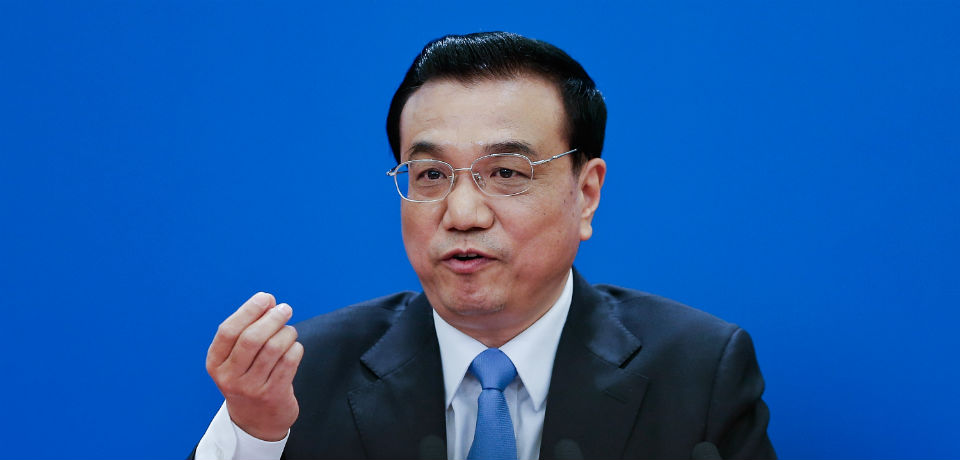
Last week at the official opening of Chinas annual parliamentary meeting, Premier Li Keqiang signalled that the lowest rate of growth in a quarter of a century is the “new normal” for the world’s second largest economy.

Last year China targeted a growth rate of 7.5% in GDP which it failed to meet. This in itself was a reduction from previous targets of 10% and well behind the years of almost 20% annual GDP growth. It now seems that gravity is catching the Chinese economy and forcing it to look at lower longer term growth.

This is not the first time this has happened in economic history. Many nations like Malaysia and Brazil managed to achieve long term double digit economic growth only to fall into what is known as the Middle Income Trap. Indeed, in history, only a few developing economies have ever managed to become advanced industrial economies. The Chinese leadership is now worried China will follow nations like Brazil and fail to break into the top level economies of the OECD.

Perhaps the biggest issue for international investors of China’s slowdown is its effect on the rest of the Asia region. To maintain high levels of growth after 2008 the Chinese government embarked on a massive spending program. Since 2008 The Chinese people and its government have created around $16 trillion dollars of debt. To put that into comparisons that is around the same size as the entire US financial system.

The effect of this extra spending boosted demand for raw materials, especially from Australia. In addition, money flowing out of China has boosted property prices right across Asia. Demand from China also helped sustain a number of Asian economies such as Singapore, Malaysia and Thailand.

As China slows it is likely to have a severe impact on Asian economies and currencies. In 2015 we should expect to see the Malaysian Ringgit and Australian dollar move much lower.  The Singapore dollar has held up for now but that too is soon likely to fall. Property prices in most parts of Asia and Australia are also likely to fall significantly.

To avoid any negative consequences it is likely to be better, for the time being at least, to look at US and UK assets. Both economies are doing well and both economies rely principally on internal consumer demand to support their GDP. As the Eurozone begins its QE program the Pound is likely to see a significant rise as Euro investors seek higher yields from within the EU.

I hope that you have enjoyed reading this post.

Stuart Yeomans

CEO

Farringdon Group

Kuala Lumpur : Malaysia

Japan’s Economy Emerges From Recession, Growth Weaker Than Forecast

044285d8-8ce4-11e3-8b82-00144feab7de

Japan’s economy rebounded from recession to grow at an annualized of 2.2 percent in the fourth quarter of last year, giving a much-needed boost to Premier Shinzo Abe’s efforts to shake off decades of stagnation even as the global outlook deteriorates.

Gross domestic product (GDP) grew by 0.6 per cent in the fourth quarter, up from -0.6 per cent in the previous three months, but below predictions of a 0.9 per cent increase. GDP rose at an annualized 2.2 per cent in the three months ended last year December 31, well below analyst (Reuter’s poll) expectations of a 3.7 per cent increase. Nominal GDP, which is unadjusted for price changes, rose an annualized 4.5 per cent from the previous quarter. Private consumption, which makes up about 60 percent of the economy, rose by 0.3% in the final quarter, less than median market forecast for a 0.7% increase.

The softness of the rebound shows Prime Minister Shinzo Abe’s challenge to revive the world’s third-largest economy from two decades of stagnation. Wage rises and increased consumer spending are likely to be crucial this year to spur activity beyond the export sector, where the lower yen has contributed to surging profits at companies like Toyota.

The rebound from recession, however, will allow the Bank of Japan (BOJ) to hold off on expanding monetary stimulus for now even as slumping oil prices push inflation further away from its 2 percent target.

I hope that you have enjoyed reading this post.

Stuart Yeomans

CEO

Farringdon Group

Kuala Lumpur : Malaysia

Precious Metal Prices Flat as All Eyes on Greece after Parliament Vote

Greece may be one of the smaller members of the Euro zone, but it continues to command the attention of world markets, as the bailout crisis continues. After the New Greek government said it would not renew the EUR 240 billion bailout under the current terms, the ECB announced that it will no longer accept Greek government bonds as collateral for ECB loans as of February 11. Greece wants a new deal that removes the harsh austerity steps required under the bailout. However, Germany and Greece’s international creditors do not want to rewrite the bailout agreement. Greek Prime Minister Alexis Tsipras and Angel Gurria, chairman of the OECD, will meet on Tuesday to try and narrow the gap between the parties.

Greece’s Parliament approved the government’s economic plan in a vote on February 10, 2015 which sets up a showdown with country’s international creditors beginning this week in Brussels. With 162 ‘yes’ votes against 137 ‘no’ with one absentee lawmaker, Prime Minister Alexis Tsipras earned approval for a plan that rolls back many of the austerity measures agreed by the former government of Antonis Samaras. On the Comex division of the New York Mercantile Exchange, gold futures for April delivery rose 0.02% to trade at $1234.20 a troy ounce. Besides, silver futures for March delivery rose 0.07% to trade at $16.915 a troy ounce. However, copper for March delivery fell 0.20% to trade at $2.545 a pound.

Gold briefly hit the lowest levels of the session after rumors surfaced that the European Commission could propose a six-month extension to Greece’s bailout program, which is due to end on February 28. Athens main stock index rallied nearly 7%, while the yield on Greek 10-Year bonds tumbled sharply to trade below the 11%. Expectations of higher borrowing rates going forward is considered bearish for gold, as the precious metal struggles to compete with yield-bearing assets when rates are on the rise.