US Expats – Retirement has now become more tax efficient

stuart-yeomans-us-expatsFor many years now it has become very difficult to give advice to US Expats living offshore as there has not been any products that are beneficial, this is because, as you may know, they are taxed on worldwide income and investments……Until now !

Essentially, without the correct tax planning, you could pay up to 39.6% on any investments offshore and with the way FATCA has been implemented it is almost impossible to avoid for many non-resident Americans. If you did decide to use a 401k while offshore, they limit your contributions to USD18,000 per year, which is not enough when looking to build a stable retirement pot.

The solution that Farringdon Group has available is by way of setting up via a Pension in Europe called a US IRP. Now looking at this, there is a double taxation agreement that is beneficial to ALL US Expats and you can happily file the pension on your US tax returns, with no CGT liability at all. There is no tax on the payments into the scheme as well. It is also very flexible in drawdown, so that you can reduce your tax exposure once retired.

These schemes are widely used offshore and we now have many clients that have taken advantage of this while other advisories do not generally offer such products as they either don’t understand them or they do not know how to explain them to a client…….We DO and we CAN.

Below will show you the main benefits of the account:

  • There is no upper limit on contributions.
  • The only tax that is taken is on withdrawals and this falls under income tax, hence it’s effectively tax deferral/gross roll up on growth. The best part is that the income tax is only liable for the growth part of the investment side and NOT the invested value.
  • The scheme allows a 30% pension commencement lump sum withdrawal, when over 55. If you are based in a jurisdiction that works, this will be tax free. (we can discuss how this works)
  • You can look to take the 30% from the growth segment of the investment, hence you can even mitigate around a third of the growths income tax segment
  • You can take between 7% – 11% as an income per year or select a 3-year annuity that draws the entire pension down within a few years

If you would like to have further details and a FULL introduction on how we can help YOU, please let me
know immediately as it may mean you can retire earlier and without worry of the tax man taking his portion.

I hope you enjoyed reading this post.

Stuart Yeomans 

CEO

Farringdon Group

Kuala Lumpur : Malaysia


Farringdon gets its asset management licence for Singapore

stuart-yeomans-farringdon

Myself and Martin have been working tirelessly over the last couple of years to get our very own license in Singapore. We decided not to continue our partnership with an IFA down there and decided to get the capital & markets service license instead. This allows us to do way more than we previously thought possible.

Martin should take most if not all of the credit for obtaining the license, because he has moved there and dealt with the daily matters that arise from trying to obtain this milestone.

Once SEA see’s the ways in which we plan to change the expat advisory market in Asia, we hope it will open up a new era of lower cost and seamless managed advice. In our view the current set up for advisers is outdated, too expensive for the client and the reputation of the industry needs changing.

Below is the full article published in the International Adviser.

Farringdon Asset Management, part of the Malaysia-based Farringdon Group, has received a licence to operate in Singapore where it will focus on focus on providing expat clients with discretionary portfolio management services.

The wealth management company said it was awarded a Capital and Market Service licence by the Monetary Authority of Singapore on 7 October 2016.

Martin Young, one of the founders of Farringdon Group and FAM’s chief executive, said the company believed the asset management licence was better fit for the company’s business model in Singapore rather than a financial adviser licence.

“The Singapore financial advice market is heavily focused on long-term contractual insurance plans and historically Farringdon Group has generated less than 10% of its revenue from such policies,” Young said.

Expat DFM provider

“The company has always focused on providing discretionary portfolio services, for single premium investments and felt that in Singapore the asset management license was a better fit for our business model.

“We see a lot of potential in Singapore, as there are no other company’s able to offer the kinds of services that we do in the expatriate space. As a financial hub we find Singapore investors are quite sophisticated and tend to shy away from the traditional IFA model, which is based on portfolios of managed funds,” he said.

Stuart Yeomans, Farringdon’s marketing director, said: “We also have a number of big announcements in the coming few months, which will certainly shake up the investment sector throughout Asia and we believe that our business model will be pioneering a few new ideas that the market has not yet seen, but sorely needs.

“It will be interesting to see how other firms react when we come to market with our new strategies and offer advice in a unique and lower cost format,” he added.

Thank you to International Advisor for another great article, for the full article please follow the below link to their website. Farringdon gets asset management licence for Singapore.

Stuart Yeomans

CEO

Farringdon Group

Kuala Lumpur : Malaysia

Fin-tech Offers Solution to Foreign Currency Risk for Asian Investors

stuart-yeomans-fintech

There is a revolution currently taking place in the Asset Management industry which may help to solve one of the biggest problems faced by investors in Asia, namely how to access the widest selection of investments without taking a foreign currency risk.

For anyone who has ever tried to create a portfolio of equities and fixed interest securities, in most countries in Asia you are immediately confronted by the problem of lack of quality defensive assets to invest in. While emerging markets can offer high growth potential companies there is very little in the way of well established businesses in sectors such as Utilities, Consumer Staples and Pharmaceuticals offering lower volatility dividend plays. Basically Coca Cola only trades in US Dollars.

If an Asian based investor chose to buy a portfolio of low risk defensive stocks on the London or New York Stock Exchange, they would automatically turn that low risk portfolio into a high risk portfolio with the currency risk between their domestic currency and the currency their investments portfolio is based in.

Generally we would expect the traditional asset management industry to step into this void and offer investors foreign mutual funds that are what is known as ‘currency hedged’. When an investment is currency hedged the manager takes away the risk of currency exposure by purchasing futures in the domestic currency.

So, in a currency hedged fund where a portfolio of US Dollar based assets rose by 10% then a Singapore based investor might expect to get a 9% return in Singapore Dollars.
The main problem with this is that it is very expensive to currency hedge in a traditional mutual fund. Investors will often pay more for the currency hedge than they will for the total management fees on the mutual fund. Due to the expense and complication of currency hedging in mutual funds the investment will require very large assets under management to justify the cost. This means there are very few to choose from and these tend to only be offered by larger managers or domestic funds that may not have the best performance. Where a US investor may expect to have over 50,000 US Equity investment funds to choose from an investor in Asia may only have the choice of 4 or 5 US Equity funds that have currency hedging.

However, this problem can be solved by a new Fintech revolution sweeping through the global assets management industry. There are a host of new alternative structures that can replicate the investor experience of a traditional mutual fund but do it at a massively discounted price.

These new Fintech investments are based on structures like Actively Managed Certificates. A traditional Mutual Fund or Exchange Traded Fund can take up to 2 years to be approved and the set up costs may be as high as $1 million. With the drive to reduce fees in the industry a typical mutual fund or ETF may have to have upwards of $50 million invested just to break even. Currency hedging greatly increases the risk exposure and cost of a fund further compiling the cost and time to market problems.

With structures like Actively Managed Certificates a portfolio of investments can be taken to market with just a few million dollars in invested assets and importantly currency hedging can be quickly and cost effectively added to the structure.

This can allow small pools of investors or even just single wealthy individuals to have their own tailor made bespoke investment strategies that can be adjusted to seek their risk and currency preferences. If fully implemented, new Fintech based solutions can put world-wide investors on an even par with the kind of investment choice investors in large markets like the USA would expect to get and this can help to bring the same kind of revolution to the investment world that Amazon is bringing to the retail world.

Currently Farringdon Asset Management is actively involved in this process with two investment strategies of our own designed to exploit some of the opportunities presented by Fintech.

http://www.farringdon.com.sg/index.php/index#fintech-index

http://www.farringdon.com.sg/index.php/index#replicas

I hope you enjoyed reading this post.

Stuart Yeomans 

CEO

Farringdon Group

Kuala Lumpur : Malaysia

International & Sharia Compliant Wills

Last will and testament

From Farringdon Group’s experience, it is common to hear people asking what the most suitable age to write a Will is. Our answer is “NOW”.

We have clients all over the world with assets around the globe, whether it be property, companies, bank accounts, investments or businesses, each of these locations/countries or jurisdictions has different laws.

We want YOU to be fully aware of ALL this so we have teamed up with a number of experts whom are able to help with International Wills and Sharia Wills for Muslim or converted Muslims living in Malaysia and a number of other partners worldwide.

Call my Business Development Manager direct on +603 2026 0286 or email on dcameron@farringdongroup.com

What is a will?

A will is a legal document which outlines how a person intends to have his/her estate distributed and/or other matters to take effect after his/her death.

Why a will is needed?

  • If you wish for a quick transfer of assets to your loved ones
  • Avoid the need of 2 sureties (guarantor)
  • You can set up Testamentary Trust Fund or Trust Property for your minor children, aged parents or special child
  • Have your own choice of executor(s), trustee(s), guardian(s) & beneficiary(ies)
  • Avoid dispute & complication over your assets & much more….

What makes a will valid?

To make a valid will, the testator (will maker) should;

  • Be minimum 18 years old (for west Malaysia and Sarawak)
  • Be of sound mind
  • Comply with the formal requirement in Section 5, Wills Act 1959.

What are the formal requirements in Section 5, Wills Act 1959?

  • A will can be handwritten or typewritten in any language except Privileged Will.
  • A will must be signed or thumbprint by the testator (Will Maker).
  • Witnessed by at least two witnesses, who witness the testator’s signature. The witnesses will then sign in the presence of the testator and in the presence of each other.

Can I will all my movable (e.g. cash) or immovable (e.g. house) assets in Malaysia as well as outside Malaysia?

The movable assets within Malaysia and outside Malaysia can be willed away. So can the immovable assets within the country.

However, for the immovable assets outside Malaysia, it is advisable to write another will for that particular property because the law governing immovable properties can vary from country to country.

Property that may not be dealt with in a Will

  • Insurance Policies under Section 23 Civil Law Act 1956/Section 166 Insurance Acts 1996.
  • Employees Provident Fund (EPF) where nominees have been named.

Can my will be revoked by a divorce?

A will cannot be revoked by a divorce and it is therefore advisable to rewrite the will when one is divorced from his/her spouse.

Is my will revoked upon marriage?

Yes, a will is revoked upon marriage unless there is an ‘Expectation of marriage’ clause in the will.

What do you mean by ‘Expectation of marriage’?

When a person gets married, his/her will is automatically revoked unless he/she intends to marry a particular person mentioned in the will. In this case, the Will will not be revoked even after marriage to this particular person.

Duties of an Executor

  • Locate the Will
  • Make funeral arrangement if necessary
  • Apply for Grant of Probate (GP)
  • Call in the Assets
  • Clear the Debts and Liabilities
  • Prepare a statement of account
  • Distribute assets according to the Will

How many executors can I appoint?

Minimum 1 to maximum 4.

Can my executor or trustee abscond with my money?

Of course he can. It is therefore important to select your executor or trustee carefully. Alternatively, you can use a trust company.

Can a foreigner be appointed an executor or trustee?

Yes, but you should consider whether it is practical to do so (for example how long will he stay in this country?) A levy may also be imposed on a foreigner.

What is the age for a minor requiring a trustee?

A trustee is required as long as the minor is below 18 years of age.

Duties of a Trustee

  • Normally, the duties of a trustee begin when the duties of an Executor end.
  • The duty of a Trustee is to continue administering the estate which cannot be distributed, eg. When minor beneficiaries are involved.
  • The Trustees has to follow the instructions and powers given to him/her by the testator and any income generated from the estate must be accounted for.

What is the age for a minor requiring a guardian?

A guardian is required as long as the minor is below 21 years of age.

Duties or responsibilities of a Guardian

  • Maintenance
  • Education
  • Health

What is the minimum age to be executor, trustee or guardian?

21 years old

Can a beneficiary be an executor, trustee as well as guardian?

Yes, he can.

Can an executor, trustee and guardian be the same person?

Yes, certainly.

Does a person need to pay estate duty in Malaysia after his death?

No. Anyone who dies on or after 1st November 1991 is not subject to any estate duty in Malaysia.

Witnessing Your Will

When you sign your will, the Law requires that you get 2 witnesses to witness your act of signing the will together at the same time. However, your witnesses must not be:

  • Your beneficiary
  • Spouse of your beneficiary

It is advisable to get someone who is:

  • A family friend or relative;
  • Easy to locate;
  • Above 18 years old.

However, it is not required by Law for the witness to know the content of the will or your wealth distribution details. You may however let them know that you are preparing this important document to protect your loved ones.

When do I need to rewrite my will?

If any of the following happen to you….

  • Change of marital status (married, divorced)
  • Change of your executor status (migrate, death, relationship breakdown, incapacity, bankrupt)
  • Change of your guardian status (migrate, death, relationship breakdown, incapacity, bankrupt)
  • Change of mind with regards to your beneficiaries (children reach the age 21, different beneficiaries)
  • Change of your witnesses status (migrate, death relationship breakdown, incapacity)
  • New family member (new born child)
  • Substantial increase of wealth (started a business, purchased properties)

However, in accordance to our statistics it is advisable to review your will every 2 to 3 years.

Does my will need to be stamped or sealed?

A will does not need to be stamped to be valid while sealing is just for confidentiality.

Can I write my own will?

Yes, the law allows every ones to write his/her own will provided he/she comply with the Wills Act requirement. However, it is advisable to seek some professional advices so that the drafted will is valid and good enough to ensure it stand up to any court dispute

Who can keep the wills safe?

We believe that writing a will is only one side of the coin which is equally important is the safe keeping of the will.

Hence, a custody package that includes safe keeping, annual updating assets and liabilities, annual reminder and discount on rewriting.

How long does it take to draft a will?

If all the information are given, your will should be ready within 5 working days

I hope you have enjoyed this post.

Stuart Yeomans 

CEO

Farringdon Group

Kuala Lumpur : Malaysia

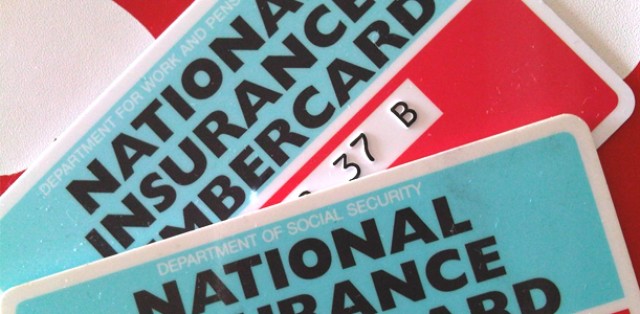
National Insurance Report for UK Passport Holders

uBeen Offshore for a Few Years?

Didn’t know you were eligible for a FULL UK State Pension?

We Can Help!

If you fail to pay enough National Insurance before you retire, you could miss out on the full state pension.

But does making up your missed payments, make financial sense?

We at Farringdon Group Ltd can create your National Insurance & HMRC profile, compile a report and give you ALL the information you need for RM470 +6% GST.

What is National Insurance and what does it pay for?

National Insurance is not strictly a tax and while it may certainly feel that way, its aim is to benefit those who contribute to it.

The main areas funded by National Insurance contributions are the NHS, unemployment benefits, sickness and disability allowances and the state pension.

Aside from the NHS, most of these benefits are in some way linked to your National Insurance contributions. However, only your state pension allowance and entitlement to bereavement benefits are impacted when you top up; your entitlement to other benefits will not change.

How to make National Insurance count

In order to claim the full basic state pension, you will need to have paid sufficient National Insurance for 35 full years.

For the 2016/17 tax year, you will need to earn £8,060 worth of income to pay enough National Insurance for it to count as a qualifying year.

If you fail to accrue the full number of qualifying years, you will not receive the full basic state pension, but a proportion of this based on your National Insurance contributions.

For example, if you have made 20 years contributions you’ll be paid 20/35 of the basic pension.

Do you have to top up?

National Insurance itself is compulsory for most people and is usually deducted automatically from your salary, but not if you are living offshore.

Whilst living offshore you have the option to voluntarily contribute or to not contribute at all.

How we can help!

Farringdon Group will provide the following so that you know exactly where you are:

  • Send you a full report which indicates exactly how many years you have contributed for
  • Currently as an expat you are classed as a Class 2 tax payer and the cost of keeping you NI up to date is as little as £2.80 per week
  • How many years you need to contribute to moving forward
  • Full details on how you can make the payments
  • You will receive your online account log on details

It is likely that a number of different factors will influence your decision as to whether to top up your National Insurance contributions, BUT we can do that for you for RM470 + 6% GST.

Please email me at dcameron@farringdongroup.com  to start the process or to ask any further questions.

Kind Regards

Duncan Cameron

National Insurance Factsheet for UK passport holders

stuart yeomans - national insurance


Fail to pay enough National Insurance before you retire and you could miss out on the full state pension. But does making up your missed payments make financial sense?

What is National Insurance and what does it pay for?

National Insurance is not strictly a tax and while it may certainly feel that way, its aim is to benefit those who contribute to it.

The main areas funded by National Insurance contributions are the NHS, unemployment benefits, sickness and disability allowances and the state pension.

Aside from the NHS, most of these benefits are in some way linked to your National Insurance contributions. However, only your state pension allowance and entitlement to bereavement benefits are impacted when you top up; your entitlement to other benefits will not change.

How to make National Insurance count

In order to claim the full basic state pension you will need to have paid sufficient National Insurance for a certain number of years.

Each year that counts towards your state pension entitlement is called a qualifying year. The number of qualifying years you need to build up to qualify for the full basic state pension depends when you will start to claim it.

  • If you will retire after 6th April 2010, you will only need 35 years of National Insurance contributions – both men and women – to be entitled to the full state pension.

For the 2016/17 tax year, you will need to earn £8,060 worth of income to pay enough National Insurance for it to count as a qualifying year.

If you fail to accrue the full number of qualifying years you need, you will not receive the full basic state pension but a proportion based on your National Insurance contributions.

For example, if you have made 20 years contributions you’ll be paid 20/35 of the basic pension.

Do you have to top up?

National Insurance itself is compulsory for most people and is usually deducted automatically from your salary, but not if you are offshore or living abroad.

However, if you get a letter from HMRC asking you to make up your National Insurance contributions you are not under any obligation to send off a cheque.

Instead this is more an invitation to top up your NI contributions for the previous tax year (letters sent out in 2016/17 will refer to the 2015/16 tax year) so that it counts as a qualifying year towards your pension entitlement.

Should you top up?

If your National Insurance contributions do not meet your annual threshold (this can vary depending on the type of NI you pay) HMRC will write to you between September and January to ask if you would like to make up the difference if you live in the UK, if not you may not be aware, please read more !

Whether you decide to pay to top up your National Insurance contributions will entirely depend on your circumstances.

Here are some of the main points to consider:

Will you reach your target?

How close you are to making 35 years of qualifying National Insurance contributions should have a big influence on whether you opt to top up or not.

If you are in your 20s or 30s for example and expect to be working for the next 20-30 years you may decide your money is better used elsewhere.

Equally, if you’ve already contributed 35 full years of National Insurance or are very close, then you may feel that there is no benefit to topping up.

However, if you are nearing retirement and missing a number of year’s contributions, you may feel that it’s worth your while.

Do you need the money now?

Whether you can realistically afford the payment is another important consideration when deciding whether to top up your National Insurance contributions.

The amount you might be asked to pay can vary hugely depending on your income and the type of National Insurance you pay and can easily run into the thousands of pounds.

Before you send this money off to HMRC you should consider whether paying will leave you hard up, or if the money might be better used to now, be that to pay off debts or add to your savings.

Will you get a better return in a private pension?

Rather than topping up your National Insurance contributions you could opt to invest the money in a private pension instead; especially as the state pension may be so minimal that you’ll need to supplement your retirement income anyhow.

Essentially this would mean sacrificing your missing year’s National Insurance entitlement in exchange for investment in your private pension.

If you are considering this option you will need to weigh up the impact on your state pension:

  • Will doing this mean you don’t build up enough years of NI contributions to receive the full entitlement?
  • Will these losses will be offset by the money you will get back through your private pension?

It is always worth consulting an Independent Financial Advisor if you need help.

* Since 1945 state pension has grown to £155.65 per week, to get this annuity from a private pension scheme would mean contributions in excess of £275,000……is it worth you getting up to date for as little as £2.80 per week??, we know it’s not a huge amount of money, but you are entitled to it at retirement, so this can be a little added retirement money you may have thought you were not entitled to while offshore or not living in the UK.

Will there be a state pension in 20-30-40 years’ time?

Yes ! Little has changed since 1945 and no UK resident will ever opt to vote a government in to power who wants the State Pension gone….They’ve been speculating this for years !!

As the UK population continues to age many people believe that in the long run the state pension will simply become too big a burden to maintain and that people will eventually be asked to fund their own retirement.

While this is essentially all speculation, if you’re at the start of your working life you may decide that paying your outstanding National Insurance contributions will be wasted and better placed in a private pension plan.

Can I still pay National Insurance as an expat offshore?

Yes, you can even back date it 6 years and get your NI up to date with one payment or via direct debit. Currently as an expat you are classed as a Class 2 tax payer and the cost of keeping you NI up to date is £2.80 per week.

If you have been out of the UK for a number of years this may not affect the fact that you can have FULL UK state pension, as long as you have paid NI for a total of 35 years between the ages of 16-68 you are entitled to this in full.

Seek advice

It is likely that a number of different factors will influence your decision as to whether to top up your National Insurance contributions.

To get an idea how much you will receive in retirement from the state pension or to find out how to do the assessment please request telephone call from us here at Farringdon Group or contact me on syeomans@farringdongroup.com.

I hope that you have enjoyed reading this post.

Stuart Yeomans 

CEO

Farringdon Group

Kuala Lumpur : Malaysia