FTSE 100 Companies Hit With More Pension Woe.

Aggregate pension deficits for FTSE 100 companies have increased over the last 12 months. The aggregate shortfall now stands at 60 billion pounds, 7 billion (11.7%) higher than a year before.

UK companies have to measure the deficit or surplus of their defined benefit pension schemes every three years. Tesco and Lloyds bank are among those re-valuing their pension schemes at the moment. With others doing the same, we are likely to see deficit increases due to record low interest rates and previous quantitative easing.

In regard to final salary pensions, if the employer becomes insolvent and the scheme is underfunded, the scheme may be rescued by the government’s ‘lifeboat scheme’, the Pension Protection Fund.

The PPF isn’t a straightforward solution however. The scheme will embark on a 12-month assessment period beforehand where the PPF establishes if the scheme is eligible for compensation. It can instruct trustees regarding investments, expenditure, and even in legal proceedings to recover assets from the insolvent employer. For obvious reasons, this can be a lengthy process and many are put through undue stress during the wait.

If the PPF takes over responsibility for the scheme it will assist both retired and non-retired members of qualifying schemes but this doesn’t guarantee that you will receive your expected pension.

The regularity that companies send out pension valuation statements also varies widely. Some employers will only send out one a year. Therefore, if you are interested to see the value and assess options it is always a good idea to request one. For some approaching retirement, they may well find that this is a worthy course of action compared to waiting another year.

I hope you enjoyed reading this post.

Stuart Yeomans 

CEO

Farringdon Group

Kuala Lumpur : Malaysia

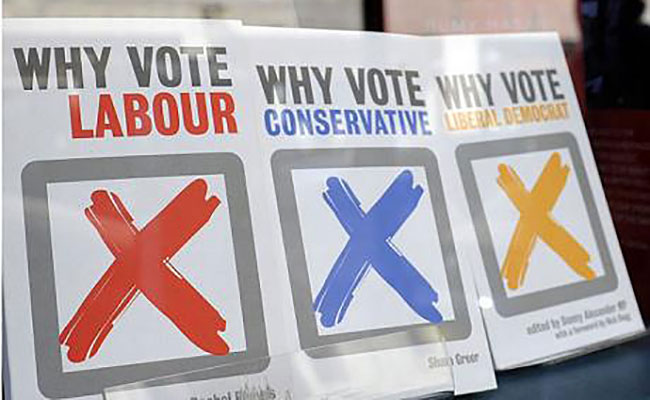
UK General Election

This week saw Teresa May make an unexpected announcement of fresh general elections, to be held in the United Kingdom on the 8th of June. The following day Parliament overwhelmingly approved to bypass the Fixed Term Parliament Act and proceed with the fresh election.

The two major effects on the markets have been to push the value of the pound up and the value of the FTSE100 down.

The pound has risen due to a sense that the Conservative Party will boost its majority from a slender margin of 12, up to a large majority of 100 MP’s. This will give Teresa May a stronger hand in negotiations both with Europe and with her own back benchers. The market thinking is that this should produce a better result for the UK’s future with trade relations with the EU.

Given the unpopularity of the leader of the opposition, the dominance of the SNP in Scotland and the low base that the Liberal Democrats are coming up from, it certainly seems like a safe bet to assume a strong majority for the Tory’s on June the 9th.

The FTSE100 has fallen due to the rise in the value of the pound. Most large FTSE 100 companies earn their income in US Dollars and as the pound rises so their profits appear to fall. Despite this the market seems genuinely receptive to the new election and we expect it to have no adverse effects as things move forward.

I hope you enjoyed reading this post.

Stuart Yeomans 

CEO

Farringdon Group

Kuala Lumpur : Malaysia

Changes to UK Inheritance Tax rules for foreign nationals

After two very successful educational seminars held in the last two weeks with 3 specialist speakers and over 100 attendees I wanted to share some of the topics of discussion as this may very well affect you or someone you know.

stuart-yeomans-london-property

Firstly, property in the UK;

On the 5th of December 2016 the British Government announced changes to Inheritance Tax rules for foreign nationals (including UK Citizens living overseas) that own UK property and assets within the UK.

The new rules will come into effect from the 6th of April 2017 and historically many foreigners used trusts or companies to avoid UK Inheritance tax. The new rules mean that such set ups will no longer avoid Inheritance Tax. This means that anyone who holds UK based property will be liable to pay inheritance tax no matter how they hold the property.

UK Inheritance Tax is one of the highest estate duties anywhere in the world. The government charges a 40% tax on the value of any assets held in the country in excess of £ 325,000 for a single person and £ 650,000 for a couple. However, with proper planning there are a number of ways to reduce or even completely remove an Inheritance Tax liability on UK property.

Secondly, moving Property in to a larger group of assets;

Previously it has been very difficult to place a property in to a portfolio, primarily because of leveraging against the property, the non-liquid nature of property, valuation fluctuations etc, BUT now we have a vehicle for both expatriates and locals who own property in the UK that can potentially negate and offset your IHT liability.

The new rules on non-domicile ownership also means that holding property within a company will NOT be IHT efficient anymore, so if you are holding a UK property and wish to know more, either let me know and I will be happy to arrange a 20-30 minute introduction which can potentially save you 40% of your asset.

Also, If you feel that this information would be of benefit to your friends or colleagues please feel free to forward this and I will be happy to meet for an introduction in the next few weeks too.

I hope you enjoyed reading this post.

Stuart Yeomans 

CEO

Farringdon Group

Kuala Lumpur : Malaysia


Market Wrap 2016 & Market Outlook 2017

stuart-yeomans-donald-trump

The past year has seen an unprecedented series of political events that have substantially increased the volatility across all sectors.

The year kicked off with the fallout from the Fed’s decisions to raise rates for the first time in nearly a decade. While Janet Yellen expressed a desire to raise rates by 0.25% four times in 2016, in the end the Fed managed just one rate rise.

The rate rise in December 2016 was a very different story to the rate rise of December 2015. Markets closed higher after the move. Principally this seems to be caused by two main factors; firstly, emerging markets like China are in a much better position to handle a rise in the borrowing costs on US Dollar denominated debts than they were 12 months ago. Many emerging economies have been rapidly deleveraging overt the past 12 months and the rise was well anticipated.

Secondly since the fall out at Deutsche Bank this year, markets have become increasingly worried about the effect of zero interest rates on the banking system. Banks like Deutsche have seen their lending margins squeezed from around 4% in 2007 to 2% today.

With interest rates rising much of this pressure is likely to fall away from the global banking sector sending shares higher.

While at the start of 2016 we saw risks from China and the US interest rate rising cycle as being the big news stories the reality ended up being very different.

stuart-yeomans-brexit-grexit-eu-cartoon

Firstly, we had the United Kingdom’s shock result in the referendum on EU membership. This saw the pound crash to a 30 year low against the US dollar and wiped nearly 10% of the FTSE 100 index over night. Fortunately, on the day of the crash our portfolios were heavily in cash and defensive assets and we could purchase back into markets at lower levels.

Subsequently the FTSE 100 has since gone back up reaching an all-time high. However much of this gain is due to the low value of the pound. Most FTSE100 companies earn in US dollars making profits appear higher in Sterling terms. In addition, rising oil prices and the boost to banking stocks have all given the FTSE 100 a lift.

UK markets and the pound in general are likely to remain volatile while the UK’s future relationship with the single market is negotiated over the next two years. There are likely to be significant buying opportunities as the UK heads towards enacting article 50 of the Lisbon Treaty. While the UK pulling out of the EU is all but a done deal, there may be interesting developments in regards to the UK’s membership of the European Economic Area and single market.

It seems certain that the Supreme Court will require the government to obtain the consent of parliament to enact article 50. It has also started to become apparent that the UK may need to separately enact article 127 of the EEA charter to leave the Single Market.

While MPs are certain to vote to respect the referendum result and leave the European Union it may be a very different story if a vote is put to them to leave the European Economic Area and the Single Market.

Any move that sees the UK more likely to stay in the Single Market will likely see the Pound and the FTSE 250 rise and the FTSE 100 fall.

In addition to the UK leaving the EU we have also had the shock result of Donald Trump winning the US presidential election. Markets have reacted well to this so far as it seems highly likely that US corporation taxes will be cut. In addition, relief may be given to companies holding large cash balances abroad that have not been remitted back to the USA.

Currently US companies are holding well over $2 trillion in cash in offshore subsidiaries. If companies repatriate this money and pay out special dividends we could see a substantial boost to both the market and the economy in the short term.

On the downside, Trumps comments on free trade agreements may serve to damage longer term economic prospects. The Trans Pacific Partnership or TPP is most certainly dead and NAFTA’s days may be numbered, although at the moment it seems that Trump may be happier to keep NAFTA if he can simply threaten US manufacturers with is removal to get them to re-shore jobs in the USA.

Trump’s election may also pave the way for a comprehensive trade agreement between the USA and the UK.

stuart-yeomans-2017

While there are some significant risks that may present themselves in 2017 the picture is much rosier than it was 12 months ago. The global economy seems to be able to live with rising interest rates, China has increasingly stabilised and the US Government looks like it will be able to start passing legislation for the first time in 6 years.

There remains significant challenges in Europe but these are more political than economic. With Italy moving to shore up its banks it seems unlikely that we will have a failure in the European banking system. The biggest potential issues are from a messy Brexit negotiation as well as the threat in France presented by Marie Le Pen.

We expect to see equities move higher across 2017 as well as bonds and commodities. Gold will likely remain flat.

I hope you enjoyed reading this post.

Stuart Yeomans 

CEO

Farringdon Group

Kuala Lumpur : Malaysia
Post Presidential Election

Republican presidential candidate Donald Trump acknowledges the crowd after addressing a GOP fundraising event, Tuesday, Aug 11, 2015, in Birch Run, Mich. Trump attended the Lincoln Day Dinner of the Genesee and Saginaw county Republican parties. (AP Photo/Carlos Osorio)

Political commentators were shocked by last week’s US presidential election result. However, markets have taken the news largely in their stride.While Asian shares dropped by as much as 5% following the election victory US shares had largely recovered by the end of the next trading day.

Western markets are now largely higher than they were before the result. Two areas that have seen drops are bonds and emerging market equities. This is on speculation that Trump will substantially increase government spending leading to higher than expected inflation and that he will increase trade barriers which will affect emerging market exporters.

However, we feel these threats are overblown and present some significant opportunities to re-enter markets. Firstly, even with the Republicans controlling both houses, Trump will still be faced by the same Tea Party lobby than has paralysed the US government for the past 6 years. While Trump wants to increase spending on the military and infrastructure he will have a tough time getting further deficit spending through Congress. His plans to cut taxes will also likely be held up by the Democrats in the senate if he tries to cut social and welfare programs.

We don’t expect to see much if any changes to US fiscal policy any time soon because of Trumps election.
In terms of free trade the only country likely to suffer is Mexico. While the US has the NAFTA agreement with Mexico it has little if any other free trade agreements with other emerging markets economies outside of the WTO. Trump could use presidential powers to pull out of NAFTA but the overall effect on the global economy of NAFTA is fairly small.

Certainly, the Trans Pacific Partnership TPP is now dead however that was likely with or without a Trump presidency and largely factored in. Interestingly Japan has now fired a warning shot across the bow of the USA by declaring its interest in joining the Chinese rival to TPP along with Malaysia.
While a Trump presidency is likely to see an end to NAFTA it is unlikely to bring the international system of trade down.

The big question pre-occupying the markets is what will the Fed do. Expectations were running high for a fed rate rise before year end. However, the effect of this will be hard on China. Will the Fed want to raise tensions with China at the exact same time a new president comes into the job? Given Trumps rhetoric about unfair Chinese trade practices a fed rate rise could further exacerbate an already tense situation.

While Trump was the Russian choice for the job, the Chinese were very much supporting Clinton. It seems likely to us that Janet Yellen will look to hold off for as long as possible before raising rates.

Ultimately current global markets are only really affected by monetary policy and Donald Trump’s election makes it less likely the Fed will tighten. This should start to translate into higher prices in emerging market stock and bonds across November and December.

I hope you enjoyed reading this post.

Stuart Yeomans 

CEO

Farringdon Group

Kuala Lumpur : Malaysia

Farringdon gets its asset management licence for Singapore

stuart-yeomans-farringdon

Myself and Martin have been working tirelessly over the last couple of years to get our very own license in Singapore. We decided not to continue our partnership with an IFA down there and decided to get the capital & markets service license instead. This allows us to do way more than we previously thought possible.

Martin should take most if not all of the credit for obtaining the license, because he has moved there and dealt with the daily matters that arise from trying to obtain this milestone.

Once SEA see’s the ways in which we plan to change the expat advisory market in Asia, we hope it will open up a new era of lower cost and seamless managed advice. In our view the current set up for advisers is outdated, too expensive for the client and the reputation of the industry needs changing.

Below is the full article published in the International Adviser.

Farringdon Asset Management, part of the Malaysia-based Farringdon Group, has received a licence to operate in Singapore where it will focus on focus on providing expat clients with discretionary portfolio management services.

The wealth management company said it was awarded a Capital and Market Service licence by the Monetary Authority of Singapore on 7 October 2016.

Martin Young, one of the founders of Farringdon Group and FAM’s chief executive, said the company believed the asset management licence was better fit for the company’s business model in Singapore rather than a financial adviser licence.

“The Singapore financial advice market is heavily focused on long-term contractual insurance plans and historically Farringdon Group has generated less than 10% of its revenue from such policies,” Young said.

Expat DFM provider

“The company has always focused on providing discretionary portfolio services, for single premium investments and felt that in Singapore the asset management license was a better fit for our business model.

“We see a lot of potential in Singapore, as there are no other company’s able to offer the kinds of services that we do in the expatriate space. As a financial hub we find Singapore investors are quite sophisticated and tend to shy away from the traditional IFA model, which is based on portfolios of managed funds,” he said.

Stuart Yeomans, Farringdon’s marketing director, said: “We also have a number of big announcements in the coming few months, which will certainly shake up the investment sector throughout Asia and we believe that our business model will be pioneering a few new ideas that the market has not yet seen, but sorely needs.

“It will be interesting to see how other firms react when we come to market with our new strategies and offer advice in a unique and lower cost format,” he added.

Thank you to International Advisor for another great article, for the full article please follow the below link to their website. Farringdon gets asset management licence for Singapore.

Stuart Yeomans

CEO

Farringdon Group

Kuala Lumpur : Malaysia