New Earth Funds – Factsheet

Stuart Yeomans - New Earth Fund

Farringdon Group of late have been seeing a vast amount of expats who not only have been experiencing bad performance within their portfolios, but high charging structures, frozen funds, ridiculous annual management fees of up to 18%, seriously bad advice, high risk portfolios with low risk appetite, no communication from their advisory and now this, New Earth Funds!

I want to share with you in this brief Factsheet all about New Earth Funds and why Farringdon Group feel that knowledge is power when educating and putting together our clients’ portfolios.

ALL of our portfolios are daily traded meaning that our client’s funds don’t have a lock in period, our annual management fee is a maximum of 1% and none of our selected investment funds have front & back end charging paying commission to the advisory.

If this information relates to you or someone you know, please share this, we don’t want this to happen to anyone else in the future as this can affect anyone, time and time again we are seeing people’s pensions pots reduced to ZERO due to this sort of bad practise.

                The New Earth Group of Funds offered three collective investment schemes:

  • New Earth Recycling and Renewables (Infrastructure) (NERR), an Isle of Man specialist fund;
  • Premier Investment Opportunities Fund (PIOF), an Isle of Man qualifying-type experienced investor fund; and
  • Eclipse Investment Fund, an Isle of Man qualifying fund investing into NERR.

Unregulated, Non-Retail Funds

Specialist, qualifying and qualifying type experienced investor funds are unregulated collective investment schemes which are not approved or reviewed by IOMFSA. Once launched the funds must be registered with the authority within 14 days. These types of funds cannot be sold to the retail public. Access to such funds is only available where investors confirm that they meet the fund type’s minimum entry criteria. This includes a statutory certification that they have read the scheme’s offering document and understand and accept the specific risks associated with that type of fund. IOMFSA’s remit for such schemes is to register, receive notifications of changes, and supervise their appointed Isle of Man functionaries

In letters to NERR and PIOF shareholders dated 16 June, the manager of New Earth Group, The Premier Group, advised that “the New Earth Group of Companies have sought statutory protection by filing notice to appoint an administrator. The administrator has moved quickly and has sold [NESG and NESFM] to DM Opco, the full details of which are unknown. “Taking into consideration that the assets of NERR are largely subordinated to the senior lenders’ debt, the directors consider it unlikely that the sale of these assets to DM Opco will achieve over and above the amount of senior lending. “It therefore remains unlikely that the sale of these assets will generate a return for the fund.”

According to the report, in October 2014, the group carried approximately £159 million of debt, with £37 million due to the Co-operative Bank and £102 million to the New Earth Recycling & Renewables Fund. A further £20 million was also owed to Macquarie Bank from the energy side of the business.

Duff & Phelps was appointed as administrator of New Earth Solutions Group and its sister company New Earth Solutions Facilities Management in early June following a breakdown in protracted talks with an unnamed plant developer to purchase the company.

Little is known about DM Opco, the sole director and shareholder of which, Declan McKelvey, is listed by Companies House as an accountant that was appointed as director of Direct Golf UK last October after its administration was also handled by Duff & Phelps. However the sale was said to safeguard the 143 jobs across New Earth Solutions’ five sites, which treat around 450,000 tonnes of municipal and commercial waste a year through in-vessel composting and mechanical biological treatment, as well as at its head office in Verwood, Dorset.

The Duff & Phelps report states that the company bought New Earth’s business for £5.9 million, with the majority (£3.2 million) going towards equipment and vehicles.

Prior to the company entering administration, the report notes that 51 companies had expressed an interest in new Earth Solutions, with seven following up with written expressions of interest, three of which wanted to take the business and assets forward as a going concern. However, none of the offers were considered acceptable by the senior lender, the Co-operative Bank, and were rejected in March.

These funds paid up to 8% commission to the advisors investing on client’s behalf – 8% just for placing client’s money in to the fund….below we have the proof from the CISE website.

http://www.premiernewearthfund.com/stakeholder-news-/

http://www.letsrecycle.com/news/latest-news/new-earth-investors-unlikely-to-be-reimbursed/

http://www.international-adviser.com/news/1029889/liquidators-appointed-earth

http://www.international-adviser.com/news/1030422/earth-funds-wound

Farringdon Group cannot stress enough that everyone should do their due diligence before agreeing to advice by any financial advisory, get a fully detailed report, see past performance, and check the history of anything you are being advised to invest in, ask about the charges, ask for the advisors qualifications and get a second opinion.

If you would like to arrange an introduction to Farringdon Group we are happy to set up a conference call, meeting or even Skype, it’ll take 30 minutes of your time and we can lend our years of experience to stopping this happening and potentially maximising your investments.

Stuart Yeomans 

CEO

Farringdon Group

Kuala Lumpur : Malaysia

Market Outlook – July 2016

Farringdon Group - Brexit

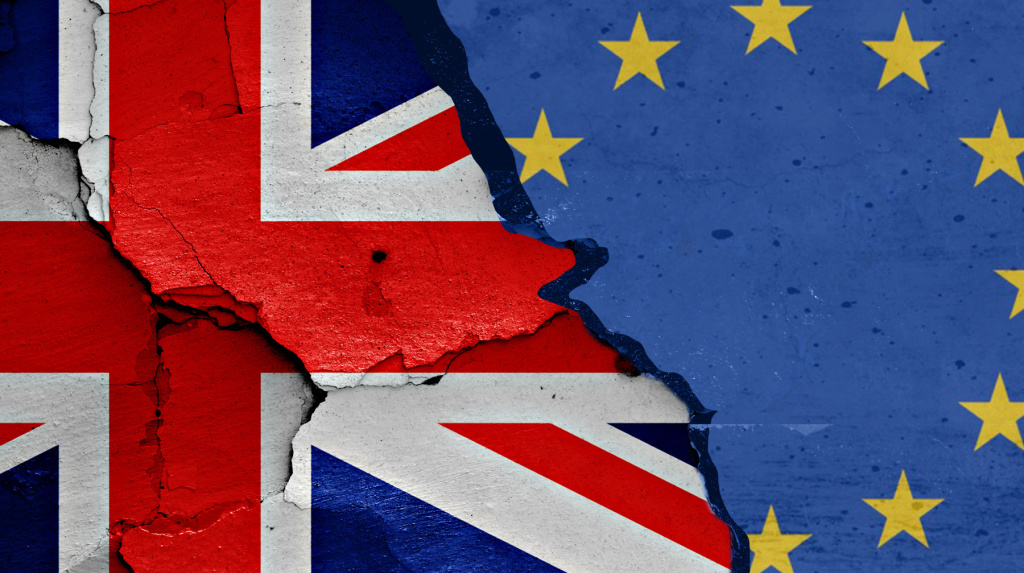
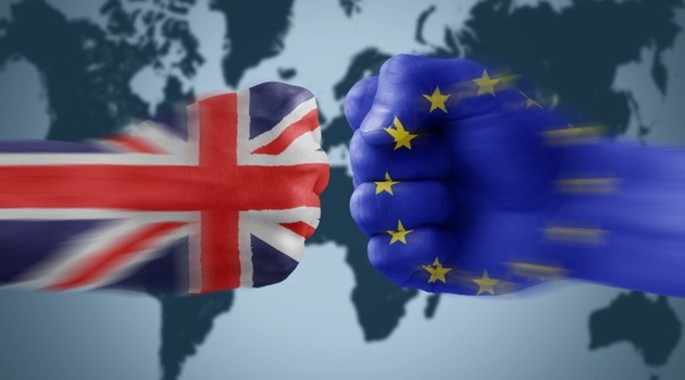
The last two weeks have seen unprecedented volatility across all markets. Events were initially kicked off by the UK’s decision to exit the European Union, on the 23rd of June. Markets have been further confused by both the leave and remain campaigns indication that there is no rush to enact article 50 of the Lisbon Treaty and the subsequent resignation not only of the Prime Minister, but also the entire leave campaign leadership.

Matters have been further exacerbated by the EU’s refusal to begin talks until the UK enacts article 50. The Tory party has now nominated two MP’s to stand for leader of the party and the next Prime Minister. The decision on enacting article 50 will be there’s to make. While Theresa May is the favourite, she may have to shore up much of the party memberships support, by giving a clear indication of when she will enact article 50 and this is likely to be before any negotiations have taken place between the UK and the rest of the EU.

Many on the leave side have pointed to the higher value of the FTSE 100 as a sign that the market does not care. However FTSE 100 companies get 75% of their income from outside of the UK and the rise in the top market has been caused due to the collapse of the value of sterling. The FTSE 250 which is a better measure of the UK’s economy is still down substantially.

One of the main consequences of Brexit is that it is putting further strain on the European financial sector. As of yesterday, Deutsche Bank (Germany’s largest) had a valuation lower than Snapchat the mobile phone app. Italian banks have some EUR 340 billion of bad loans, The Italian Government wants to arrange a bailout of EUR 40 billion; however, this is a violation of EU state aid rules. Currently the Italian government is playing a game of chicken with the EU commission and the ECB.

While things are gloomy at the moment there are signs that things could be poised for a change. Angela Merkel is said to want rid of the commission president Jean Claude Junker, this may lead to a more consolatory approach to Brexit negotiations and the possibility of a new European Union settlement, often called the Norway plus model. In this model the UK could gain access to the single market, but also have concessions on freedom of movement.

The Italians may also make the decision to ignore rules on state aid and recapitalise their banks which should help to reduce any future threat of an EU banking crisis.

If these events do happen then there is significant value in current investment markets and it could turn out that summer 2016 is a good time to purchase assets.

I hope you enjoyed reading this post.

Stuart Yeomans 

CEO

Farringdon Group

Kuala Lumpur : Malaysia

The Brexit has happened…….so what’s next?

brexit


I personally followed the media trail on the run up to the Brexit referendum and many fingers pointed to a stay vote. Even Nigel Farage hinted that he felt the campaign to leave was potentially lost and to our surprise it has gone the other way with a slight majority of 52% to 48%. (to be updated once final results are in)

Now that the Brexit has happened, people need to consider two main points:

  1. What will the UK do next to curtail volatility and widespread issues?
  2. When should you take advantage of the current drops in the markets?

There is a simple answer to question one and I believe that the UK would opt to join the EFTA which stands for the European Free Trade Association. Current members of this are Switzerland, Liechtenstein, Norway and Iceland and it was formed in 1960. This will be a solid interim strategy or possibly even permanent strategy for the UK. It still offers freedom of movement and a number of other benefits too.

The UK were a member of the EFTA between 1960 – 1973.

So what is the EFTA and what will it offer as a solution to the Brexit situation.

To participate in the EU’s single market, Iceland, Liechtenstein and Norway are party to the Agreement on a European Economic Area (EEA), with compliance regulated by the EFTA Surveillance Authority and the EFTA court. Switzerland instead has a set of bilateral agreements with the EU.

Farringdon Group sold out of most equities a few weeks back and this has proved to be the right decision for our clients. We just need to decide as to exactly when we buy back in!

So to answer point two, you should be looking to play this by ear and ascertain when the current drops have bottomed out. It is difficult to predict exactly when, but you should look to enter on the date of the EFTA announcement.

If the UK do not enter the EFTA, it may be wise to hold cash until a certain time that a clearer picture presents itself.

If we do enter the EFTA……..when?

Well honestly speaking the government should have a battle plan in place and I would be surprised if we do not see this before the end of next week……..but lets see!

Thanks for reading

Stuart Yeomans 

CEO

Farringdon Group

Kuala Lumpur : Malaysia


Q1 – Market Outlook 2016

Stuart Yeomans - Brexit

Quarter 1 has seen a continuation of the volatility we experienced in the second half of last year with Markets dropping in the middle of the quarter then recovering towards the end, while most equity markets also ended this period flat. The S&P 500 started the quarter at 2043 and ended at 2059 while the FTSE 100 started at 6242 and ended at 6174.

Oil experienced major volatility across the period, with prices for WTI dropping as low as $26.55 before recovering to levels of around $40 a barrel. Markets have been somewhat uplifted by a more dovish sentiment emanating from the US Federal Reserve with The Fed now predicting making just two interest-rate rises during 2016 instead of the previously reported four.

China continues to weigh heavily on the collective mind of all the global markets and for the present, the situation in China appears to have stabilised with the government easing back on its market interventions which were adding to the volatility. However the nation’s economy will continue to face strong headwinds for at least the next six months.

Looking ahead this quarter, many analysts are concerned about the potential decline in company earnings with this being particularly acute in the energy and commodity sectors, however cheaper prices are already starting to move on to other downstream sectors such as airlines and manufacturers which is positive.

Markets have now been down for ten months and it seems likely to us that most bad news is already priced in and we may start to see selected companies outperforming as earnings beat the low expectations already set.

Brexit

Q2 will bring us the UK referendum on continued membership of the European Union with current polls too close to call, so we do expect to see some volatility in both the value of sterling and the FTSE 100.

Currently we expect to begin moving assets to cash across May with the view to trying to purchase back in, off the back of any resulting dip.

In the medium to longer term, we do not expect the result to have much of an impact, as it is probable that the EU and UK would rapidly negotiate a deal for continued membership of the common market. The UK is a massive net importer from the rest of the EU and the consequences of the UK being outside the single market would be quite devastating for the Netherlands, Germany, France and especially Ireland.

The bigger issue of a UK exit is likely to be in terms of the UK’s loss of free-trade agreements with other non-EU countries. However, given the UK’s status as the fifth-largest economy in the world – not to mention the fact that it is a net importer from most other countries – it would seem likely that some form of fudged deal would be reached to allow the UK to remain under EU treaties until new ones could be negotiated.

If a Brexit deal is reached we would expect governments to move quickly on such issues in order to stem any longer term uncertainty. So the Brexit vote is likely to pull the market down in the short term but will likely present us with a good opportunity in the medium to longer term.

Oil

The oil market has recovered on the assumption that the Russians and Saudis had a deal to at least freeze oil output at January levels, however the Russians have reneged on this deal by producing an additional 200,000 barrels a day in their March production figures.

The Russians have done this to The Saudis several times in the past – most notably in 2009 when they agreed to a production cut and then actually increased production. The other factor which caused oil to rally was the loss of production from Iraq and Nigeria which, due to closed pipelines, saw some 900,000 barrels a day removed from global production.

While many pundits are claiming the world is awash with oil, this is not really the case with The Saudis historically holding back a production reserve of around two million barrels a day.  This in turn has then been used to make up any losses when other supplies falter, however The Saudis are now flooding the market with this reserve, which means there is little additional spare capacity.

The current low prices have caused major damage to the exploration industry and the IEA is now predicting a major oil shortage by the year 2020 which could once again send prices back above $100 a barrel.

We are currently waiting for prices to drop to a range of $32 – $34 a barrel before recommending any additional purchases within our portfolios as we still expect to see prices in the range of $50- $60 by the end of 2016.

I hope that you have enjoyed reading this post.

Stuart Yeomans 

CEO

Farringdon Group

Kuala Lumpur : Malaysia

Should you reduce your Employees’ Statutory Contribution Rate of your EPF for 2016?

EPF

This morning I got asked by my wife, exactly what the reduction of the employees EPF contribution means; so here is a view from my side and how I would handle this tough choice.

Currently there are two parties that contribute to your EPF:

  1. You as the EMPLOYEE
  2. Your company as the EMPLOYER

Currently the EMPLOYER has a set rate of 12% each month, that MUST be sent to your EPF account.

In 2015 you as the EMPLOYEE would have 11% of your salary deducted.

In 2016, the government has decided to reduce the EMPLOYEE contributions down to 8%, hence you will end up with 3% more in your payslip each and every month.

As an EMPLOYEE, you actually have the option to fill in a form and elect to remain at 11% contributions and not have an extra 3% in your salary!

Below is the form that you will need to fill in and have processed. Unfortunately, when this article was written the website is down for maintenance, so we can’t provide a web link.

Form EPF 17A (Khas2016), Notice to Contribute More than Statutory Rate (Employee’s Share).

IS THIS A GOOD IDEA?

In my opinion I feel that most people should elect to fill out this form, you should not reduce your contributions; simply because many Malaysians do not have enough in their retirement to be self-sufficient and an extra 3% now in your hand, will not help you much in your daily life.

There is an increasing issue of people running out of money or having to have help from loved ones in later years.

The only reason to reduce your contributions, is if you do not trust the EPF or you feel that you can find a safer home for this money.

Many newspapers and articles online are saying that the main reason why the government has reduced this rate is to stimulate growth in Malaysia at its most needed time. This will also grow the GST income for the government in the short term and is a move to stabilize an already fragile economy.

CONTACT US

If you feel that you will be short in retirement and you want to look at saving some additional money towards your future, please contact us below on.

syeomans@farringdongroup.com

I hope you have enjoyed reading this post.

Stuart Yeomans

CEO

Farringdon Group

Kuala Lumpur : Malaysia

Continuation of Volatility to start 2016

Stuart Yeomans - NYSE

January has seen a continuation of the volatility that was seen in the third and fourth quarters of last year. However, despite substantial drops in the middle of the month, equity markets ended the period relatively flat.

Oil

Oil has experienced further drops across January, touching a low of $26.55 on WTI and $27.10 on Brent. Prices climbed back up substantially from these lows, to levels around $34 a barrel. However, this move upwards seems to be based on market speculation and we expect to see prices fall again in the near term. We believe that oil will bottom out in the mid 20’s, before rounding sharply in the second half of the year. While prices of $27 a barrel are below the marginal production costs for many wells, it is important to remember that these are prices of high grade crudes. Lower grade crudes that make up much of the world’s production, are trading at much lower prices. Last month North Dakota Sour Blend, was trading at a negative price of -$0.50. These low prices should mean that many wells around the world begin to shut down later this year, helping to restore balance to the market.

In addition to this, there is now talk from Russia about joining OPEC in making a 5% production cut. This offer has been rebuffed by OPEC members. However, it will be in all of their best interests to get a deal at some point. A 5% global production cut would see prices quickly move in the $80 a barrel range.

China

Data from China continues to weigh heavily on the minds’ of most markets. However, many underlying indicators such as house prices and car sales, seem to be indicating that the economy has returned to stronger growth. Other figures such as the Purchase Managers’ Index data, indicate recessionary pressures inside the country. It is hard to tell which sets of data are correct and this uncertainty is one of the principal reasons why the markets have experienced heavy volatility.

Outlook

The first quarter will remain volatile, however it looks increasingly unlikely that the world is headed into a recession in 2016. This should translate into higher values across all asset sectors by the end of the second quarter.

I hope you have enjoyed reading this post.

Stuart Yeomans

CEO

Farringdon Group

Kuala Lumpur : Malaysia