Japan’s Economy Emerges From Recession, Growth Weaker Than Forecast

044285d8-8ce4-11e3-8b82-00144feab7de

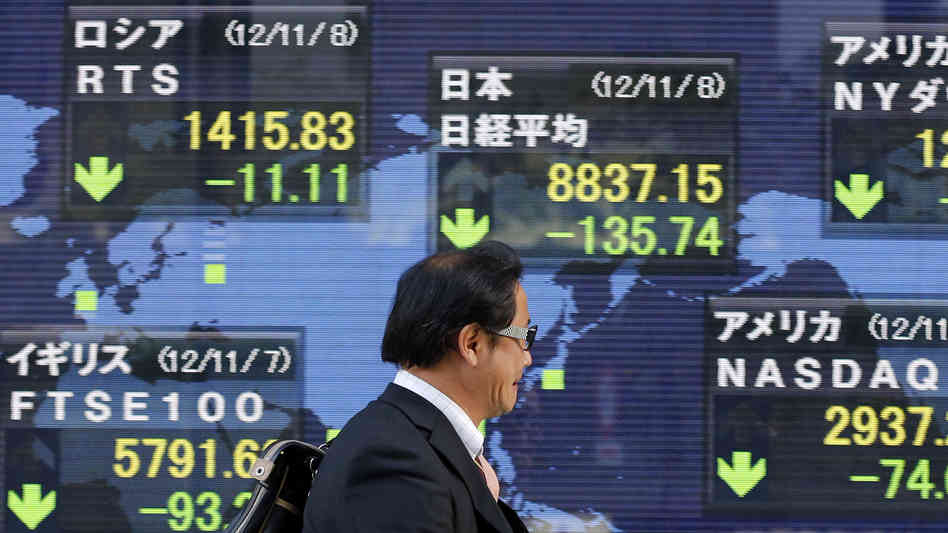
Japan’s economy rebounded from recession to grow at an annualized of 2.2 percent in the fourth quarter of last year, giving a much-needed boost to Premier Shinzo Abe’s efforts to shake off decades of stagnation even as the global outlook deteriorates.

Gross domestic product (GDP) grew by 0.6 per cent in the fourth quarter, up from -0.6 per cent in the previous three months, but below predictions of a 0.9 per cent increase. GDP rose at an annualized 2.2 per cent in the three months ended last year December 31, well below analyst (Reuter’s poll) expectations of a 3.7 per cent increase. Nominal GDP, which is unadjusted for price changes, rose an annualized 4.5 per cent from the previous quarter. Private consumption, which makes up about 60 percent of the economy, rose by 0.3% in the final quarter, less than median market forecast for a 0.7% increase.

The softness of the rebound shows Prime Minister Shinzo Abe’s challenge to revive the world’s third-largest economy from two decades of stagnation. Wage rises and increased consumer spending are likely to be crucial this year to spur activity beyond the export sector, where the lower yen has contributed to surging profits at companies like Toyota.

The rebound from recession, however, will allow the Bank of Japan (BOJ) to hold off on expanding monetary stimulus for now even as slumping oil prices push inflation further away from its 2 percent target.

I hope that you have enjoyed reading this post.

Stuart Yeomans

CEO

Farringdon Group

Kuala Lumpur : Malaysia

Precious Metal Prices Flat as All Eyes on Greece after Parliament Vote

Greece may be one of the smaller members of the Euro zone, but it continues to command the attention of world markets, as the bailout crisis continues. After the New Greek government said it would not renew the EUR 240 billion bailout under the current terms, the ECB announced that it will no longer accept Greek government bonds as collateral for ECB loans as of February 11. Greece wants a new deal that removes the harsh austerity steps required under the bailout. However, Germany and Greece’s international creditors do not want to rewrite the bailout agreement. Greek Prime Minister Alexis Tsipras and Angel Gurria, chairman of the OECD, will meet on Tuesday to try and narrow the gap between the parties.

Greece’s Parliament approved the government’s economic plan in a vote on February 10, 2015 which sets up a showdown with country’s international creditors beginning this week in Brussels. With 162 ‘yes’ votes against 137 ‘no’ with one absentee lawmaker, Prime Minister Alexis Tsipras earned approval for a plan that rolls back many of the austerity measures agreed by the former government of Antonis Samaras. On the Comex division of the New York Mercantile Exchange, gold futures for April delivery rose 0.02% to trade at $1234.20 a troy ounce. Besides, silver futures for March delivery rose 0.07% to trade at $16.915 a troy ounce. However, copper for March delivery fell 0.20% to trade at $2.545 a pound.

Gold briefly hit the lowest levels of the session after rumors surfaced that the European Commission could propose a six-month extension to Greece’s bailout program, which is due to end on February 28. Athens main stock index rallied nearly 7%, while the yield on Greek 10-Year bonds tumbled sharply to trade below the 11%. Expectations of higher borrowing rates going forward is considered bearish for gold, as the precious metal struggles to compete with yield-bearing assets when rates are on the rise.

ECB Quantitative Easing; Is Mario’s Bazooka Big Enough?

stuart yeomans - mario draghi

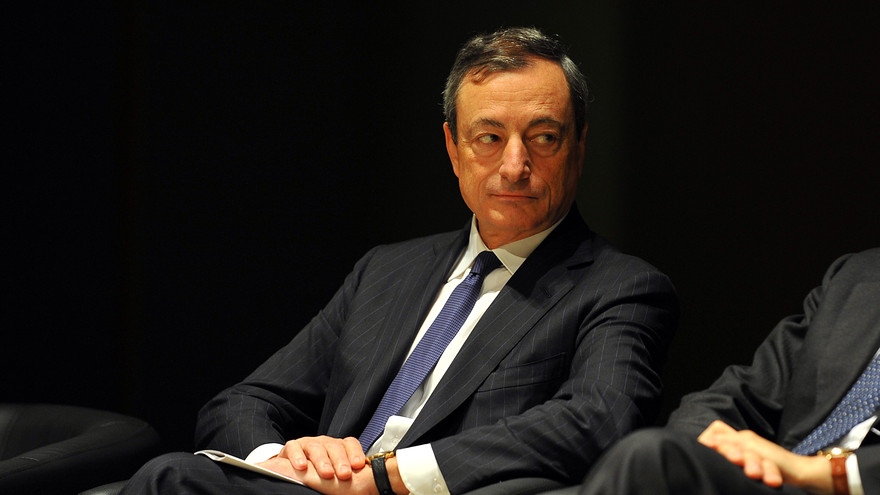
Last Week the European Central Bank (ECB) finally initiated a policy of Quantitative Easing (QE). This is the process where the central bank prints money and uses it to buy government bonds to help inject more cash into the financial system. This process has jokingly been referred to in the past as Mario’s Bazooka, in reference to the ECB Chairman Mario Draghi.

The scale of the ECB’s QE plan is certainly vast. The program will have an initial run of printing EUR 60 billion per month, to a total value of EUR 1.1 Trillion. That’s roughly double what analysts were expecting last year. However, that is also less than a quarter of the relative value that the Bank of England and Federal Reserve have both done.

Many analysts also feel that the ECB is three years too late. One of the key benefits of QE is pushing up prices and producing inflation. This has allowed countries like the UK and USA to avoid the so called “deflation trap” that has plagued Japan for the last 20 years. However Europe is already in deflation and it’s unlikely the new QE program will help to turn things around on its own.

One effect it will have is to push up the prices of European investments such as equities and bonds. However it will also have the effect of weakening the Euro so it’s unlikely that Pound and Dollar investors will be able to make any real returns from European assets.

However much of the money the ECB is printing will leak into other financial systems. This will have the result of pushing up those other currencies and their financial asset classes at the same time. These secondary effects are likely to be where foreign investors can reap the best returns.

The biggest gainers are likely to be the Pound and the Swiss Franc, as European money chases high interest rates and a safe heaven. Equities and bonds in both markets are also likely to receive a significant boost.

I hope that you have enjoyed reading this post.

Stuart Yeomans

CEO

Farringdon Group

Kuala Lumpur : Malaysia

Market Wrap October 2014

Stuart Yeomans - MW Oct 2014

Concerns about global economic growth, increasing geopolitical instability and the increasing worry of the Ebola epidemic, has brought back volatility into the markets. This has caused steep falls in the first half of the month; however, most major indices have bounced back quickly towards the second half, following positive data and central bank actions which have stimulated growth. With these results most regions ended the month in positive territory.

US equity markets rose in the month of October and the S&P 500 Index increased 2.4%, this was mainly due to a response by the US Federal Reserve’s decision to end their bond-buying programme. This move has effectively brought the US economy back to normality, after the global financial crisis.

Volatility had risen in the approach to the Fed’s announcement, amid concerns that share prices would suffer if quantitative easing was brought to an end. Moving forward, there are fears over the global growth outlook and US equities have experienced losses not seen since May. This being said, the markets have recovered from these losses, because of the announcement of some solid economic data.

In Europe, equity markets were naturally impacted by the deteriorating outlook of the Eurozone economy. This data confirmed that German exports plunged in August and has intensified fears that the Eurozone’s largest economy may be slipping into recession. Market participants would like the European Central Bank (ECB) to go further with their quantitative easing efforts, but this would be met with significant opposition from Germany.

The equity markets rebounded later in the month, as more positive data came to the fore, while the conclusion of the ECB’s comprehensive assessment of 130 banks in the Eurozone also led to expectations that this may improve the flow of credit to the region’s economy.

The UK equity markets trended lower, despite the country’s positive economic outlook. The UK’s economy has rebounded from recession faster than expected. While this raises expectations that the UK’s interest rates will rise, there are still signs that the housing market may be cooling and has dampened these expectations. During the month, Britain was also asked to pay an additional EUR2.1 billion into the European Union’s budget, primarily due to its economy performing better than other European economies; but also as a result of changes after a once-in-a-generation review of how gross national incomes are calculated. This has put pressure on the UK government, which is seeking to reduce the magnitude of this bill.

Asian equity markets have recovered from early weaknesses, because of other regions growth fears. Whilst China’s third quarter GDP was lower in comparison to its second quarters, it still proved to be better than expected, which helped ease concerns of further deterioration in the economic outlook. Furthermore, sentiment towards Chinese equities was bolstered by the announcement of new policies, which were aimed at supporting consumption in areas such as broadband and mobile internet.

In Japan, concerns about global economic growth hit the earnings outlook of its exporters, thus causing the countries equity market to fall initially. However, a strong US Dollar has worked in Japan’s favour by strengthening the competitiveness of its products in the US, which is one of their key markets. All this led to the equity market closing the month in positive territory. In the Emerging equity markets, returns were led by Turkey, while early gains of Brazilian equities were eroded following the outcome of the presidential election.

Bond markets began the month strongly, because the market pushed out its expectations about the timing of US interest rate hikes. Further support for this expectation was found in the minutes from September’s Federal Open Market Committee meeting. Weaker economic and inflation data seemed to support this more dovish view.

I hope that you have enjoyed reading this post.

Stuart Yeomans

CEO

Farringdon Group

Kuala Lumpur : Malaysia

Selangor Set New Price Floor on Properties for Expatriates

As you may know, the Malaysian government have recently changed the minimum purchasing price for expatriates on properties in the Selangor region. I have included some information for your perusal so you can get a better idea of the changes and how it may affect you.

house pic stuart yeomans

Selangor’s new restrictions on property ownership for expats have started to implement since 1st September 2014.

The new guidelines now restrict expatriates from purchasing any types of properties that cost less than RM2mil in most of the districts in the state. Previously, the price floor was set at RM1mil, the Malaysian government are now trying to price expatriates out of the market with this 100% increase.

According to the new restrictions, residential, commercial and industrial properties are categorized into three zones, Zone 1 covers districts of Petaling, Gombak, Hulu Langat, Sepang and Klang, while Zone 2 eventually covers districts of Kuala Selangor and Kuala Langat. Lastly, Zone 3 will be covering districts of Hulu Selangor and Sabak Bernam.

The new restrictions have increased the threshold price for different properties that the expatiates wish to purchase.  Below is the table of the new restrictions on property purchases by expats.

Before Jan 1, 2014 After Jan 1, 2014 Effective Sept 1, 2014
Residential properties Zone 1 and Zone 2 RM500k RM1mil RM2mil
Residential propertiesZone 3 RM500k RM1mil RM1mil
Commercial properties Zone 1 and Zone 2 RM500k RM1mil RM3mil
Industrial/Manufacturing propertiesZone 1, Zone 2 and Zone 3 RM500k RM1mil RM3mil

Expats are not permitted to purchase Malay reserve property, non-strata landed residential or those sold by public auction. The expats are not allowed to acquire any properties that are set aside for the Bumiputera. Also no more than 10% of the non-Bumiputera units can be sold to expats under the new restrictions. Expats must purchase directly from the developers and not from any secondary market, limited to only one residential unit per family. Furthermore, expats are permitted to acquire strata and landed strata properties only.

The Expat Group’s chief executive officer, Andy Davison, who assisted in the Malaysia My Second Home programme (MM2H), confessed about his disappointment and said, “It seems Selangor is changing its attitude to foreigners, they used to have some of the lowest minimum prices for foreigners to purchase but now they have the highest.”

As you can see from the above information, the expatriate property market is being tightly regulated and it seems that the government are trying to price expats out of the market.

I hope that you have enjoyed reading this post.

Stuart Yeomans

CEO

Farringdon Group

Kuala Lumpur : Malaysia

Market Wrap – 2014 Quarter 3

S&P 500

The S&P 500 saw a third monthly loss for this year, closing 1.4% lower in September. Energy stocks experienced the steepest fall together with other sectors such as industrial, consumer discretion and tech which are all sensitive to the economic cycle.

There wasn’t a distinctive reason for the broader market fall, but stocks that were hit tend to be more exposed to higher interest rate.  It has been a general view that the recent strong economic performance in the US may spur the Fed to increase interest rates sooner than expected, although the Fed had maintained its assurance that interest rates will remain low for a “considerable time” after the asset purchase ceases.

A larger increase in exports and business investment had contributed to the US economic growth, growing at the fastest rate since 2011 for the period between April and June. The economic growth was revised upwards to an annual rate of 4.6% and growth in consumer spending remained unchanged from its previous estimate of 2.5%.

In Europe, equity markets advanced slightly following speculation on the European Central Bank’s QE programme.  The FTSE World Europe ex UK closed 1% higher for the month of September. The pharmaceutical sector had the biggest gains together with utilities and financial stocks and the consumer goods and services were the biggest losers.

On broader economic perspective, data out of Europe was mixed, indicating a slowdown in the European economy. The Germany economy is reeling from weakness both within the Euro area, including France (a key trading partner), and the fallout from the crisis in Ukraine which prompted sanctions to be imposed on Russia, an important customer for heavy German goods. Business expectation surveys declined in September and the Purchasing Manufacturing Managers’ Index (PMI) fell below 50 indicating a contraction.

To spur growth and combat low inflation, the ECB reduced its rates in main refinancing, deposit facility and marginal lending facility by 10 basis points respectively. The central bank also announced a new program to buy asset-backed securities and covered bonds, while implementing the first tranche of its Targeted Long-Term Refinancing Operations package (TLTROs) which provides cheap financing to banks. A little confidence was restored into the European markets following moves being taken by the ECB and its commitment to resuscitate growth in the European region. This in return saw the euro currency falling to a two-year low against the US Dollar.

Following speculation and hype regarding the Scottish independence from the UK, the FTSE All-Share index closed 2.8% lower for the month of September. An analysis of the month’s primary market sector price movements shows that the personal goods sector was amongst the better performers, whereas the food & drug retailers were amongst the worst.

On a macroeconomic perspective, the UK continued to show good growth although there were a few disappointing reports. Q2 GDP growth estimate was revised up 0.9% compared to 0.8% as previously estimated by the Office of National Statistics. Industrial production, which is a factor influencing the GDP, was reported to have risen in July by 0.5%, which is above the median growth of 0.3%. This would mean the annual growth in industrial production is at 1.7% compared to the 1.2% which was recorded in June. Although the economy has been experiencing better growth, inflation for August remained low at 1.5% compared to 1.6% for the previous month. An update on the public finances for the UK is reported to have worsened, as the Public Sector Net Debt rose over the month, and it is now about 6% higher than last year.

In the minutes released by the Bank of England Monetary Policy Committee, it indicated that “the downside risks to UK growth in the medium term had probably increased” based on all the recent data and issues.

Asian equity markets declined sharply in September as increased volatility in currency markets and a correction in commodity prices led to a sell-off in riskier assets. Further monetary easing by the European Central Bank (ECB) and strengthening conviction that the US will raise interest rates sooner than expected were the primary drivers of US Dollar strength, while some weak economic data from China also weighed on equity markets.

Chinese economic data for August reported a decreasing momentum in industrial production growth, retail sales and fixed asset investment which were all weaker than expected. Preliminary readings of HSBC’s manufacturing survey for September however showed that activity remained steady at subdued levels, which eased fears that growth would continue slowing in the Chinese economy. Political protests in Hong Kong led to further volatility in the markets.

In Japan, the yen experienced a significant depreciation against the US dollar which was beneficial to large exporters, such as transportation equipment, machinery and electric appliances sectors, where all had solid performance. Though there seemed to be poor visibility on the domestic side of things, Japanese equities made strong gains in September.

Consumer spending and consumer confidence in Japan both fell in August. A drop in the service sector overlooked a slight improvement in the manufacturing sector. An initial estimate in industrial production also came out weaker than what was expected. However weaker economic data has strengthened the speculation that there will more be monetary and fiscal policy stimulus. This caused the depreciation of the yen, as it would mean higher profits for the exporters, which led equity markets higher.

 

Stuart Yeomans - Dilma Rousseff

In emerging markets, equities fell sharply due to the strengthening of the US Dollar, disappointing economic data from China, and geopolitical issues. Latin America was the worst performing region, with Brazilian stocks falling heavily as President Dilma Rousseff gained momentum in opinion polls ahead of October’s election. A few emerging countries that had posted positive gains for the month were Egypt, UAE and Czech Republic. Consumer discretion and energy sectors fell the most but all other sectors in the emerging markets, with the exception of healthcare, also fell.

In the fixed interest sector, Investment Grade (IG) corporate bonds outperformed government markets. According to data from Merrill Lynch European, IG corporate bonds returned 0.19% while Bunds lost -0.16% with European IG credit spreads unchanged over the month. However, reflective of the general risk adverse mood, European High Yield lost 0.9%. In the UK gilts lost 0.67% while sterling IG corporates returned -0.59%.

I hope that you have enjoyed reading this post.

Stuart Yeomans 

CEO

Farringdon Group

Kuala Lumpur : Malaysia