Market Outlook September 2014

Both developed and emerging market equity had positive returns in August, following an increase in investor confidence. The idea that world’s largest economies are heading towards recovery was further strengthened by the sign of growth from the US economy. Markets were also led higher by the Federal Reserve’s (Fed) statement that it will do everything within its capacity to remain accommodative until economic data showed significant level of sustained improvement.

Despite the flat performance in Japan, most equity markets in Asia finished higher, with the Thai, Philippine and Indian equity markets leading the way within the region in local currency terms. Ongoing positive political developments in Thailand, following the coup in May, provided investors with comfort, while expectations that the Indian government will help boost growth supported its domestic equity market. China’s equity market, however, struggled to gain ground as the recent positive momentum of economic data started to wane.

In the UK, the market rebounded from the weakness shown in July, as the low level of volatility recently witnessed within the equity markets continued to prevail. Economic data continues to be generally encouraging despite recently released data for June which was a little more disappointing than expected. European equity markets registered their first monthly gain since May. Market anxiety resulting from geopolitical tensions in Ukraine, and disappointing GDP figures, loomed over the region’s equity markets at the beginning of the month. However, statements made by Mario Draghi, President of the European Central Bank, that hinted at further measures to stimulate European economies and the potential announcement of a quantitative easing program, led to a strong market rebound.

Emerging equity markets continued to advance, with Latin America driving investment returns, particularly due to the strong gains witnessed by the Brazilian market. In emerging Asia, the Thai market was a strong performer together with Taiwan, as stock prices rallied, buoyed by good earnings results from the country’s technology companies. Performance in emerging Europe was mixed, however, as equity market weakness in Turkey and Russia was offset by strength in Czech Republic and Poland.

Within the fixed income markets, core government bonds globally experienced strong rallies, driven by a ‘flight to safety’ response to the geopolitical tension emanating from Ukraine and the Middle East. Weaker than expected economic data across many economies pointed to diminishing inflationary pressure, further increasing the attraction of fixed income assets. These broadly supportive factors overshadowed an uptick in hawkish sentiment within the Fed and the Bank of England, raising uncertainty about the likely timing of interest rate rises. Conversely, higher credit risk sectors of the market, such as high yield bonds, felt the negative impact of the fall in risk appetite and underperformed the wider market.

Stuart Yeomans - washington-dc

US equity markets rose steadily throughout the month of August and the S&P 500 index pushed through the 2,000 mark for the first time before closing up 4.0% (in US$ total return terms). This was the biggest monthly gain since February. Signs of growth boosted confidence that the world’s largest economy was recovering, with the Fed saying that it would do “whatever it took” to be accommodative until the data started to show significant improvements.

Investors shrugged off geopolitical fears for the most part, instead focusing on improving business fundamentals. Avago Technologies, which makes semiconductors used in smartphones, computer servers and other devices saw its share price surge to touch an all-time high after the company reported earnings that beat analysts’ estimates. Similarly, Splunk soared after the data management software developer also reported earnings that beat expectations. It also raised its full-year profit and revenue estimates.

More generally, strong company earnings and a string of corporate deal news contributed to the rally. Sector performance was led by typically defensive areas including utilities, health care and consumer staples. However, telecoms saw negative returns (-1.0% in US$ total return terms) and IT, materials and energy stocks lagged the broader index.

A gauge of consumer sentiment showed greater optimism in August. The rebound from the previous month’s dip was strongest among high income households, which reported more favourable trends in their income and wealth. The University of Michigan index of consumer sentiment rose to 82.5 in the final August reading and overall, continued to remain in the relatively tight range it has occupied throughout the year, consistent with the moderate growth in consumer spending that we have seen.

This has been supported by other US economic data. The Chicago Purchasing Managers Index rose to 64.3 in August, up from 52.6 in July, when it had fallen sharply after strong readings in the second quarter of 2014. The August rebound suggested that production in this region has been on a solid track in the third quarter of 2014 despite a soft July reading. The recent rise in new orders in the manufacturing sector has been driven by domestic activity while the non-manufacturing index posted its highest reading since 2005. The most recent ISM manufacturing index rose to 57.1 in July, the highest reading in three years. Overall export growth, however, is likely to stay modest.
pic 3

European equity markets rose in August, registering their first monthly gain since May. Nervousness surrounded equity markets at the start of the month with the escalation of military conflict in Ukraine, disappointing Q2 Eurozone GDP figures and an inflation rate close to zero. Markets rebounded in the final half of the month, however, with investors regaining confidence following comments made by Mario Draghi. At a symposium in Jackson Hole, Wyoming, drawing central bankers from all over the world, Draghi stated that he is ready to use “all the available instruments needed to ensure price stability”, hinting to more stimulus measures by the ECB and the potential announcement of a quantitative easing program. The FTSE World Europe ex-UK index ended the month up by 2% (in EUR total return terms).

Just Apart from utilities and telecommunications, all industrial segments advanced in August. Health care companies registered the largest gain during the month, followed by consumer services and consumer goods. On a stock level, Dutch oil company SBM Offshore was the standout performer, amid progress in talks about an on-going litigation. Bank of Ireland was also among the leading performers, seeing its share price increase by about 14%, as it reported the first positive earnings since December 2011. The bank’s return to profitability, complemented by encouraging commentary from management on lending volumes, helped spur sentiment. Conversely, French telecom operator Iliad SA was the leading European detractor in August. Its share price fell 20% after an initial bid to acquire a majority share in T-Mobile US was rejected by the target company on valuation grounds. Iliad’s bid for acquisitions abroad raised concerns with some investors, who saw a lower likelihood of telecom company mergers in France than originally expected, and put into question the growth upside in the domestic business.

On the macro side, economic data remained mixed. Inflation in the Eurozone slowed further in August, from 0.5% to 0.3%, the weakest rate since October 2009; unemployment remained constant at 11.5%. GDP figures showed the German economy shrinking by 0.2% in the second quarter, France’s stagnating and Italy falling back into recession. Yet, fundamentals remain constructive. Lead indicators still point to expansion in the Eurozone, albeit at a slower rate. The fiscal drag in Europe has been significantly alleviated and the economic revival in some peripheral countries is still well on track. In Ireland, the Manufacturing Purchasing Manager’s Index reached 57.3 in August, the highest since September 2011. In Spain, latest total mortgage lending figures showed a growth of 13.2% year-on-year, up from a decline of -9.2% in the prior reading. Corporate earnings in Europe have also improved in Q2 and are set to grow in 2014, helped by a pick-up in global economic activity. Despite the latest headwinds, various economic forecasts still imply a strengthening of activity in the Eurozone going into 2015.

Stuart Yeomans - British People

The FTSE All-Share index rebounded this month, against the background of low market volatility that has continued over recent months. Despite this lacklustre pattern, the quarterly trends of economic data are generally encouraging, although the recently released data for June has seen a bias to more disappointing news.

An analysis of the month’s primary sector price movements within the equity market shows that the technology hardware sector was amongst the better performers, whereas the mining and food & drug retailers were amongst the worst. From the group of larger companies, the best share price performance was ARM Holdings and the worst was Tesco.

Companies involved in noteworthy announcements included Tesco, Drax, Serco, BP and Legal & General. Tesco released a trading update in which it said that its profit for this year would be below its previous expectation and due to this shortfall the board anticipated that the interim dividend will be cut materially. Drax shares suffered after the UK Court of Appeal ruled that one of its power-generating units would not be eligible for a government contract that would have paid a guaranteed price for its electrical output over a number of years. Serco was in the news by default, in that it failed to submit certain criteria to enable it to bid for the Northern Rail train franchise. BP was thought to be at a disadvantage, through its stake in Rosneft, which as a Russian company, was at risk of sanctions being imposed by Western governments due to the military conflict in Ukraine. Legal & General released an interim management statement in which it reported a growth in its profits and a recommendation to increase the dividend by 21%.

On the macro front, CPI inflation fell to 1.6% in July from 1.9% in June. This fall was to a level below that of the consensus expectation and could be attributed to a fall in the rate of price inflation for clothing and food. Relatively cheaper consumer products should be helpful for the consumer. Their confidence can be gauged from the retail sales volume figures for July, which rose by 0.5% from the level in June and are now therefore 3.4% higher than a year ago. There is, however, a persistent constraint to higher levels of consumer spending and this comes from the continued weakness in wage growth. The rate of wage growth, excluding bonuses, fell to just 0.6% in June. This is the lowest rate of wage growth for many years and contrasts starkly with the rate of inflation for that same month of 1.9%. This low rate of wage growth has been used by The Bank of England as evidence of slack in the economy. Away from the consumer, industrial production figures for June were released that showed a monthly rise of 0.3% which was below the consensus of expectations. Related to industrial production are the UK’s trade figures. Data showed a widening of the trade deficit over Q2 to £6.9bn versus the smaller deficit of £5.5bn for Q1. This deficit has not been helped by the sluggish nature of exports which reflects the depressed state of much of the continental European economies.

 Stuart Yeomans - Emerging Markets

It was another decent month for emerging equity markets as they continued their advance in August. Latin America was the best performing region, driven by strong gains being made by the Brazilian market. Mexico and Peru also performed well. Thailand was the best performing equity market in emerging Asia, on increased political stability following the coup in May. Stock prices in Taiwan also rallied, buoyed by good earnings results from the country’s technology companies. By contrast, China’s equity market struggled to gain ground after a spate of disappointing economic data. Performance in emerging Europe was mixed with weakness in Turkey and Russia being offset by strength in the Czech Republic and Poland. Apart from materials, all emerging market sectors were up on the month with healthcare and telecoms leading the gains.

Hopes of policy change in Brazil’s October 2014 presidential election and stronger economic momentum in Mexico were the main contributors for Latin America’s strong equity rally. A shift in presidential voting intentions was detected with the latest Datafolha poll (29th August) pointing to an election defeat for President Rousseff against Marina Silva. Political developments overshadowed negative news on the Brazilian economy as GDP data indicated the country entered a technical recession for the first half of this year. By contrast, the Mexican economy grew by a seasonally adjusted 4.2% year-on-year rate during the second quarter period of 2014, driven by industrial activities such as construction. President Nieto signed a package of laws that will serve as a rule book for comprehensive energy reform. Elsewhere in the region, Chile’s central bank cut interest rates by another 25 basis points to 3.5% and left the door open for a possible further reduction. However, interest rates were raised in Colombia in an attempt to withdraw monetary stimulus towards boosting the economy.

The threat of further Western sanctions and an escalation of fighting in east Ukraine dampened enthusiasm for Russian equities. Russia’s central bank widened the Rouble’s trading band, sending a clear signal that conflict in Ukraine will not derail plans to float the currency going into 2015. The central bank also promised to support domestic financial institutions hit by US & EU sanctions. Against an uncertain backdrop, Russian economic news held up well with healthy survey and good consumer data. Q2 earnings from Lukoil and Sberbank were strong with solid guidance. On the 30th August, the EU announced the Polish Prime Minister would be the next EU President. Turkey’s ruling Prime Minister Erdogan won the presidential election, securing 52% of the votes and extending his 12-year hold on power. Greece’s credit rating was raised two notches by Moody’s to Caa1, with the ratings agency citing an improvement to the government’s finances as a factor for the upgrade.

August was a positive month for Asian equity markets with most markets higher. In local currency terms the best performing markets were the Thai Stock Exchange and the Indian Sensex.Stuart Yeomans - Asian Equity
In China the recent positive momentum of economic data faded. After four consecutive months of gains, the preliminary HSBC manufacturing Purchasing Managers Index (PMI) data fell from July’s reading of 50.7 to 50.3 – a level that indicates a reduced level of expansion of the manufacturing sector. Aggregate financing fell to 237.1 billion with M2 money supply falling to 13.5%. The Chinese property market remains a key area of weakness in the economy. Government figures for July show that of the 70 major cities surveyed 64 new residential apartments experienced a decrease with existing residential prices lower in 65 cities.

The Thai stock exchange was the best performing index over the month as investors took comfort from ongoing positive political developments in the country and a strengthening of macro-economic data.

The market in the Philippines also provided investors with strong returns over the month with the Philippines Stock Exchange index gaining 2.7%1. A rebalancing of MSCI indices that saw the weightings of some Philippine stocks increase helped the index to rally higher. GDP growth for Q2 rose to 6.4% beating market expectations; however, the market seemed to ignore this and instead took the opportunity to take profits.

The Indian Sensex continued to make solid gains reaching further new highs by the end of the month. Expectations that the Indian government will help boost growth have helped to drive the index higher. GDP data released at the end of the month showed second quarter year-on-year economic growth of 5.7%, which beat market expectations.

In Indonesia Joko Widodo was confirmed as President following the Indonesian constitutional court’s rejection of a lawsuit filed by rival candidate Prabawo. The Indonesian equity market rallied on the news.

In Japan, the Topix was flat on the month, after falling initially on the back of geopolitical concerns the index rebounded into month end. Economic data released during August has continued to reflect the disruptive impact of the April tax hike. GDP for Q2 released over the month showed that the economy contracted at an annualised rate of 6.8%. This fall was, however, better than market expectations, which had expected a bigger drop. 

Returns were positive for all major areas of the bond market in August, driven by a strong rally in core government bonds. Escalating conflict in Ukraine and the Middle East increased investor risk-aversion. Some weaker than expected economic data pointed to diminishing inflationary pressure, also increasing the attraction of fixed income assets.

These broadly supportive factors overshadowed an uptick in hawkish sentiment within the US Federal Reserve (Fed) and the Bank of England, raising uncertainty about the likely timing of interest rate rises. The minutes of the Fed’s July meeting showed more support for a “relatively prompt move toward reducing policy accommodation”. In August the Monetary Policy Committee of the Bank of England broke a run of 35 unanimous decisions, with two of the nine members voting for a 0.25% rise. Conversely, rhetoric from the European Central Bank has raised anticipation of further accommodative action there, possibly including outright quantitative easing, to seek to counter increasingly widespread signs of deflation.

While there is an increasingly clear bifurcation in the path of growth and interest rate expectations for the US and the UK on one side, and the Eurozone on the other, recent data has not put extra pressure on the Fed and the BoE to hike. While US consumer confidence and employment growth remain robust, in July CPI fell to 2.0% from 2.1% in June. The UK unemployment rate fell to 6.4% in June and July service sector PMI data was strong. But headline inflation fell from 1.8% in June to 1.6% in July and wage growth remains very low. In August, the Eurozone Economic Sentiment Indicator fell to its lowest level since December 2013. In Germany the ZEW survey of economic expectations hitting a 20-month low in August.

The 10 year Bund had another strong month, its yield closing August down 27bps at 0.89%. But this move was part of a wider rally for interest rate-sensitive assets. According to data from Merrill Lynch, Gilts had a total return of 3.5% for the month while Treasuries returned 1.2%, Bunds 1.9% and Spanish government bonds 2.3% (all returns in local currency terms). Corporate bonds were also boosted, with credit spreads little changed. Sterling investment grade corporate bonds returned 2.9%. Within investment grade, non-financials returned 3.4% compared to 2.2% for financials. Higher credit risk sectors of the market, such as high yield bonds, felt the negative impact of the fall in risk appetite and underperformed the wider market. European high yield bonds returned 0.6%

I hope that you have enjoyed reading this post.

Stuart Yeomans 

CEO

Farringdon Group

Kuala Lumpur : Malaysia

Abenomics

japan 4

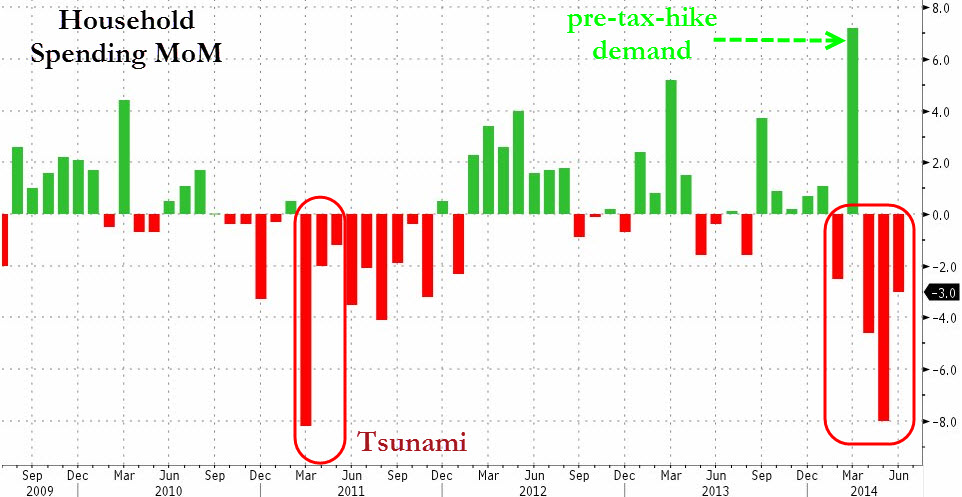
Last week Japans economy contracted the most since three years ago when the record earthquake shook the country. Consumption and investment plunged after an April sales-tax increase aimed at curbing the largest debt burden in the world.

The Cabinet Office stated that Gross domestic product shrank an annualized 6.8 percent in the three months through June. That was less than the median estimate of a Bloomberg survey of 37 economists who expected a 7 percent drop. Unadjusted for price changes, GDP declined 0.4 percent.

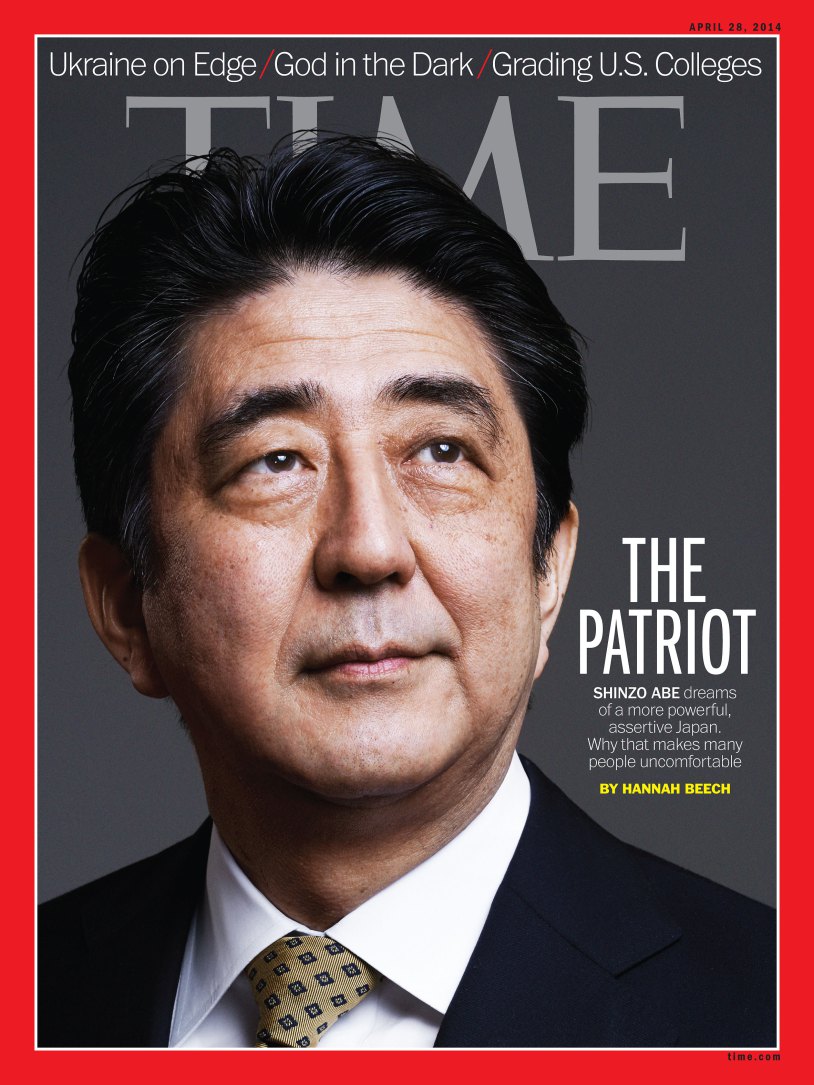
Prime Minister Shinzo Abe is counting on a quick bounce back to form, however the economy stumbled in June, with output dropping the most since March 2011 as companies attempted to pare elevated inventories. The Economy minster, Akira Amari claims that the government is ready to take flexible action if needed.

Indeed, Takeshi Minami, chief economist at Norinchukin Research Institute Co. in Tokyo said “The probability is high that the July-September quarter will see a rebound, but the fall in real incomes and weakness in production could weigh on the recovery.”

japan 1

In the three months through March, following the contraction, a surge in growth was seen as consumers and companies hastily aimed to make purchases before the tax rose. Shinzo Abe, fighting two decades of economic stagnation, is striving to maintain this recovery.

Private investment sank 9.7%, while household consumption nosedived at an annualized rate of 19.2% from the last quarter. These factors clearly highlight the damage done by the 3% increase in the levy.

The increased sales tax hit consumers who’ve seen only a very minor increase in income despite the Bank of Japans liberal stoking of inflation with unprecedented easing causing a big rise in the cost of living. Prices rose 3.6% in June on the previous year and food prices in particular rose 5.1%.

The only seeming silver lining in last week’s data seems to be that net trading contributed to growth for the first time since the launch of Abenomics (the economic policies advocated by Shinzō Abe since the December 2012 general election), this however is most likely due to weaker domestic demand bringing down import volumes.japan 3

The trade impact was a tumble of 20.5% on imports and a fall of 1.8% on exports. This has been a big drain on the manufacturing sector and shows the yen’s 16 percent drop against the dollar over Shinzō Abe reign has yet to push forward outbound shipments.

The weaker yen did offer some offerings of corporate profits last year however this has begun to show signs of fading.

Toyota Motor Corp. last week maintained its forecast for net income to drop from last year’s record high of 1.82 trillion yen, as Japan’s largest car makers braced themselves for a domestic slump in sales following the tax increase. Panasonic Corp. reported last month first-quarter profit that missed analyst estimates as fixed costs rose and demand for consumer electronics in Japan weakened.

Economists predict an annualized growth of 2.9% in the third quarter. It is possible that so long as the economy does not post zero growth or contracts again in the third quarter we could well see Shinzō Abe raise the sales tax even further.

The government aims to raise the sales tax to 10 percent in October 2015 from 8 percent now. The prime minster will make a decision whether to proceed with this plan by the end of the year, based on the economy’s strength.

japan 2

Abe’s Cabinet support level was 51 percent in a survey this month by national broadcaster NHK, dropping 13 points from January 2013 a month after he came into office with a promise to implement bold news monetary easing to tackle 15 years of deflation and stagnation.

The GDP deflator, a broad measure of prices across the economy, rose 2 percent from a year earlier, the first instance of an increase in 19 quarters, according to a report by the Cabinet Office. This gain reflected the impact of the higher sales levy as well as a rise in material prices and personnel costs.

It will be interesting to see how Japan moves forward and whether it is possible that we will see a solution for an economy that has reached such a level of development that stagnation is seemingly unavoidable without a disaster of the magnitude of the tsunami of 2011.

I hope that you have enjoyed reading this post.

Stuart Yeomans

CEO

Farringdon Group

Kuala Lumpur : Malaysia

July Market Outlook 2014

pic 1

Following a bad first quarter in the US economy due to severe winter weather, US growth has now normalized, with the economy growing at a pace closer to its potential than we have seen for several years. The Fed is en route to stop its quantitative easing program by the end of 2014, but has promised to keep rates at record low levels until the mid of 2015.

In the Eurozone growth is still fragile, and chances of a strong recovery are looking more distant. The European Central Bank (ECB) announcement of a series of stimulatory measures in early June has not done much help. Consumer prices in the Eurozone are also approaching deflation.

The UK recovery has continued to be strong, although there
have been signs of cooling in the housing market, and, as yet, real wage increases remain elusive.

The consumption tax hike in announced in April has slowed the Japanese economic growth. There has been significant decrease in spending since the tax increased compare to the fourth quarter of 2013 and the first quarter of 2014. Due to the previous depreciation in the yen and also the tax hike, inflation is currently higher.

In the emerging markets, growth is anemic, particularly the BRIC economies. China is currently looking dependent on the prospect of global trade, which remains stagnated, domestic spending in China on the other hand is under pressure due to the tightening in monetary policies.

Can-America-Survive-If-Americans-No-Longer-Agree-On-A-Core-Set-Of-Shared-Values-Photo-by-DrRandomFactor

Following the disruptions due to severe winter weather, lower-than-expected health care spending and disappointing export performance, US economic growth in the first quarter of 2014 was revised sharply downward to -2.9% annualized. However, growth appears to have rebounded across a broad front since then, resuming a much more normal trajectory of close to 3%. A revival in business capital spending, combined with moderate growth of housing activity and continued steady growth of consumption, has buoyed domestic demand. For example, core capital goods shipments increased by 0.4% in May, and manufacturing output increased by 0.7%, while survey indicators of consumer confidence, as well as regional and Institute for Supply Management surveys of manufacturing and services continue to register healthy expansions, all suggesting solid underlying momentum. Unemployment has fallen to 6.1%, and nonfarm payroll growth has averaged 231,000 per month since December.

Although overall gross domestic product (GDP) forecasts for the calendar year have been revised down due to the very weak first quarter (e.g., the consensus for the year is now 2.2%), the performance of the three subsequent quarters looks likely to approach a vigorous average of 3.5% annualized.

In response to this buoyant backdrop, the Fed has continued to reduce its asset purchases at the measured rate of $10 billion per Federal Open Market Committee meeting, implying an end to its quantitative easing operations by year end. Fortunately for Chair Janet Yellen and her colleagues, the commercial banks have been taking up the baton of credit creation from the Fed by increasing their lending at a rate of 8.7% annualized so far this year, or 5% year-on-year. As yet, this pace of credit growth is modest, giving support to the economy but not so much as to threaten inflation. On the contrary, even though the amount of slack in the economy will steadily be reduced, inflation is likely to remain subdued through 2014 and 2015.

pic 3

Real GDP growth for the euro area slowed to 0.2% quarter-on-quarter in the first quarter of 2014, down from 0.3% in the fourth quarter of 2013, registering only 0.9% year-on-year. The recovery is at best bumping along the bottom and remains acutely vulnerable to a rise in global oil prices or even a mild financial shock. Markit’s Purchasing Managers’ Index (PMI) for manufacturing across the eurozone slowed to 51.8 in June, the lowest level so far this year, with Greece (49.4) and France (48.2) both showing contractions. Consensus expectations for real GDP growth this year amount to just 1.1% — well below the 2.5% rate experienced between 2004 and mid-2008 before the crisis erupted in 2008 and 2009.

There are three broad reasons for the failure of the eurozone to resume normal economic growth in the aftermath of the financial crisis of 2008 and 2009:

  • First, the fiscal and monetary authorities have not provided sufficient stimulus to promote economic recovery. Austerity programs on the fiscal side and the ECB’s reluctance to engage in pre-emptive balance sheet expansion on the monetary side have held back any possible growth of spending.
  • Second, the failure to repair private sector balance sheets — especially among those households, companies and financial institutions that became over-leveraged going into the crisis — has meant that even with low interest rates it is proving very difficult for private sector entities to repay loans and clear up balance sheets.  Finally, the strength of the euro has inhibited any possibility of an export-led recovery.

The composite PMI for June was 52.8, suggesting a slightly better rate of real GDP growth in the second quarter of perhaps 0.4%. However, the signals continue to be very mixed. While costs have been falling and competitiveness has been improving in the periphery, bank lending in the core area has been declining. Also, the risks of longer-term disruption to oil and gas supplies from Russia through Ukraine remain significant unless some kind of geopolitical settlement can be reached in the coming months. The weakness of the upswing is reflected in the data for unemployment, which remained at 11.6% in May, only slightly down from 12% over the past year, in contrast with steeply declining unemployment rates in the US and the UK.

Against this background of weak GDP growth and inflation falling well below the ECB’s 2% target, the ECB finally acted at its June meeting to implement a broad-ranging program of expansion. The package of measures included:

  • A 0.1% charge (or negative deposit rate) on commercial banks’ funds held at the ECB above required reserves.
  • A 400 billion euro targeted lending plan to be implemented in stages over the next four years.
  • The de-sterilization of prior bond purchases under the Securities Markets Program.
  • An announcement that the ECB will explore purchases of asset-backed securities. Forward guidance implying the anchoring of interest rates until 2016.

And, perhaps most importantly, a promise (dependent on macro developments and, critically, inflation) that the ECB is not yet finished. ECB President Mario Draghi signaled that this could even include the purchase of sovereign government debt if inflation fails to pick up.

Because the ECB’s plan was well discounted in financial markets ahead of the actual announcement, it did not have any dramatic impact on bonds, equities or the currency. Moreover, as we saw with the previous long-term refinancing operation program in 2011 and 2012 (which coincided with a decline in bank lending), lending to banks is far less effective in increasing money and credit growth than purchases of government securities from nonbanks — as conducted by the Bank of England. It will therefore be surprising if this plan is enough to revitalize the stumbling Eurozone economy.

 pic 4

The recovery of the UK economy continued during the first half of 2014 with numerous indicators suggesting that the UK’s recovery is stronger than any other leading developed economy. For example, the PMI for manufacturing in June recorded 57.5, well ahead of any euro area economies, Japan, and even slightly ahead of the US.

In the first quarter of 2014, real GDP grew at 0.8% quarter-on-quarter and 3.0% year-on-year, and expectations remain firm for the remainder of the year. Private consumption spending also expanded by 0.8% over the quarter, and this has been echoed in continuing strong growth of retail sales (up 5.0% year-on-year in volume terms in the three months to May). Meanwhile, fixed capital formation expanded by 2.4% in the first quarter, showing that the recovery is by no means limited to consumer spending only.

 In effect, the economy is firing on all cylinders with manufacturing, services and construction all growing strongly. If the current pace of activity continues, the UK will exceed its precrisis peak level of GDP in real terms during the second or third quarter.

employmentProgress in the labor market has been particularly encouraging, with employment rising strongly from 28.8 million at the trough in 2009 and 2010 to almost 30.5 million in the three months ending in April, an increase of 1.7 million jobs. At the same time, unemployment has fallen rapidly to 6.6%, below the level at which the Bank of England’s Monetary Policy Committee (MPC) had previously said they would start to consider raising interest rates. The housing market has also shown strong buoyancy with the Nationwide index of house prices increasing 11.8% in the year to June, although most of the price increases have been concentrated in London and the southeast. In addition, housing starts in England increased to 36,450 in both the first quarter of 2014 (up from lows of 17,000 in the first quarter of 2009), but still below the pre-crisis peak of almost 49,000 in the first quarter of 2007.

To cool the housing market, the Bank of England’s Financial Policy Committee introduced in June macro-prudential restraints on mortgage loan-to-income ratios — setting a maximum of 4.5 times income for 85% of new residential mortgages — and required banks to conduct stress-testing of householders’ ability to repay in the event of a 3% rise in mortgage rates. Mortgage approvals had already fallen from 76,000 in January to 62,000 in May, and there have been signs that prices in London are softening.

Reflecting strong economic activity, rising property prices and the expectation that UK interest rates would be raised before year end, the pound has appreciated to the highest levels since 2008, retracing about one-half of its depreciation during the crisis.

Looking ahead, the pace of economic growth is unlikely to accelerate much from here, but various indicators suggest that the growth will be maintained at somewhere between 2.5% and 3%. The available spare capacity in the economy and in the labor market, combined with the appreciation of sterling and moderate rates of money and credit growth, should ensure that inflation risks remain minimal through 2014 and 2015.

Turning to monetary policy, the Bank of England’s once-clear forward guidance has been overtaken by a series of mixed messages not only from MPC members, but also from Governor Mark Carney himself. After he abandoned the 7% unemployment threshold in February in favor of a set of 18 indicators, while promising that rates would stay low for an extended period, the strength of the economy has forced a recent volte-face. In June, the governor advised that rates could rise by year end. Inevitably, this chopping and changing has undermined the bank’s credibility in the eyes of market participants. Forward guidance now means little more than that the bank will rely on its own discretion in assessing the timing of rate hikes.

japan

In Japan, consumer spending picked up strongly ahead of the 3% increase in the consumption tax on April 1. This spending surge drove up real GDP by 1.6% quarter-on-quarter, or 6.7% at an annualized rate in the first quarter of 2014. Since then, spending has slowed abruptly, and the critical question is: When will Japan return to a more normal growth rate? Given that the initial impetus from President Shinzo Abe’s “Abenomics” had already been starting to fade, the real test of the policy will be how quickly the economy returns to a sustainable trajectory over the coming months.

20140728_japan1

Retail sales dropped an astonishing 13.6% in April as consumers stayed away from department stores and supermarkets, and the declines continued into May. Vehicle sales plunged in April, May and June, while industrial production fell 2.8% in April but recovered by a respectable 0.5% in May. However, it is widely expected that in the aftermath of the tax hike, real GDP growth will fall by 3.2% quarter-on-quarter in the second quarter and 0.8% in third quarter, pulling down the year-on-year growth rates to 0.7% and 1.1%, respectively. For the year 2014 as a whole, I expect 1.8% real GDP growth.

From a longer-term perspective, the success of Abenomics is still in doubt. Although there has been a temporary growth spurt, much of this was due to the depreciation of the yen in 2012 and 2013 and the spending surge ahead of the April tax hike. A stronger yen and a continuation of the spending slump after April and May would raise doubts about the sustainability of the program. During the annual spring negotiations between unions and larger companies, wage increases were moderate, with the result that wages at smaller firms did not increase much. Consequently, the May index of wage earnings in all industries increased by just 0.6% year-on-year, implying a continuing decline in real terms.

Moreover, the deterioration of the external trade and current accounts is continuing to act as a drag on growth. This is due mainly to increased imports of oil and gas to replace the power lost from Japan’s nuclear energy providers whose plants were closed down following the tsunami damage to the plant at Fukushima. Despite the yen’s 30% depreciation against the US dollar, the current account has switched from a surplus of 4% of GDP in 2010 to deficits since 2012, and is now running at about 1% of GDP. Meanwhile, the trade balance has also switched to large and persistent deficits.

So far, most of the inflation can be attributed to the weaker yen and higher imported commodity prices — especially energy products and food items — not stronger domestic demand. While the weaker yen may help to achieve Prime Minister Abe’s goal of 2% inflation in the short run, unless wages and personal incomes rise more than 2% on a continuing basis, the result could simply be an episode of temporary imported inflation, followed by a resumption of weak domestic spending and growth as inflation subsides again.

On the monetary policy front, the Bank of Japan has refrained from any significant action since it announced two enhanced lending schemes on Feb. 18 — the Growth-Supporting Funding Facility and Stimulating Bank Lending Facility — both designed to encourage more bank lending. Since then, there have been few signs that commercial bank lending has picked up much, but the whole period has been disrupted by the surge in spending followed by the slump in spending in reaction to the consumption tax. In this atmosphere of uncertainty, the authorities have understandably announced that if growth were to weaken persistently, they would be prepared to adopt further easing measures.

pic 6

The momentum of the Chinese economy remained subdued in the first half of 2014 as policymakers tried to support the economy with modest fine-tuning measures on the one hand, while taking care not to engage in large-scale stimulus measures on the other. Among the easing moves, the deliberate depreciation of the Chinese yuan from around 6.05 per US dollar in January to 6.25 in April and May was probably the most important. Although the depreciation was widely considered to be an attempt by the authorities to inject some two-way uncertainty into the yuan/dollar exchange rate, it came at a time when Chinese exports were continuing to struggle, growing at low single-digit rates in an environment of weak world trade growth and rising wage costs in China. Since May, the currency has resumed a mild recovery, strengthening to China yuan renminbi 6.20, but the prospects for a sustained recovery of exports depend more on the revival of overseas demand than anything the Chinese government can do in the short term.

At home, the housing market has weakened from its recent peak in 2013, and excess capacity problems in various parts of the manufacturing industry have persisted, adding to the pressure on banks’ asset quality. The overall official nonperforming loan (NPL) ratio of the banks as published by the China Banking Regulatory Commission is just 1%, but sectoral data suggest a more worrying picture, with NPLs rising to 2% to 5% in key manufacturing sectors such as steel.

The practice of evergreening NPLs — lending more to enable borrowers to pay interest due — especially to state-owned enterprises (SOE) is widespread, and the growing involvement of cash-rich SOEs in shadow-bank lending to financially vulnerable small and medium enterprises have also contributed to the general perception that Chinese corporate and financial balance sheets are less healthy than the official ratings suggest.

Japanese 10,000 yen bank notes and coins are displayed March 3, 2006. The yen fell on Friday after J..

Against this background, economic activity in China showed further signs of moderation. After real GDP growth of 7.4% in the first quarter of 2014, the official manufacturing PMI, which focuses on larger, state-owned firms, remained barely above the 50% threshold between expansion and contraction in April and May, though it did improve to 51.1 in June. Hong Kong and Shanghai Banking Corporation’s (HSBC) PMI, which focuses on smaller, private companies, fell below 50 from January to May and as low as 48 in March, returning to 50.7 in June. At the same time, aggregate house prices in 70 cities declined in May (month-on-month) for the first time since mid-2012, while property transaction volumes remained sluggish. These indicators suggest China continues to work through a growth adjustment phase.

I hope that you have enjoyed reading this post.

Stuart Yeomans

CEO

Farringdon Group

Kuala Lumpur : Malaysia

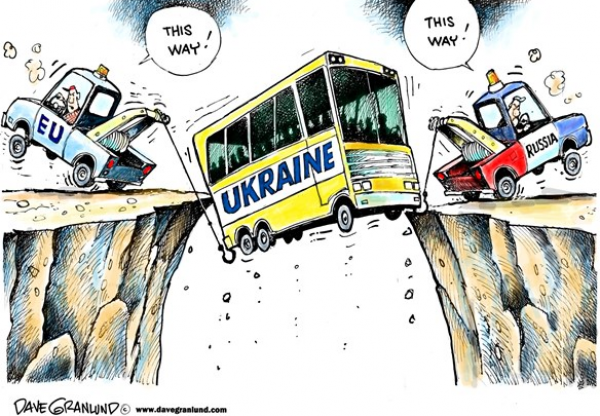
The Economic Impact of An Ever Escalating Ukrainian Crisis

cartoon ukrain

The world has been in a state of shock ever since 298 people were killed last Thursday after a Malaysia Airlines plane was shot down over eastern Ukraine by what is thought to have been a Russian supplied Buk anti-aircraft system fired by Pro Russian Ukrainian rebels. The level of malicious intent to this attack is still in question with some saying it was just too sophisticated a weapon in too unsophisticated hands who wanted simply to show their muscle to the world, not commit an abhorable act of terrorism. Russia has been extremely difficult to read, most experts believe that they are directly supporting the rebels, although they deny having supplied the rebels with any weapons at all, least of which a Buk missile launcher. On Monday President Obama questioned just what exactly they are trying to hide, warning Mr Putin that Russia could face additional sanctions if they fail to take steps to resolve the crisis in Ukraine.  The fighting in Ukraine has already been reported to have claimed over 1000 lives. Its escalation has caused a great deal of concern, exemplified well by the case of six Shakhtar Donetsk football players who have refused to fly back to Ukraine after a friendly match in France due to concerns over the conflict.

So how has this crisis affected the economy? Well in Russia the effects of the Wests sanctions are certainly being felt. The richest in Russia are losing money at an alarming rate with $14.5 billion being lost compared with a gain of $56.5 in US wealth since the start of the year. This change can to some extent be pinned on what is happen150170538_putin_551796cing in Ukraine. Areas of the market, such as energies and commodities, which are currently surging, are being missed out on by Russia. Also forgetting about oil and gas we must remember that Ukraine is the 5th biggest exporter of Wheat in the world and Russia is the world leader in the production of palladium, all of these exports have taken big hits. Aside from their direct economic impact, the sanctions are causing a great deal of fear in the wealthy people of Russia who can see their billions slipping away. Billionaires such as Alisher Usmanov who is the 46th richest person in the world has seen a drop of 2.5% of his $17.7 billion wealth. Another is Vladamire Lisen who ranks at 96th richest and is worth $12.1 billion and has seen a change of $-2.4 billion. A third is Leonid Mikhelson whose fortune of $15.9 billion has decreased by $2 billion. It is a question as to how much longer the uber rich of Russia will accept Putin’s continuing policies before they rebel against him to save their fortunes from complete collapse. Indeed Russia’s economy has been stagnating for several years and even before the crisis in Ukraine, Russia was a poor bet for international investment. Peter Broockvar, the chief market analysis with the economic research firm The Lindsay Group was quoted saying “Geopolitical influences on markets are usually fleeting, and the news yesterday (July 17th) will likely be, too, but the intensification of the conflict and increased amount of sanctions will further damage the Russian economy, which was already on its heels.” This has led to Russia taking steps to diversify its economically essential energy market, just this past May Moscow signed a 30 year energy agreement with China reported to be worth around $400 billion, however the pipeline required for this exchange is years away from being a reality.

As previously stated the EU is reluctant to follow the US in its increasingly tougher sanctions on Russia. This is because despite Obama stating that the new sanctions placed are “designed to have the maximum impact on Russia while limiting any spill over effects on American companies or those of our allies,” this is still a distinct fear. Russia is a major export market for the European Union and it also relies on Russia for around one fourth of its overall oil and gas suppliPro-Russian separatists look at passengers' belongings at the crash site of Malaysia Airlines flight MH17, near the settlement of Grabovo in the Donetsk regiones, meaning that there is a real danger of Moscow restricting or even turning off these supplies in retaliation for increased economic sanctions. A big part of the problem facing the Eurozone is that they are still economically weak, working hard to recover from the recession. Mark Luschini, a chief investment strategist at the broker deal Janney Montgomery Scott explains; “The EU can ill afford to have a mishap in terms of their economic activity at a time when they’re growing at such a timid pace. It would not take much to tip them back into a contractionary mode, which they fought so hard and have seemingly broken out of. That would obviously create great anxieties across the Eurozone and once again ignite concerns about their financial system.”

Another area which could cause issues for European stability is whether we could see Ukraine coming to the point of economic collapse and require another bailout. In April the IMF agreed to lend Ukraine $17 billion over the next two years to stave off the threat of a financial meltdown. However with the ever increasing crisis the government is finding it harder and harder to meet the strict terms of the bailout. The IMF now expects that the Ukrainian economy will shrink by 6.5% this year, compared with 5 % at the time the emergency load was originally agreed. For the current program to succeed it relies on the conflict beginning to subside in the coming months.

For now I would recommend investors to closely monitor the ongoing crisis, digest the information and avoid a knee jerk reaction, the market has a tendency to sell first and ask questions later.

I hope that you have enjoyed reading this post.

Stuart Yeomans

CEO

Farringdon Group

Kuala Lumpur : Malaysia

Petronas: The joints are creaking but is there any oil?


670px-Visit-the-Petronas-Twin-Towers-Step-1


The ocean is a dangerous place at the best of times and for an oil tanker carrying a load of 2.5 million litres of petroleum with a value to the tune of 1.5 million US dollars you can become something of a target.  Indeed just such a tanker, bound for Sandakan, was hijacked and robbed by pirates a few days ago. They are reported to have siphoned off more than 60% of its gas oil cargo before damaging the ships engines and navigation, leaving the stranded vessel adrift until the Malaysian navy was able to come to its aid two hours later.

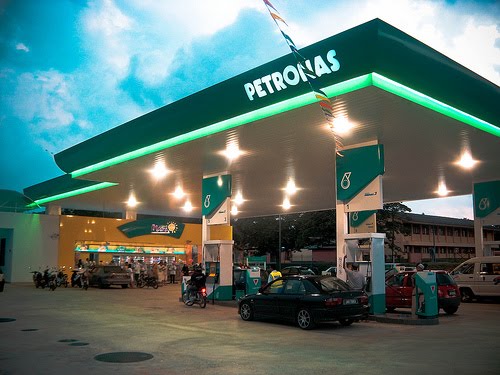
The question is, just how much longer will such Malaysian oil tankers be seen in our seas? Malaysia’s national oil company, Petronas has in the past been relied on by the Malaysian government for nearly half its revenue, however Conoco Philips Malaysia confirmed a few years ago that without new discoveries, Malaysian oil production will decline at approximately 10 per cent per year, from 550,000 bpd in 2008 to roughly 490,000 bpd in 2009 and 450,000 bpd in 2010. Furthermore, current CEO of Petronas, Tan Sri Shounsul Abbas has pointed out that without expanding its capabilities, Petronas will practically be forced to shut down operations in about 13 years. On top of this, with rumour being that Malaysian oil is set to run out on that time frame, Mr Abbas’ comments seem only to verify this theory. Oil revenue is the backbone of Malaysian government spending, all but funding state intervention and national infrastructure, so an oil less Malaysia would be unable to support government spending. The scary question is how would the Malaysian people cope without the social welfare programs that rely almost completely on oil?

So what lies in store for Malaysian oil? Well, Mr Abbas is widely acclaimed for his effor1petronasts to secure and protect Petronas’ independence and interests in spite of growing government pressure and interference. The Malaysian government are frustrated with the company who have capped their payments to 30% of net profit, furthermore Mr Abbas has targets many groups of people in his attempts to protect Petronas’ integrity and independence. He has cited his unwillingness to cut back room deal and send contracts to connected people, instead he has focussed on building up an open bidding process that will bring down costs for the national oil company. This indeed is a breath of fresh air in the corruption filled Malaysian environment.


The Malaysian government needs to step back and stop interfering with Petronas and if they want the company to run in the same way and compete in the same league as companies like Royal Dutch Shell and Exxon Mobil Corporation then they must untie Mr Abbas’ hands.

I hope that you have enjoyed reading this post.

Stuart Yeomans

CEO

Farringdon Group

Kuala Lumpur : Malaysia

What Everybody Ought To Know About Malaysian Property Pricing

Stuart Yeoman - Kuala Lumpur

As the ringgit declines and as US quantitative easing reduces, the era of low interest rates and cheap credit via bonds – the drivers of speculative investment – may soon end. Can that lead to the popping of the property bubble?

For the past few years, most Malaysians have realised what business journal Forbes has now articulated: Malaysia’s economy, together with high property prices, low interest rates, rising federal government and household indebtedness, shows all the signs of a classic credit and property bubble. The Finance Minister for Malaysia, published the 2014 Budget at Parliament. Among few of the significant changes the country will face, such as the introduction of the Goods and Services Tax (GST), he also mentioned that the minimum price for foreigners to purchase propeties will double from the current RM500,000 to RM1million.

The real property gains tax (RPGT) rate has increased to 30% for citizens who sell their units within three years. For disposals within the holding period of up to four and five years, the rates have risen to 20% and 15% respectively. For disposals that took place in the sixth year and so on, no RPGT will be imposed on citizens, but companies will pay tax at 5%. Foreign buyers are subject to a RPGT of 30% on the gains from property disposal during the holding period of up to five years, and for sales in the sixth year and subsequently, a 5% RPGT is imposed.

Stuart yeomans - property bubble

The years 2014-2016 is the crucial time for the repayment of housing loans. This small factor can cause a financial meltdown. Most banks double interest rates from 4.25% to 8.5% per month if you fail to pay your installments for three months. Many people may default on their loans and market value of properties held by banks will decrease.

The International Monetary Fund (IMF) has warned of another possibly disastrous housing crash given that property prices are still well higher than their historical averages in many countries in relation to incomes and rentals. The world financial institution says the situation has emerged as one of the biggest threats to economic stability.

Is Malaysia faced with a risk of a property market bubble and should we be worried of a damaging burst of the bubble given that the inflated prices of property apparent in the last two years may not be sustainable?

National House Buyers Association (HBA) honorary secretary-general Chang Kim Loong said that in the event borrowers are unable to pay their mortgage installments and the banks are forced to auction off their properties, “there is a risk a property bubble in Malaysia can burst, just like what happened during the sub-prime crisis in the US.”

However, CB Richard Ellis Malaysia executive director Paul Khong does not predict any serious bubble in the market, specifically this year, and further predicts the market to continue to march ahead towards the second half of the year.

“The first half of 2014 has been relatively quiet as predicted earlier, as the property market has been absorbing the market cooling measures silently hoping for some good news. We currently see the secondary market becoming slightly active and prices in select locations are now looking relatively attractive,” Khong says.

In my opinion the Malaysian property bubble is not a question of “if” it’s a question of “when”.

I myself have been shocked at the property prices that people are expecting. I visited a 4 bedroom property in Ampang the other week and walked around a property that needed a new drive, new marble flooring, no air-conditioning, no lights, a new kitchen, a new bathroom, it had dry rot on the balcony, needed new swimming pool tiles and a whole lot more!  Literally everything and the cost of this dilapidated half finished home…….  RM3.4 million for a property that was not in a gated community and in a rundown road.

Anyone with sanity would conclude, that for USD1 million they could get much better deal in the UK or America.

I have already sat on the side lines at some distressed sales here in Kuala Lumpur and I have seen units in my own condo go for RM1.2 million, for 2,600 square feet, my home is situated in the center of KL and an identical unit was valued at over RM2 million two years ago. This condo is around 6 years old, still looks modern and is a 15 minutes’ walk to KLCC. This same residential block recently sold a penthouse which was 6,400 Sq Ft at auction for RM2.4 million; a distressed sale from an expat that was sold the dream!

In my opinion, the cracks of the Malaysian property market are not just starting, they are erupting as we speak; with a number of factors such as GST being implemented, higher mortgage rates, the weakening RM and expats leaving the capital. This all means weaker demand and eventually the property bubble will burst.

Property agents say to me that the market is fine; however, when you get to speak to a more honest and experienced agent, they will open up. A large number of agents agree that the home prices are ridiculous and that the market needs a correction. The well-known property websites that rent and sell, are all inflated and have some ridiculous values put on them. This is not the fault of the site, it is certain agents/owners that demand silly prices.

You can negotiate apartments from RM10,000 a month for RM5,000 a month, so how can you trust what is listed?

There is little honesty on these websites and in my opinion, they look to take advantage of the unsuspecting consumers and people with little knowledge on properties in Malaysia.

So why are prices doomed to fail in Kuala Lumpur?

To start, the expats are diminishing in KL and its surrounding areas and so is the demand for overpriced properties. Another realisation is that the larger oil and gas companies are now giving their expat employees a monetary package, so they can go and hunt for a property and negotiate their own price. Gone are the days where big oil and gas firms have a set budget for property and pay RM15k for a property worth RM8k a month.

Agents had a field day with this and this fueled unrealistic rents. However, these days are now numbered and rents are very low indeed.

Now that this RM15k is paid directly to staff, they are being a lot more careful on squandering their own pay; why pay RM10,000 or RM15,000 per month when you can get nearly 3,000Sq Ft for RM5k unfurnished or RM6k furnished?

The property market here is very unstable and simply googling the bad news and negative posts will open up a realm of information. Please remember that the agents and companies that post the positive property news and figures, do have an agenda and that is to make as much commission from sales and rentals as possible, so painting a positive picture is the best course of action!

The above is just my humble opinion on the property market in KL and I stress the importance of research; you yourself can pick up a bargain, but you must take your time and shop around. If you need any additional information, please feel free to contact me.

I hope that you have enjoyed reading this post.

Stuart Yeomans

CEO

Farringdon Group

Kuala Lumpur : Malaysia