US Payrolls Rises!

stuart yeomans jobs

The US economy looks better placed to withstand a slowdown projected for the second quarter as the labour market keeps making progress. Employers took on an additional 165,000 workers in April, more than forecast, according to Labour Department data. Revisions showed 114,000 more workers were hired in February and March than previously estimated. The jobless rate fell to a four-year low of 7.5% last month.

Payrolls are now expanding at a faster pace this year than in 2012, which will help the US economy emerge from a softer period of growth projected for the second quarter. Stocks rallied after the report, sending the Dow Jones Industrial Average briefly above 15,000 for the first time.

Other reports this week showed auto sales and manufacturing cooled in April, indicating the expansion will slacken as consumers are pinched by higher taxes and factories rein in stockpiles and production. Nonetheless, the pickup in hiring means American companies are confident the world’s largest economy will overcome across-the-board federal budget cuts to rebound in the second half.

Economists project gross domestic product will cool to a 1.5% annualised pace for the period from April through June, after advancing at a rate of 2.5% in the previous three months, according to a Bloomberg survey from April 5th  to April 9th.

The jobs report removed some of the worst concerns from the economic outlook. The Labour Department revised the March employment gain up to 138,000 from the initially estimated 88,000. February’s advance was pushed up to 332,000 from the 268,000 prior estimate, making it the strongest month for employment since November 2005, excluding the census-related temporary boost in government hiring in mid 2010.

The Bank of England will maintain its target for asset purchases next week after surveys indicated the recovery is gaining momentum, a survey of economists shows. The nine-member Monetary Policy Committee led by governor Mervyn King will keep the target for quantitative easing (QE) at £375bil (US$582bil), according to all but one of 44 economists in the Bloomberg News poll.

The MPC will also keep its benchmark interest rate at a record-low 0.5%, another survey shows. Services, the largest part of the economy, unexpectedly strengthened in April as new business rose, while manufacturing and construction shrank less than forecast, Markit Economics said this week.

Those reports followed data on April 25th showing that gross domestic product increased 0.3% in the first quarter, averting a third recession since 2008. “The encouraging outturn for the services index is

a hopeful sign that the recovery is now genuinely under way,” said Nida Ali, an economist at the Ernst & Young Item Club in London.

“Given the relatively strong run of economic indicators over the past few weeks, the chances of any additional QE being authorised this month now look slim.” The MPC will announce its decisions at noon on May 9 following its two-day meeting.

Policy makers will have new projections for economic growth and inflation, which they will publish in the quarterly Inflation Report on May 15. The MPC has split in recent months on the need for more QE, with King and two others pushing for a £25bil increase. While Chancellor of the Exchequer George Osborne gave policy makers more flexibility in March to support the recovery, the improving economic data may weaken the minority’s case.

The purchasing managers index for services rose to 52.9 in April, the highest in eight months, from 52.4 in March, Markit and the Chartered Institute of Purchasing and Supply said yesterday in London. Readings above 50 indicate expansion. The construction index increased to 49.4 from 47.2, while the manufacturing gauge advanced to 49.8 from 48.6.

I hope that you have enjoyed reading this post.

Stuart Yeomans 

CEO

Farringdon Group

Kuala Lumpur : Malaysia

Is Islamic Finance Relevant Today?

As recently as five years ago, the Islamic finance industry was still viewed by some as an infant industry. However, the industry has developed significantly in recent years to establish itself as a globally viable alternative to the conventional finance industry. Islamic finance is developing at a remarkable pace. Since its inception three decades ago, the number of Islamic financial institutions worldwide has risen from one in 1975 to over 300 today in more than 75 countries. In 2009, according to Standard & Poor’s Ratings Services, Shariah-compliant assets reached about $400 billion throughout the world. Three years later, in 2012, Islamic banks have $1.2 trillion in assets, an increase of 200% and the potential market is $4 trillion. This enables them to finance major infrastructure projects through direct financing or ‘sukuk’ (Islamic law compliant bonds).

What are the reasons behind the recent growth in Islamic finance? One is the strong demand from a large number of immigrant and non-immigrant Muslims for Sharia-compliant financial services and transactions. A second is growing oil wealth, with demand for suitable investments soaring in the Gulf region. And a third is the competitiveness of many of the products, attracting Muslim and non-Muslim investors.
stuart yeomans - islamic finance1

Islamic banking adheres to the principles of Sharia law, with the main characteristics being the prevention of applying interest on loans, and limiting excessive financial speculation. Due to these reasons, most of Islamic banks have been able to withstand the global financial crisis in 2008. The excessive use of structured debt and securitisation which drove unsustainable levels of financial leverage by the conventional banks is one of the causes of the financial crisis. The global economic crisis was also triggered by global imbalances and structural weaknesses that for the most part remain in place and still constitute a potential source of global economic risk. This would not happen under Islamic banking. The central concept in Islamic banking and finance is justice, which is achieved mainly through the sharing of risk rather than risk-transfer which is seen in conventional banking. Stakeholders are supposed to share profits and losses, and charging interest is prohibited. Islamic products are based on real transactions that involve the real economy.

However for Islamic finance to go forward, the industry still needs to overcome its biggest challenges, most importantly is developing a framework for governing, supervising, and regulating Islamic banks. Nevertheless, Islamic finance remains relevant today not only because of its religious aspects, but also as an alternative investments to investors.

I hope that you have enjoyed reading this post.

Stuart Yeomans 

CEO

Farringdon Group

Kuala Lumpur : Malaysia

Gold vs Silver

stuart yeomans gold silver

Over the years, gold and silver have been invested mainly to hedge against inflation, deflation or devaluation. Anytime there’s economic uncertainty and a risk of higher inflation, precious metals become increasingly popular because of their perceived safety and reputation as strong inflation hedges. However, nowadays, investors view these commodities as an alternative to investing in equities. The reason is not only because of their ability to withstand economic recession but the returns they generate. The question is, which of these metals are better to invest in?

For the first time in history, silver mines are coming up empty even as demand surges. Used in over 10,000 industrial applications, from microchips to microwaves, silver is an indispensable metal that’s exploding in value. In 1950, there are 10 billion ounces of silver in storage, which is equivalent to 140 months of supply. However, now, there are enough supplies to remain for only 20 months. In 2010, the demand for silver reached to 1,047.7 million ounces making it the largest demand in history. Experts predict that by 2015, global demand will increase 36%, from 487 million ounces in 2010, to 666 million ounces. After all, modern technology cannot exist without silver. Consumption of silver has grown so much and we have consumed much more than what we are mining from the ground. Global industrialization and technological advancements of society has come to the point where we have consumed most of the historical silver reserves mined from early civilizations (95% of the silver ever produced has already been consumed).

In the past 10 years, the price of gold has climbed more than fivefold from less than $300 to more than $1500 an ounce. Silver has actually done quite a bit better, rising from less than $5 to nearly $30 an ounce which is about sixfold price gain over the past decade. It has even reached its record high $50 in 2011. Silver is much more volatile than gold. The metal’s 100-day volatility trend is twice as high as gold’s. According to Bloomberg data, investment worldwide made through silver-backed exchange-traded products reached a record high of 18,854 tons in November, and holdings now are estimated to be around $19.2 billion. The growing investor sentiment is down to several factors.

The price of silver could be set to soar for several reasons. The big advantage of silver is it’s not mainly a store of value like gold. Besides offering an inflation hedge and helping to calm investors, silver has many applications in industry, medicine and dentistry thanks to its electrical and thermal conductivity, usefulness in making metal alloys and other unique properties. Commercial and industrial applications account for about 60% of silver demand each year which is more than half of its demand. This source of demand is expected to strengthen during the course of 2013, thanks in part to expectation that the re-election of the Obama administration will keep monetary policy loose in the US.  With major economies such as the UK, eurozone, Japan and the US pumping money into their financial systems – in the form of quantitative easing in Britain and the expansion of the bond-buying program in the US – their currencies are being devalued, and investors increasingly turn to commodities, such as gold and silver, to offset this and to hedge political risks. With the US Fed’s quantitative easing actions, it’s worth noting that silver has risen with each QE instance: 53 percent for the first round, and 24 percent for the second.

Furthermore, while the United States and other Western economies have been struggling, China, India and many other emerging countries have been expanding by leaps and bounds. Their industries need lots of silver. Significant inflation isn’t here yet, but it could be on the way. China’s inflation has already risen and expected soar further this year. The US government has been printing billions of dollars to cover its huge debt, creating more new money in the past couple years than at any other time in U.S. history. This sets the stage for higher inflation by diluting the money supply and reducing the value of the dollar. The economy is at a crossroads of sorts: There are signs of recovery, yet conditions are ripe for inflation. In this situation, silver may be a better investment than gold because there are two sources of demand – investors and industry.

As a final point of fact, silver, which could one day get awfully close to the price of gold, remains very much a screaming buy.

I hope that you have enjoyed reading this post.

Stuart Yeomans 

CEO

Farringdon Group

Kuala Lumpur : Malaysia

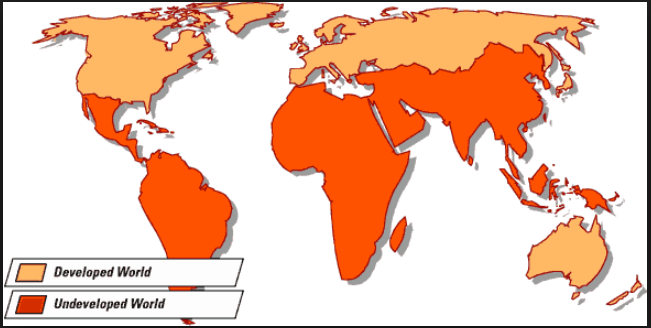
Developing World Vs Western Economies!

map stuart yeomans

With the European debt crisis dragging on for its third year and sequestration never far from the front pages clearly demonstrating the fiscal management or lack of from America, it’s worth noting the financial health of the rest of the world is actually not that bad.

Far gone are the days when the developing world would be in the headlines for defaulting on payments and having countless debt crises. With Europe and the U.S going down painstaking paths at the moment, the developing world countries have been allowed to follow policies that have padded their citizens from the impact of the global slowdown.

In the Euro zone, gross external debt is worth about 125% of GDP, compare that to the developing world where the average external debt to GDP is 42% and less than one in three countries have a ratio that is over 50%.

With these lower initial debt levels, developing countries were able to weather the 2008 crises better and bounced back faster than advanced countries. And most recently due to the lower debt, higher reserve, credible bank leadership and stronger reserves – many developing countries have been able to increase spending and reduce interest rates to avoid shrinking their economies.

Hopefully this will continue, however they cannot be complacent and what’s going on in the Eurozone and U.S should be enough for the decision makers in these countries to take notice and not be complacent.

I hope that you have enjoyed reading this post.

Stuart Yeomans 

CEO

Farringdon Group

Kuala Lumpur : Malaysia

Market Outlook for 2013

2013-forecast-stuart yeomans

In terms of “Economic Commotions”, 2012 has been as important as 2008. In 2008, the breakdown of global capitalist system was triggered by the collapse of Lehman Brothers. Whereas in 2012, we have seen various creative actions from policymakers working hard “not” to fix but to delay economies from collapsing!

Are policymakers living in a “fantasy land” where the world economy will fix itself through the operations of the business cycle, and the “magic of the market” coming to the rescue? We are now into the fifth year of the financial crisis, and we have not – and are well away from – seeing a fix to the crisis! We are currently in an era where the financial system is being sustained only because of interventions by the world’s major central banks through an activity called “quantitative easing” – which simply means creating more money!

Policymakers fail to see that this method no longer creates conditions for recovery or increase in business activity, and they are simply financing accumulation of profits through speculation, in other words creating a bubble – the very same thing that led to the 2008 crash.

If pumping liquidity into the financial markets helps, why aren’t we seeing a recovery in unemployment numbers?

After a contraction of 0.5% in 2012, the euro area is expected to grow by at most only 0.3% in 2013 and 1.4% in 2014. In 2012 the US grew between 2 and 2.2%, however this is expected to fall to 1.7% in 2013. These figures are well below the levels experienced during every other “recovery” in the post-World War II period. Japan, whic

h had experienced a contraction last quarter, is expected to grow by only 0.6% in 2013, after growing by 1.5% in 2012. These are figures provided by the UN, and although the figures may vary a little, reports from all other major international financial institutions highlight the same trend.

These weak numbers were due to contracting world trades. In 2009, the world trade fell by 10%, but then rebounded significantly in 2010. However in 2011, the growth of exports started to slow and then decelerated sharply in 2012, mainly due to declining import demand in Europe and anaemic aggregate demand in the United States followed by Japan.

Most economists believed that the BRIC economies could provide a new base for the expansion of global capitalism, however falling growth rates in these economies has proved otherwise.  Last year, the growth rate in China dropped from 10.4% to 7.7%. Brazil, where growth reached 7.5% in 2010, recorded a rate of just 1.3% last year, while India’s growth has fallen from 8.9 to 5.5%.

In our point of view, the global businesses are being cynical towards the future due to previous financial crises and this is not allowing headway towards a recovery. This mindset has to change…further stimulus will only delay a recovery causing the bubble to expand.

Between 2007 and 2011, private investment in the 27-member European Union fell by more than €350 billion, larger than any previous decline in absolute terms. This represented more than 20 times the fall in private consumption and four times the decline in real gross domestic product. Private investment is now 15% lower than in 2007, meaning companies will not generate some €543 billion in revenues between 2009 and 2020 that they otherwise would have.

A recent report from McKinsey Global Institute noted that European companies had excess cash holdings of €750 billion for which they could not find profitable outlets. The piling up of cash points to a breakdown in the basic dynamic of capitalist production, in which investment leads to the accumulation of profit, which then results in further investment and economic expansion.

The US economy is suffering from the same mindset, where companies are piling up cash while profits are being accumulated through investor sentiments and speculation in financial markets rather than the technicality of the companies themselves i.e. the companies’ capability of generating more profits by increasing products and services.

In 2012, we have seen many measures from policymakers to spur growth, however none of these have brought a sign that we are in a recovery phase.  The current mindset has to change; private investment will need to increase to lead the economy towards a recovery. The worst mistake it could make is to believe that half-measures will suffice or that the capitalist economy will eventually right itself. Though growth in the Emerging Markets continued to remain positive through their domestic demands, they will eventually suffer a hard landing due to diminishing demands from developed markets.

Regional Outlook

UNITED STATES

The US economy will stay on a moderate growth path next year amid lacklustre consumer spending and weak business investment.

The US Federal Reserve has broadcast its intentions to continue increasing the overall size of its balance sheet in an attempt to stimulate the sluggish economy. The US federal funds rate, its main policy rate tool, remains at the exceptionally low level of zero to 0.25% and there are no expectations that it will shift in 2013. The Fed is on hold as far as the eye can see. We certainly don’t see the rates rising this year.

In early February we are ought to see another fiscal fiasco on the US debt ceiling. Should the Congress not take action to raise the country’s borrowing limit, the US will default on its debt. We believe the Republicans will not be willing to take the blame of forcing the US into defaulting it debts.

EUROPE

A Greek exit and deterioration in Spain are the currency union’s biggest short-term risks. Besides Greece, the focus will be on Spain – specifically, if or when it applies for a bailout package that would make it eligible for the Outright Monetary Transactions (OMT) introduced by the ECB. Further easing is expected, given recession in the euro area. The ECB has followed a Taylor rule over the last decade, taking into account not only inflation but also the business cycle status. Therefore, it is expected that the ECB’s monetary policy will be accommodative in the near future.

We’ve seen four consecutive quarters of negative GDP growth. We might see a 25-basis-point rate cut that could come in the first quarter of 2013, which would bring down the official policy rate to 0.50% from its current 0.75% level. But, additional monetary accommodation could be seen as well.

The ECB stands ready to step in with further assistance if market conditions warrant. The ECB has broadcast its willingness to buy government bonds on the open market through its so-called OMT program. Most analysts agree that a rate cut to 0.5% would mark the low point for the ECB in the current monetary policy easing cycle and then rates would be on hold for the remainder of 2013.

EMERGING MARKETS

In this interconnected world, what happens in the key economies of the US, Eurozone, and Japan this year will almost certainly impact the global economy at large, but the ebb and flow of action and reaction is shifting. Emerging markets, for instance, are generally lessening their trade dependence on the US and Europe, and there are other countries that can drive global growth—some of which may even surprise us in 2013. In addition, a likely continuation of easy monetary policies in the developed markets this year could result in more investment dollars into global equity markets including emerging and frontier markets.

Emerging markets in general have had three characteristics in their favour: generally high economic growth rates, large amounts of foreign reserves and low foreign debt. Many emerging economies appear to be on the cusp of consumer booms as well as productivity advances, which should bode well for future growth potential.

The middle class is growing in many emerging markets, and with it, the potential to fuel a consumer spending boom; the numbers in developing and Southeast Asia look particularly compelling to us. The latest estimates from the International Monetary Fund project developed economies as a whole to have achieved GDP growth of only 1.3% in 2012, with growth expected at 1.5% in 2013. In contrast, emerging Asia is expected to post an estimated GDP growth of 6.1% in 2012 and 6.8% in 2013.

CHINA

Following a year tainted by heightened economic uncertainty, the world’s second largest economy is setting itself up for a positive 2013. Supported by the slew of upbeat economic data and improving investor sentiment, the benchmark Shanghai Composite rallied almost 15% last month, pushing the market into positive territory for 2012.

Worries over possible overheating in the economy led Chinese policymakers to exercise caution with unleashing new stimulus to support growth in 2012. In September, Beijing approved over $150 billion in infrastructure spending – around one quarter of the total size of the stimulus package unveiled in 2008 to prop up the economy following the onset of the global financial crisis. Nonetheless, China’s economy has staged a recovery helped by a pickup in domestic demand, and is expected to grow in the 7.5%-8.5% range in 2013.

INDIA

After going through a gloomy phase in 2012, the Indian economy is poised to return to a healthy growth trajectory in the early part of 2013-14 on the back of some positive factors. While it may not be a smooth ride due to several risk factors going ahead, investors and economists say the worst may be over for the Indian economy.

Inflation, which has emerged as a major policy challenge for almost the past three years, is also expected to moderate in the months ahead and there is a consensus that it may settle in the 6-7% range by end-March 2013.

Perhaps the most crucial factor that should help jumpstart growth and boost investments as well as sentiment would be the easing of interest rates. The Reserve Bank of India has signaled its intent to support growth and expectations are that the central bank may cut policy rates in January.

I hope that you enjoyed reading

Warm regards

Stuart Yeomans 

CEO

Farringdon Group

Kuala Lumpur : Malaysia

What is Happening to Investment Bonds?

In our recent market outlook, we emphasized the objective that we do not aim to track a benchmark in the traditional sense and that our primary concern was that the portfolio should meet every investor’s desire to preserve capital. With markets remaining uncertain, we have continued to maintain a defensive approach by being biased towards bond funds and mixed asset funds (which have also been biased towards bonds). This approach has kept growth on our portfolios stable.

Determining an accurate outlook for the financial markets is never an easy task, however the 2013 bond market outlook is even more challenging than usual. While nearly all of the factors that helped bond market performance in the past two years remain firmly in place, bond yields are at extremely low levels compared to history. This indicates that yields have less room to fall (and by extension, for prices to rise) than was the case one or two years ago. At the same time, it leaves greater latitude for yields to rise which would in turn cause prices to fall if one or more elements of the fundamental backdrop were to change. The bond markets are therefore looking at one of two scenarios:

  • The investment environment improves or stays the same. In this case, the overall bond market would likely deliver returns within one to two percentage points of its yield in 2013.
  • The investment environment takes a turn for the worse. Under this scenario, bonds could have significant downside.

However, the primary question is determining the probabilities of these two outcomes. Though the first scenario is more likely than the second, investors will still need to be cautious that the balance of risk and reward now is much less favorable compared to previous years. Compared to equities, bonds can continue to provide safety, diversification, and modest levels of income – however the returns will not be the same as they were during the 2011-2012 periods.

In the last quarter of 2012, “iShares iBoxx $ InvesTop Investment Grade Corp. Bond Fund” offered a 30-day SEC annualized yield of 2.75%, while the largest high yield ETF, iShares iBoxx $ High Yield Corporate Bond Fund (HYG) yielded 5.76%. Both were still well above the 1.61% yield available on the 10-year U.S. Treasury note on that date. However, both are also near the low end of the historical range.

At the same period, the 30-day SEC yield on the iShares JPMorgan USD Emerging Markets Bond ETF had fallen to 3.3%, near the lowest in the history of the ETF. This indicates that investors aren’t getting paid nearly as much for the risks as they were one, two, or three years ago.

Although the risk-reward tradeoff has become less attractive, there are still a number of important positive factors that could hold back the major meltdown in the bond markets:

  • The U.S Federal Reserve has mentioned that it will not consider raising interest rates at least until unemployment reduces to 6.5% or inflation climbs beyond 2.5%, together with this the Fed is still employing its quantitative easing program. With the efforts from the Federal Reserve, seeing a major sell-off in US Treasuries is unlikely, except if we experience a significant decrease in unemployment figures or an increase in inflation, which will then benefit other asset classes.
  • Inflation remains low and we currently do not foresee any concern for inflation in the near term though there may be fears that the stimulative efforts from the Fed may increase prices.
  • Overall economic growth remains sluggish, and with higher taxes due for 2013, it is unlikely that it will grow above the 1-2% range. Should the economy experience stronger growth, the central bank will more likely raise interest rates which will hurt bond prices.
  • The “spread sectors” of the bond market – in other words, the non-Treasury segments that trade based on their “yield spread” (or advantage) over Treasuries – should continue to find support from investors’ search for higher-yielding alternatives to the safer areas of the market. This has been – and given the Fed’s low-rate policy – a positive factor supporting corporate, high yield, and emerging market bonds. At the same time, municipal bonds are likely to perform well in any environment since taxes are likely to go up no matter what the final outcome.

Though this factors may back the bond sector, there are several significant concerns that may prove otherwise:

  • Though the current level of inflation may be low; central banks across the globe have been pumping money into the global financial system in recent years. The simple reason this could cause inflation is that there is now more money in the system with the same amount of goods and services to purchase – which technically will drive prices up. As mentioned above, this is yet to happen due to sluggish growth; however when it does, Treasury yields will begin to climb in anticipation of tighter Fed policy, and the bull market in bonds will likely unravel.
  • The so called fiscal cliff has been resolved; however U.S. lawmakers still have to vote to raise the debt ceiling. Investors expect the issue to be resolved, as usual at the last minute, and any failure to do so would cause higher-risk assets to decline in price. But it would likely boost Treasuries and Treasury Inflation-Protected Securities (TIPS) while causing corporate, high yield, and emerging market bonds to lose ground. We should see how this issue gets resolved by the first quarter.
  • Besides this, there may be other unforeseen risk factors lingering around the bond sector that may cause a major pullback. Examples would be a sudden and surprising deterioration of the Chinese economy, a worst-case scenario emerging from the European debt crisis (such as a collapse of the Eurozone), or a severe downturn in the global equity markets. Typically, these types of issues benefit U.S. Treasuries but weigh heavily on higher-risk market segments such as high yield and emerging market bonds.

Both corporate and high yield bonds produced average annual total returns of 9.30% and 12.30%, respectively. With such high returns already in the rear-view mirror, it’s highly unlikely that corporate and high yield bonds can continue to deliver similarly robust performances in 2013. In addition, week-to-week volatility is likely to rise – a contrast from the relatively steady upward trend that characterized 2012.

As for emerging market bonds, even though the fundamentals in these regions are much stronger now than they were 10 or 15 years ago, emerging debt is still very sensitive to developments in the broader world economy. During the times when investors lose their appetite for risk, emerging market bonds will almost undoubtedly underperform. Factors that could derail the asset class in the year ahead include a worsening of the economic slowdown in the United States and/or China, a resurgence of the European debt crisis, or conflict in the Middle East, not to mention risks as yet unknown.

In recent years, we have seen a significant amount of cash moving out of stocks and into the bond sector. Yields are presently so low that it has now become technically impossible for bonds to replicate recent returns. Stocks currently offer investors attractive dividends and potential for capital gain, and if the economy sees an improvement, we will see capital being redirected from bonds to equities.

Following expectations of continued low yields, higher volatility and limited growth on the bonds, we have crystalized gains that were made throughout our bond funds. Proceeds from the sales will be reallocated into various mixed asset funds which has exposure to equities, bonds, currencies and are not limited to remain invested in a specific asset class.

I hope that you enjoyed reading

Warm regards

Stuart Yeomans 

CEO

Farringdon Group

Kuala Lumpur : Malaysia