A Review of the US Markets 2017


  • US economic growth appears to be picking up but with the FED likely to tighten policy and inflation increasing, we appear to be in the latter stages of the cycle.
  • Global equity markets record an unprecedented year of performance and market conditions look supportive of further gains next year.


The year is in its last days and barring a bombshell in the last couple of weeks, 2017 will go down as one of the most remarkable on records. Few investors expected the S&P 500 to post gains of close to 20% with near-record low volatility while enduring geopolitical tensions, massive natural disasters, political infighting in Washington, and a tighter monetary policy.

This year has demonstrated why it can be detrimental to under-exposed investors to wait for a pullback. Another mark of the steadiness of the market in 2017 has been the attention the small pullback we’ve seen lately has seen —with some media pundits asking whether this marks the beginning of the end. We remain in the no camp, although we don’t expect growth to mirror what we have seen in 2017.
 

A Smooth Ride in 2017 (S&P 500)


But while we think the bull market still has room to run and investors should remain at their long-term strategic equity allocations, it can be easy to get complacent after a year like this.


The U.S. economy has picked up steam; with back-to-back quarters of 3%+ growth and the employment picture is healthy, with claims near record lows, unemployment at 4.1% and a solid 228,000 jobs being added in November, according to the Department of Labor. Further, business and consumer confidence is booming, both the manufacturing and services Institute for Supply Management’s indexes show robust growth, and the Index of Leading Economic Indicators continues to rise.

Housing is also picking up again, with housing starts rising nearly 14% last month (Census Bureau), and existing housing inventory is down over 10% year-over year (National Association of Realtors).


US Consumer Confidence is Booming
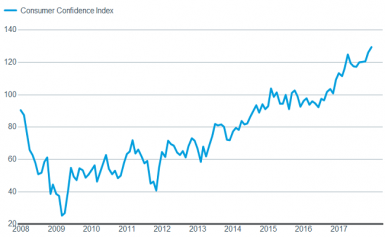


Source:  FactSet, Conference Board. As of Dec. 5, 2017


But there’s a downside to all the good news; expectations are becoming elevated and could morph into a bar set too high for actual data to hurdle in 2018.

In terms of corporate earnings growth, Thomson Reuters’ 2018 S&P 500 consensus earnings forecast is above 11%. Although a boost from tax reform is potentially in the cards, elevated valuations suggest that any disappointment relative to those expectations could bring heightened volatility and/or pullback risk.


Macro Factors

Tax reform is moving along, and odds are improved that it will cross the finish line; the final form is still in question, as is the ultimate impact on the economy. Judging by market movements on tax news, investors are optimistic about passage; while hopes for an infrastructure package seem to be falling as midterm election season heats up early next year.

Finally, there is the Robert Mueller investigation wild card, which could also wreak havoc with investor sentiment.

There doesn’t appear to be any waning in the desire by the Federal Reserve to continue normalizing policy, as evidenced by the near-certainty of a rate hike in December.  However, with Jerome Powell taking over the Fed chair position in 2018, and several new members set to be appointed, uncertainty is elevated.

Judging by the comments from Powell during his confirmation hearings, continuity and transparency are priorities; but if inflation should flare up, or growth start to lag, the Fed may be challenged early in the new regime.


S&P 500 – Overvalued/Undervalued?


With the rises in the US markets over the last year, how can investors see whether the rise is justified and not a bubble? A good indicator is to look at the Price to Book Value for the S&P 500 over the last 17 years. This provides a good historic indication on whether the US Market is becoming overvalued in comparison to the components’ assets.

Price-to-book value is the ratio of market price of a company’s shares (share price) over its book value of equity. This number is defined as the difference between the book value of assets and the book value of liabilities. Generally speaking, if the ratio is lower this is a positive indication because it suggests the price is low compared to the companies’ assets in the index.

Even with rises in the S&P 500 over the last year, we are not seeing a dramatic rise in the S&P P/B which suggests the rise is justified:


S&P 500 Historic Price to Book Value


After a year with uninterrupted monthly gains, it seems safe to say that 2018 may bring more volatility in global stocks. We may see some red next year, but like the U.S. market, it appears to us that a steep bear market is unlikely.

Our near-term outlook for global stocks in 2018 is therefore positive. We believe most markets are not too expensive to post further gains in the later stage of the economic cycle, as long as earnings continue to rise with economic growth next year.


All the best

Stuart

CEO

Farringdon Group

+60 3 2026 0286

Goodbye 2017, Hello 18′


This past year has seen for the first time since the Global Financial Crisis, Europe, North America and Asia growing strongly at the same time. We expect this trend to continue through 2018.


United Kingdom


UK assets have experienced a mixed bag of results this year. The FTSE 100 experienced rapid growth in the first 6 months of the year as equities recovered from the shock of Brexit however in the second half of the year a rapid increase in the value of the pound has stunted growth of the main London index. The UK has now completed preliminary discussions with the Commission on a Brexit deal and is now moving on to discuss its future trading relationship with the EU.


However, it seems highly unlikely that the UK can be given any kind of deal beyond the Free Trade Agreement given to Canada last year (not least because any terms given to the UK would also have to be given to South Korea, Japan, Canada and other countries with Free Trade Agreements with the EU). One wonders if British voters and MPs will be satisfied covering a £40 billion divorce bill for nothing more than a standard third country trade agreement.


Despite Brexit uncertainty, the UK economy continues to perform well, and the Pound has rebounded from its historic low levels. In 2018 we expect to see the pound level off against the Dollar and the Euro and we expect to see strong gains in the FTSE 100 by the end of the second quarter.


Europe


With the exclusion of Brexit, it has been relatively quiet in EU markets this year. The expected seismic shift in French politics with the election of Marie La Penn did not happen. While German elections have returned the CDU under Angela Merkel to power, they have also brought right wing extremists under the Alternative for Deutschland into the Bundestag for the first time since World War 2. However, this seems more likely to produce further cooperation between mainstream parties than any outright threat to the government from the extreme right.


All in all, Europe has witnessed its first quiet year since the financial crisis. Euro stocks 600 like the FTSE 100 had a strong start to 2017 but has failed to rise since the middle of the year on a rising Euro Dollar exchange rate. We expect moderate growth next year in both The Euro and European equity.


Asia


In 2017 we have seen Asia pull out of the slowdown that started in 2015. Growth is now becoming more focused on the ASEAN region and India with slower growth levels in China. Chinese equities experienced a major boost in 2017. While the Growth in Chinese stocks will slow in 2018 we expect to see strong growth in ASEAN and Indian equities in the coming year.


Bitcoin


The past year has seen the emergence of the Bitcoin bubble. While Blockchain Technology has a clear role to play in Fintech in the coming years the Bitcoin system is a highly flawed block chain set up that was never designed to deal with the kind of demands being placed on the technology currently. In the past two weeks, almost all major venders who accepted Bitcoin payments have now stopped given the extreme costs and delays associated with trading through the blockchain.


When the Dutch Tulip Bulb Bubble burst February 1637 it followed a second surge in pricing off the back of the first futures being swapped. With the Chicago Mercantile Exchange now opening futures trading in Bitcoin, we expect to see a second surge in prices. At some point in the next three to six months we expect to see the bubble burst. This will likely be caused by regulations in the USA or an outright ban in China.


Given the size of Bitcoin is now around $200 billion dollars any substantial growth will cause the crypto currency to begin to pose a systemic threat to financial systems not to mention the vast scale of tax avoidance currently going on in the USA with those with capital gains. This will prompt the Fed, SEC and IRS to intervene heavily. China will also have to intervene at some point as the value grows as it risks circumventing capital controls.


When China banned Bitcoin earlier this year prices fell by half almost overnight. That decision was quickly reversed leading to the current price run up to $17,000. In a severe downturn the time taken to update the bitcoin block chain and allow investors to exit might stretch to months causing panic selling as people try to preserve gains.


While better crypto-currencies do exist like Ethereum, it seems highly unlikely that any other coin will achieve the brand recognition of Bitcoin. The massive amount of fraudulent Initial Coin Offerings currently taking place are likely to poison the entire crypto currency market in the longer term and it is hard to see how much value can be retained following an inevitable crash.


At this stage almost no one doubts that Bitcoin is in an unsustainable bubble and all investors are playing a gigantic game of Chicken or the Greater Fool in economic terms with each other. Prices in Bitcoin may top $60,000 in 2018 however when the crash does come it will be very sudden and values are likely to be lost at a far quicker rate than any investor can pull money out.


All the best and I hope you all have a great 2018

Stuart

CEO

Farringdon Group

+60 3 2026 0286

Week 1 – 2018 – In Review – Happy New Year !


Stocks got off to a strong start in the first week of 2018, bringing all of the major indexes to new highs. The Dow Jones Industrial Average, although narrowly focused, garnered the most attention by passing the 25,000 threshold on Thursday—less than a year after breaking through 20,000 for the first time.

Less noticed but perhaps more telling was a new record low on Wednesday for the CBOE Volatility Index (the VIX), Wall Street’s so-called “fear index.” Energy stocks were particularly strong, helped by a climb in domestic oil prices to their best levels in three years.

Information technology and materials shares also performed especially well. Utilities and real estate stocks were weak, held back by a sharp rise in long-term bond yields, which makes their dividend yields less attractive in comparison.


European equity markets began 2018 on a subdued note, but momentum from strong regional and global economic data helped to fuel a rally by the end of the week.

The blue chip FTSE 100 Index hit yet another record high, while the STOXX Europe 600, Germany’s DAX, and other key indexes ended the week up. Some of the key drivers included automobile makers, buoyed by better-than-expected sales, and banks, which benefited from higher yields and steeper yield curves.

Earlier in the week, technology and retail stocks drove market gains amid favorable reports of increased sales and demand. On Wednesday, according to FactSet, the STOXX Europe 600 Technology Index recorded its biggest one-day gain in nearly six months. Investors were encouraged that German retail sales were strong in November, but a report that UK retail prices fell in December signaled that consumers were less willing to spend, weighing on the market.


ECB Governing Council member and rate-setter Ewald Nowotny told a German newspaper that the ECB may end its stimulus program this year if the eurozone economy continues to grow strongly, according to Reuters. One of the goals of the stimulus program is to revive the eurozone inflation rate, but data at the end of the week showed that the euro-area inflation rate had slowed to 1.4% in December from 1.5% in November.

In addition, the pace of inflation in Italy slowed in December to 1.0%, its lowest level in 2017. Some observers reflect that it might be difficult to end the stimulus program if the inflation rate remains weak. But other fresh economic data during the week showed that the eurozone recorded its strongest growth in nearly seven years. The eurozone core CPI (which excludes food and energy prices) came in at 0.9%, slightly below expectations of 1.0%.


The Week Ahead

Following a week that was dominated by macroeconomic news, featuring the release of the Federal Reserve’s December meeting minutes and December’s jobs report, investors will likely shift their attention to the start of the fourth quarter’s earnings season. Additionally, economic data to be released next week include inflation data and retail sales on Friday.


All the best and Happy New Year, I hope you all have a great 2018

Stuart

CEO

Farringdon Group

+60 3 2026 0286

Algebra – 6 Months Since Launch and Amazing Results so Far


Well, 6 months in to both Algebra & Farringdon Robo and I have to say that we are over the moon with not only the performance but by how the industry has accepted us.


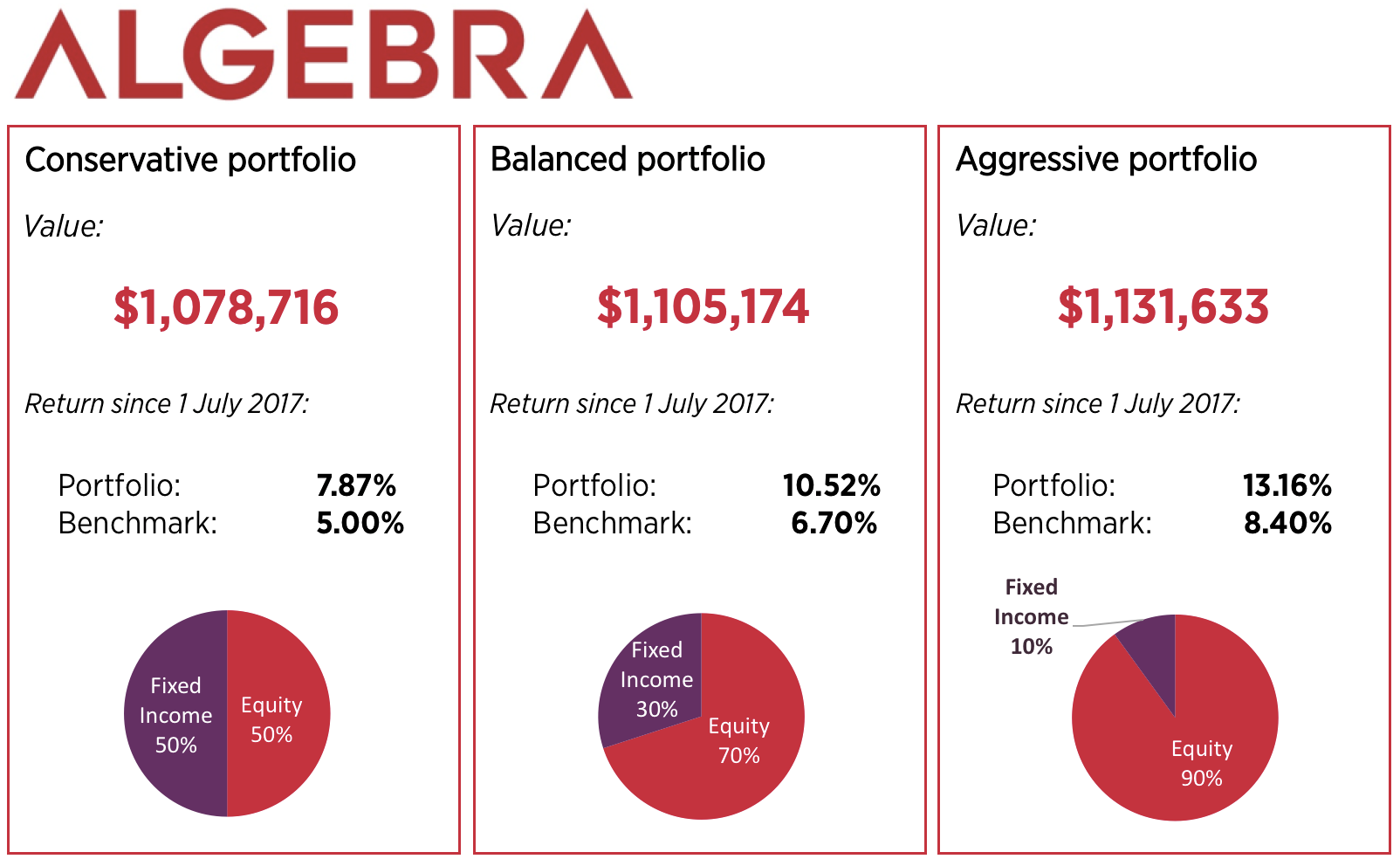
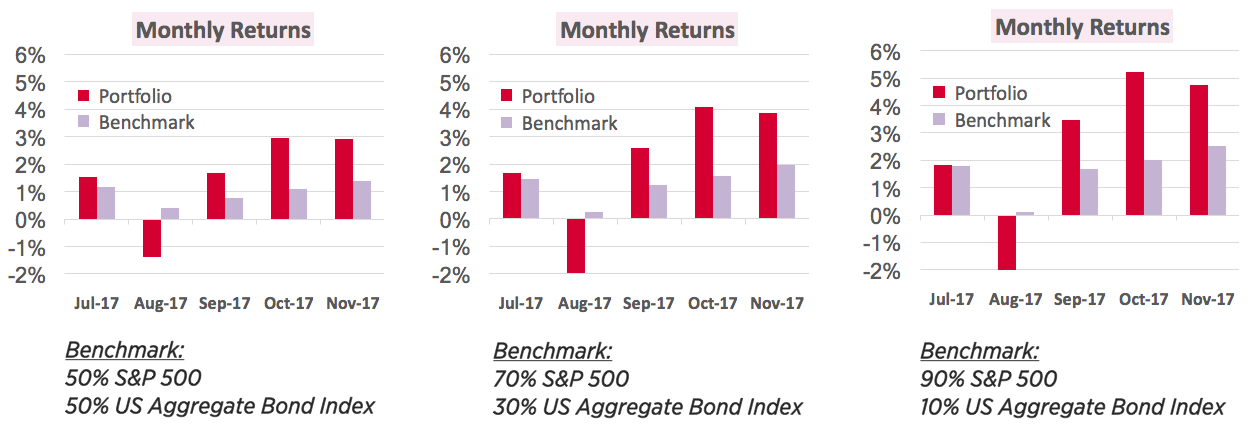
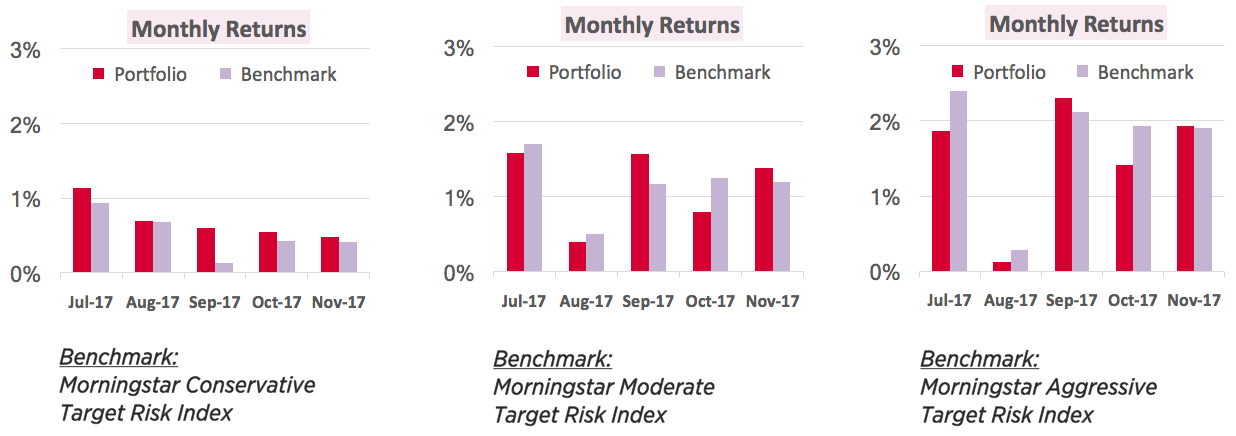
We have seen consistent growth of our portfolios and generally out-performed the benchmark so our algorithms and talented portfolio team have done fantastically well.


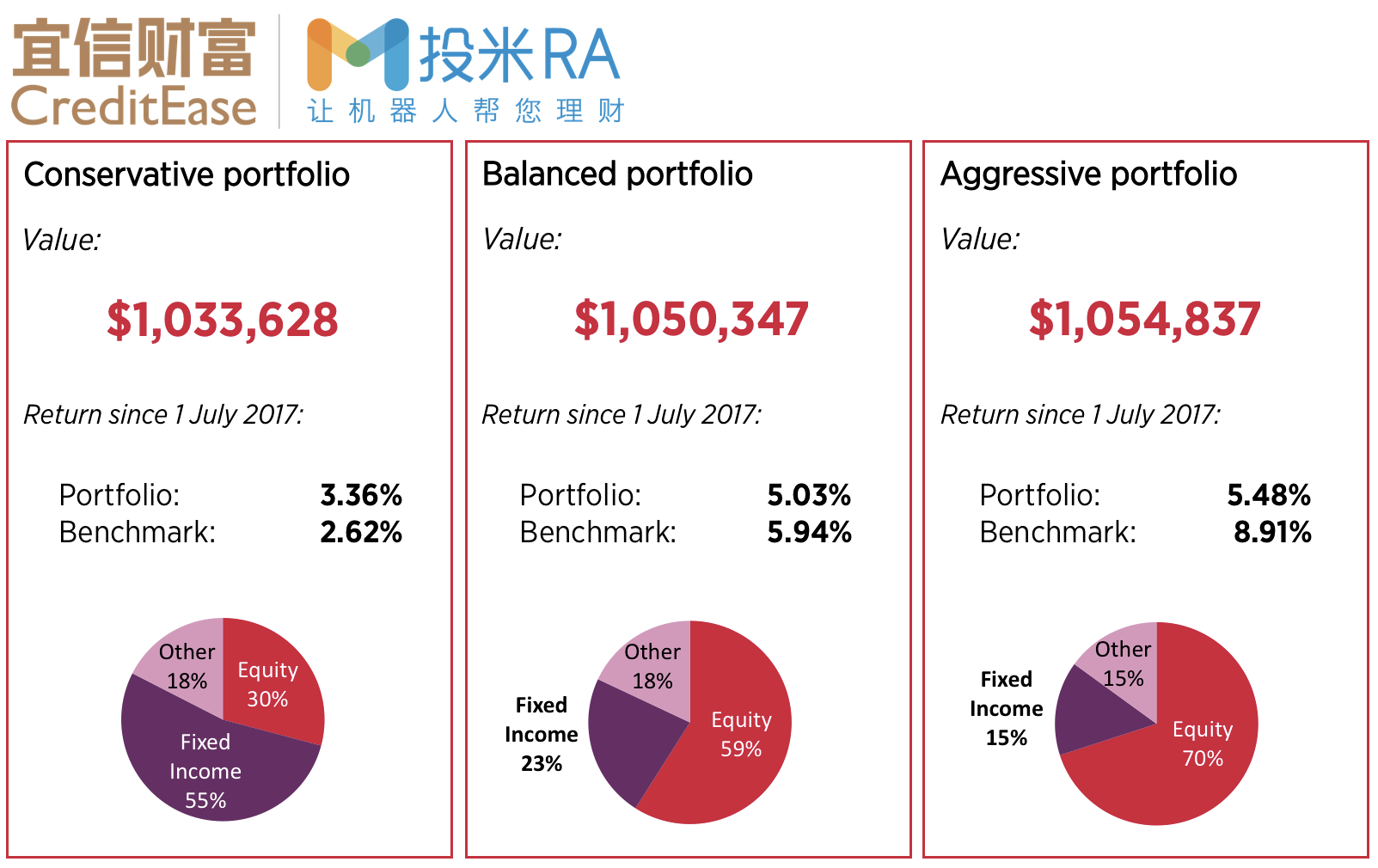
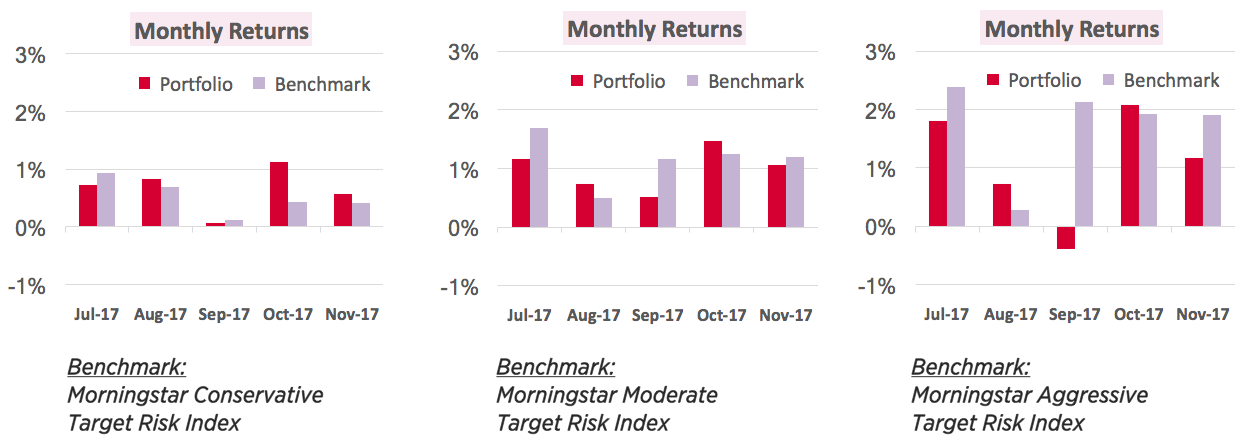
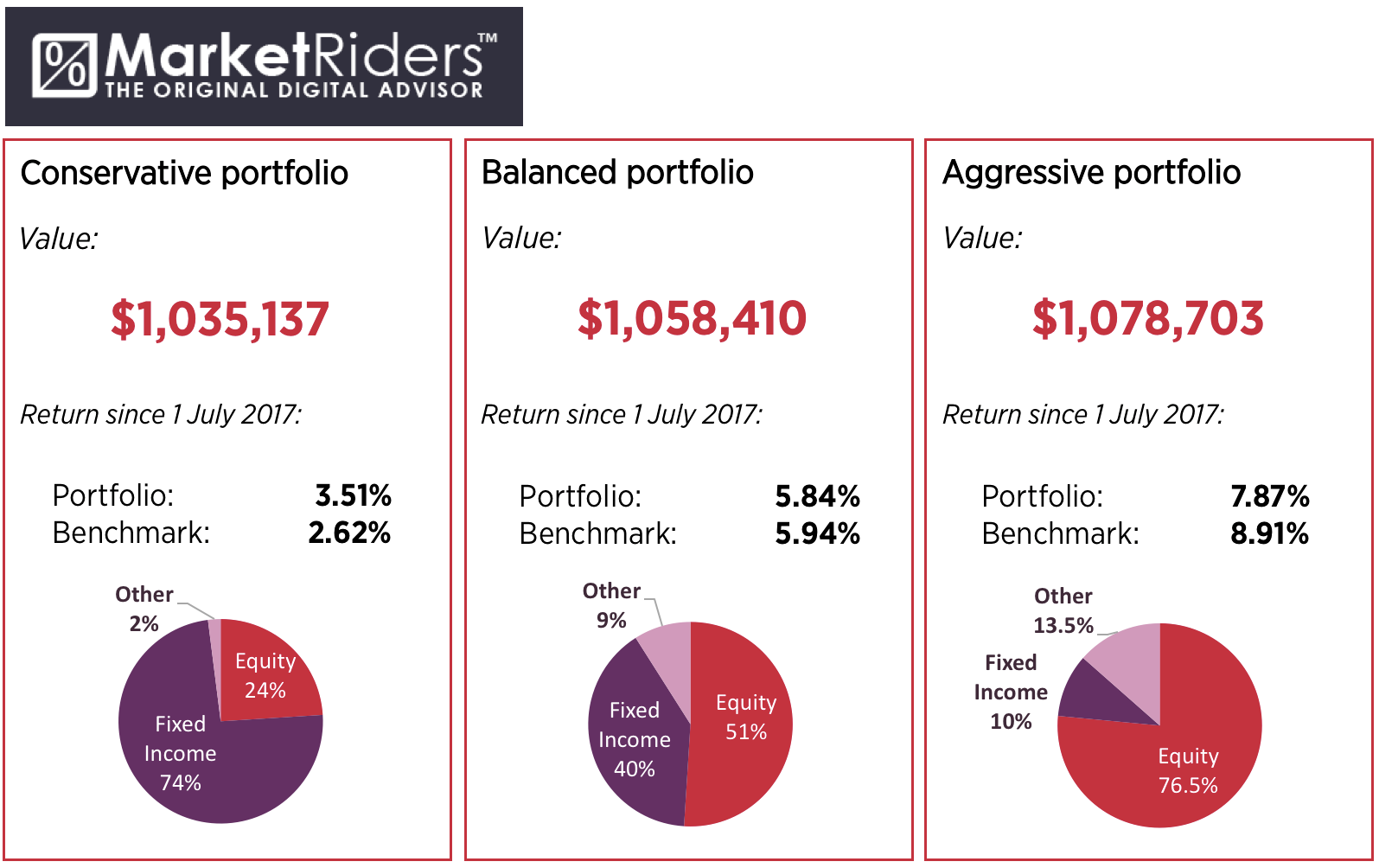
Fund Selector Asia  started running a comparison of two other similar Robo’s back in July 2017, they made a hypothetical $1m in each of the three Robo-Advisors featured below. The results in today’s article show what that $1m is now worth. Return results will be published monthly until August 2018.


Three portfolios for each Robo-Advisor are presented: Cautious, Balanced and Aggressive, however we have a few other options for each client’s requirements.


The purpose is to highlight the practical angle – how Robo-Advisors allocate and how they perform over the long-term, particularly when there is a downturn.


Note that the Robo-Advisors operate in different markets and offer different products. In FSA‘s presentation, they are not competing against each other, but against their own benchmarks.


Even though we may not be competing, I know where I would place my money!!


While there are several robo adviser available in the market Algebra offers a very different investment approach. Most Robo advisers simply buy a portfolio of ETF’s aimed at tracking markets in the cheapest possible way.


Algebra has a much more advanced level of technology that uses smart beta algorithms designed to out-perform markets but still carry a minimal cost of investment.


Algebra is our Robo-Advisor it was launched in July 2017, offers Sharia-compliant and conventional portfolios. This article features non-sharia portfolios.


The basis of Algebra’s portfolios is the Large Cap Master Select Gold Strategy, developed by Singapore-based Farringdon Asset Management. The portfolio consists of around 50 US stocks from the S&P 500 universe. They are selected based on analysis of portfolios of ten highly-rated active US equity fund managers. From each manager’s portfolio the algorithm chooses five stocks in which they are overweight. The three model portfolios presented here contain a different allocation of fixed income to manage the risk profile. The annual fee is 0.85%


Beijing-based Creditease Wealth Management launched Toumi RA, its robo-advisory platform in May 2016. It is currently offered to investors in mainland China. It offers offshore US dollar-denominated portfolios of global ETFs, holding equity and bond ETFs as well as gold and real estate. It has nine levels of risk for investors to choose from. FSA features three portfolios with the risk levels: 2 – second lowest, 5 – moderate and 8 – second highest. Creditease does not charge fees, so how do they survive? I am confused too.


Tuomi RA’s portfolios target a specific level of volatility. Asset allocation is adjusted if the volatility deviates from the target. Over the past two months, the conservative and the balanced portfolios have tilted towards fixed income. Bond ETFs now constitute 55% of the conservative portfolio, up from 44% on 1 October. The allocation to equities in the conservative portfolio was reduced to 30% from 37% and that to alternatives to 15% from 18%. The balanced portfolio now has 23% in fixed income, up from 19% two months ago. Its equity allocation has been reduced to 59% from 66% and 3% were added to alternatives. The asset allocations in the aggressive portfolio have not changed since 1 September.


In business since 2008, Marketriders is offered by the US-based brokerage Sogotrade. It was re-launched in March 2017 as a full service robo-advisory service. It offers US-based accounts, and its model portfolios consist of US-based ETFs. Marketriders charges an advisory management fee per year and no transaction fees.

Marketriders’ portfolios have not changed their asset allocation since 1 July.


www.algebra2u.com as a Digital Advice platform will take you through a series of goals and give you an indication on the levels of money that you will have to invest to reach these goals. These questions have been designed by fully qualified advisers within Labuan FSA’s remit.

This plan is then automatically incorporated in a risk weighted portfolio that will be managed over time for you to help you achieve your desired financial goals and the minimum initial investment is just $1000, there is no lock-in period, no term and this is the future.

If you would like to know more, just drop me an email or give me a call

All the best

Stuart

CEO

Farringdon Group

+60 3 2026 0286

Property In Malaysia, Is The Bubble About To Burst ?


Next year is expected to be another flat and challenging period for the real estate market, with the issue being the lack of affordability which remains unresolved. Although overall consumer sentiment has improved and asking prices have come down, the key issues of affordability overhangs  high-rise homes, rising cost of living and tight financing and this will have a dampening effect.


In 2018, properties are expected to remain unaffordable at 4.4 times the median income in Malaysia, with the number expected to be even higher in key urban locations like Kuala Lumpur and Penang. Despite higher gross domestic product (GDP) projected for 2017 and a slight recovery in crude oil prices, the property industry is still hampered by various factors. Higher GDP does not necessarily mean higher wages and disposable incomes for the B40 and M40 segments.


Properties remain out of reach for many Malaysians due to the gap between asking prices in both the primary and secondary markets. B40 refers to the bottom 40% of households with a monthly income of below RM3,900 while the M40 group has household income ranging between RM3,900 and RM8,300. The country’s real estate market is still correcting itself, with a steady downward trend.


It sees possible marginal drops in real estate prices in Kuala Lumpur, Selangor and Penang. The recent bad floods in Penang are expected to have minimal effect on prices in the long term. On improving the supply of affordable homes, one key finding was the possibility of making it compulsory for developers to build affordable homes in their projects, similar to the statutory requirement to allot Bumiputera homes. A gradual improvement in overall consumer sentiment is expected to continue next year.


Similar to the ‘Ripple Effect’ in London there will greater interest in landed suburban properties located some distance from the city centre, particularly those on the outskirts of Selangor. Emerging hotspots, such as Rawang, Shah Alam North, Setia Alam, Ijok, Semenyih and Kota Kemuning, these are expected to continue gaining momentum as the infrastructure improves in the coming years.


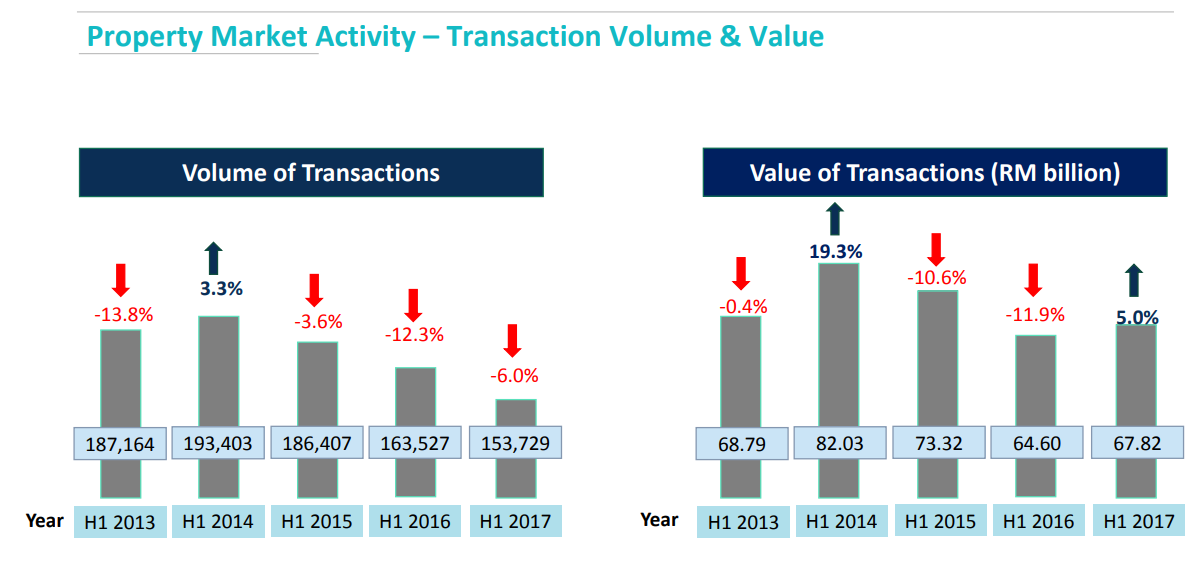
According to Deputy Finance Minister Lee Chee Leong, the number of unsold completed residential units are up 40% to 20,807 units in the first half of 2017 compared with the same period last year. These units are worth RM12.26 billion with condominiums and apartments costing over RM500,000 dominating the unsold homes in Malaysia.


Ernest Cheong, who is a property expert, pointed out that the RM12.26 billion is only from the primary market, which includes launches by developers, it does not include the secondary sale market. With the amount of units unsold it means that developers are in danger of losing their bridging finance from banks as they may fail to hit the sales target because consumers can’t afford to buy the properties. Thus, he predicted that property markets will crash within 24 to 30 months if this situation continues. If the property crash comes early next year, Cheong expects the prices of houses to fall from RM500,000 to RM300,000 and advised Malaysian consumers not to commit to buying a home unless they could save up to RM1,000 a month for at least a year.


In addition, oversupply of property would be exacerbated as there are about 140 malls entering market in key states by 2021. This will potentially become more severe than during the Asian Financial crisis in 1997.


According to the International Monetary Fund, historically housing booms have been followed by busts about 40% of the time, which is associated with longer economic downturns and larger output losses compared to equity market.


Given that there are imbalances in both residential and commercial property segments, Bank Negara in its report, said this is a source of concerns as the property sector has linkages to more than 120 industries, collectively accounting for 10% of Gross Domestic Product and employing 1.4 million Malaysians. Any severe property market imbalances and overbuilding will affect the stability of the financial system.


The central bank had raised this issue to banking institutions and the exposure of the financial institutions on this sector was still at prudent level but property oversupply could impact other sectors. This could pose risk to macroeconomics and financial stability of Malaysia.


The Chinese government has prohibited direct individual investment in overseas property projects, but there are numerous ways to skirt around these restrictions so money coming in from mainland China will still be a positive for Malaysian property but Malaysia cannot just rely on this if they are to be a fully-fledged developed nation.


Malaysia’s population is still growing so demand is still good BUT there is a huge gap between earning capabilities and first time buyers and new families will have to look very carefully over the next few years on whether they can buy instead of renting or living with family.


In long run, I feel Malaysian property prices will stay stagnant and rental income will drop due to the choice and over supply, we have seen high end property slightly decrease in value over the last few years and until the market has more demand will stay relatively flat. Unlike Tokyo, Hong Kong, Singapore, Shanghai, Kuala Lumpur has vast amounts of space to still build properties so comparing the like for like is unrealistic and expectations of large capital growth is not imminent.


Malaysia economic outlook may look more positive if the oil price increases in next few years, this in turn will bring in more expatriate workers, boost rental returns for owners and start creating demand for both local and foreign investors. However, currently there is a little skepticism within the market because of the general election next year which may bring even more changes.


Have a good day

All the best

Stuart

CEO

Farringdon Group

+60 3 2026 0286

Week 47 In Review


  • German coalition talks fail, snap election possible
  • United Kingdom mulls €40 billion Brexit payment
  • European economy powers ahead
  • Yellen: Low inflation a “mystery”


Global equities were modestly higher on the week amid strong global economic momentum. The yield on the US 10-year Treasury note was little changed, at 2.33%, but the price of a barrel of West Texas Intermediate crude oil rose to the highest level in over two years, at $58.75, aided in part by a pipeline shutdown.

Volatility, as measured by the Chicago Board Options Exchange Volatility Index (VIX), drifted lower this week, falling to 9.8 from above 11 last week.

MACRO NEWS

Pressure mounts for German grand coalition

Talks between Chancellor Angela Merkel’s Christian Democratic Union (CDU), the Greens and the Free Democratic Party (FDP) broke down on Sunday evening, throwing Germany into a nearly unprecedented political crisis. As a result, German president Frank-Walter Steinmeier has appealed to the center-left Social Democratic Party (SPD), the second largest vote-getter in the 24 September general election, to form a grand coalition with Merkel’s party.

SPD leader Martin Schulz has thus far declined to join a coalition, believing that being a coalition partner in the previous government hurt his party at the polls in September. Steinmeier has appealed to Shulz to reconsider for the good of the country. If the SPD does not acquiesce, fresh elections in early 2018 seem likely.

UK floats Brexit payment

At a mid-December summit, the European Union will determine whether sufficient progress has been made in three key areas in order for talks to advance on a second track on the future trade relationship   between the two sides. The three areas of critical importance to the EU are the rights of EU citizens residing in the United Kingdom, the “divorce bill” payment the UK will pay as it leaves the EU and the thorny issue of how to deal with the border between Northern Ireland and the Irish Republic.

In an effort to advance negotiations, the UK government has floated payment figures of as much as €40 billion. Press reports indicate that EU officials have received the overture positively. Of the three policy areas, the border of Northern Ireland is seen as the most difficult to settle. Complicating that delicate issue is the precarious state of the Irish Republic’s government, with the country’s deputy prime minister embroiled in scandal.

Europe continues business boom

Flash readings of November purchasing managers’ indices in the eurozone show that the manufacturing and services sectors had their best combined month since April 2011. Forward-looking indicators, such as unfilled orders, were particularly robust, suggesting growth will continue in the months ahead.


Yellen mystified by low inflation

In what will likely be one of her last public appearances as chair of the US Federal Reserve, Janet Yellen said this week that the challenge the Fed faces is how to craft a monetary policy that maintains a strong labor market while also moving inflation back up toward the Fed’s 2% target.

Yellen expressed surprise at the low levels of inflation in 2017, given low unemployment figures and stable prices for the dollar and oil. Yellen’s term ends on 8 February, and she recently announced that she will resign from the Board of Governors upon the confirmation of Jerome Powell as her replacement as chair.

THE WEEK AHEAD

Mon, 27 Nov

United States  New home sales

Tue, 28 Nov

US Wholesale inventories, Case-Shiller home price index

US Fed’s Powell confirmation hearing

Wed, 29 Nov

Eurozone Consumer and business sentiment

US Q3 gross domestic product, pending home sales

Thu, 30 Nov

US Personal income and spending

Fri, 1 Dec

Global Manufacturing purchasing managers’ indices

Canada                 September gross domestic product


All the best and have a great week

Stuart

CEO

Farringdon Group

+60 3 2026 0286