Argentina Bond Battle Enters New Phase

Stuart Yeomans - Argentina

The Central Intelligence Agency’s World Factbook says “Argentina benefits from rich natural resources, a highly literate population, an export-oriented agricultural sector, and a diversified industrial base.” A hundred years ago, it says, it was one of the world’s wealthiest countries.

But that was then and this is now. Or nearly now. In the intervening years, Argentina’s economy has surfed a series of booms and busts and in late 2001, the nation defaulted on nearly $100 billion in sovereign debt as its currency collapsed — a record amount for a government.

On June 23rd the country’s statistics agency announced that Argentina’s economy had officially entered recession, shrinking by 0.8% in the first quarter of 2014 after a 0.5% contraction in the final quarter of 2013. Many economists are expecting the first calendar-year recession since Argentina’s devastating 2001-2002 financial crisis.

The economy’s contraction can be attributed largely to a devaluation of 20% in January, accompanied by interest-rate hikes. That subdued output and spurred on inflation, predicted to reach almost 40% by year-end. For Miguel Kiguel of EconViews, a consultancy, expectations of devaluation also played their part, by pulling some economic activity into 2013: “People stocked up on durable goods such as cars, and they were smart to do so given that prices have since spiked and the peso has lost value.”

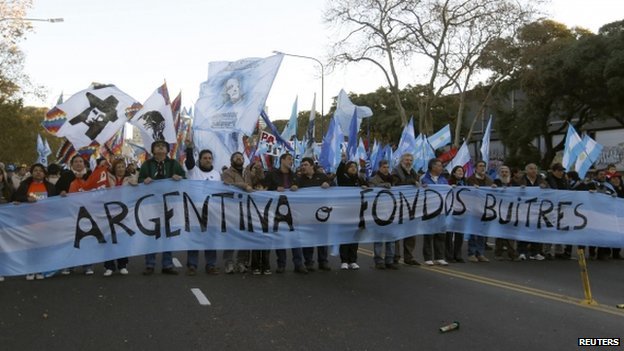
Stuart Yeomans - Argentina protests

Many of Argentina’s problems are familiar. Inflation has plagued Argentina for much of the past decade; it still grew by an average of 5.6% from 2005-2013. Exchange and trade controls have long made it hard to get hold of primary materials, stifling production. But whereas in the past Argentina could maintain growth by propping up the peso and consumers’ purchasing power, falling foreign-exchange reserves mean it can no longer afford to do so.

However it ends, Argentina’s standoff with the holdout creditors is likely to exacerbate this problem. On June 27th the New York judge in charge of the case warned Argentina that its preparations to make a June 30th payment to its exchange bondholders, without also paying the holdouts, would not be allowed. If Argentina cannot find a way to pay its exchange bondholders by the end of a grace period on July 30th, it will be in default. According to Fausto Spotorno at Orlando Ferreres & Associates, defaulting would “make a situation that is already unsustainable, less sustainable still”. Commercial credit lines would be cut off, he says; investment would drop to zero and access to dollars would be further strangled, putting more pressure on the peso.

Negotiating a settlement with the holdouts has its own costs. A cash payment to the holdouts would mean a further drain on the country’s foreign-exchange reserves, again putting pressure on the currency. Argentina could try to pay the holdouts in bonds, as they recently did to compensate Repsol, the Spanish oil company, for the expropriation of its stake in YPF, another oil firm, in 2012. But with lots of new IOUs already in the market, that might make it less easy for the country to fund itself with new debt even if there is a rapprochement with the holdouts.

In any case, access to financing will not solve Argentina’s deficit problems. The fiscal deficit swelled to 15 billion pesos ($1.85 billion) in the first quarter of 2014. To reduce this gap the Argentine government will need to curb spending, a task that would be tough politically and would do little to pep up the economy.

At the very least the Argentines can take heart from their national team’s World Cup performance so far, maybe this will be their year.

I hope that you have enjoyed reading this post.

Stuart Yeomans

CEO

Farringdon Group

Kuala Lumpur : Malaysia

Changes to the UK Pension System that Could Adversely Affect Your Retirement

The 2015 UK budget has unveiled several major changes in the UK pension system. At the same time the budget has also instigated several consultations on even bigger changes.


UK Pension Fund


What’s changed in the Budget?

There were three main changes in the UK budget. The first was to increase the size at which a small pension fund can be liquidated. This was increased from £20,000 to £30,000. In addition to this the government has reduced the amount of guaranteed income someone is required to have to avoid having to use their pension fund to purchase an annuity from £20,000 per annum to £12,000 per annum.

Both of these changes are relatively minor and make sense by allowing people with smaller pension funds to avoid the annuity market which has historically offered people bad values for their retirement savings.

The biggest change in the budget was to increase the amount of money a person can withdraw from their pension pot each year. This now means that an individual can pull down 150% of GAD each year. GAD is a number based on life expectancy and government bond interest rates that set’s out how much someone can expect to draw down from their pension sustainably each year. To give you an idea drawing down at 150% of GAD would allow a 65 year old to take out 9% of the value of their pension in the first year. This change has also been matched in many QROPS schemes as well that follow the same rules as the UK system.

In addition to these changes the government will also prevent public sector workers from withdrawing their final salary pensions.


What’s going to Change?

Consultations were announced in the budget that will consult the industry on some even larger changes to come out in the next year. Perhaps the biggest change is giving people the ability to withdraw the entire value of their pension at age 55. However these withdrawals will not be tax free as some in the media reported but instead liable to up to 45% income tax.

As part of this change the government is also investigating stopping private sector workers with final salary schemes from transferring out. The reason for this is that these types of pensions are heavily invested in government bonds and if people suddenly start taking the pensions out then the government bond market could collapse. This move would also prohibit people from transferring into offshore tax efficient QROPS’s schemes.

What’s coming around the corner?

There are many rumours circulating about further changes the government may make in the next year or two to the pension system to generate more tax for the government.

The Labour Party and potentially the Tory Party as well are said to be interested in capping the maximum 25% tax free withdrawal at £36,000.  This would generate a substantial amount of tax for the government especially if people start to pull down the entire value of their pension funds.

In addition the treasury is said to be quite interested in capping the amount of pension savings anyone can have at £1 million or around £33,000 per year. Anyone with a fund larger than this would be liable to a 55% tax charge on the balance above £1 million.

If you are looking for further information on this subject please drop me a message and I will get back to you as soon as possible.

I hope that you have enjoyed reading this post.

Stuart Yeomans 

CEO

Farringdon Group

Kuala Lumpur : Malaysia


Spring Economic Outlook 2014

Spring-Nature-Wallpaper-745x419

Equity markets have continued to see limited returns as we approach the second month in the second quarter of 2014. The US and the Emerging Markets were almost flat in April. The severe winter in the first quarter impacted economic activity in the US across a wide range of sectors, however those problems have now passed and we have been seeing growing signs that the US is back to normal rates of growth. The US also released a weather-beaten first quarter GDP result showing the economy had grown by 0.1% quarter on quarter. This figure was well below estimates of 1.1% however, the markets took the disappointment in their stride. Digging deeper into the release does provide some positive reading for investors. Private consumption grew by 3% suggesting that consumption, which makes up nearly 70% of US GDP, is beginning to pick up and that strong growth is just around the corner now that the bad weather has receded.

The recovery of the UK economy has continued during the early months of 2014 despite some setbacks from storm-related damage to roads, rail, farmland and other infrastructure. The manufacturing PMI remained as high as 56.9 in February, and the services PMI stayed at 58.2, both levels consistent with continued growth of over 2.5% annually. If the current pace of activity continues, the UK should at last exceed its pre-crisis peak level of GDP in real terms by year end. UK equities seemed to be a flavor of the month, as the FTSE 100 rebounded by 3.1% after a selloff in March. In the UK, first-quarter GDP was just below consensus, with the headline growth figure coming in at 0.8% quarter on quarter compared to the real GDP for the fourth quarter of 2013 which was at 0.7%.

-

Despite the unrest in Ukraine, the European economic recovery remains on track as consumer and business confidence indicators continue to improve. Most core and peripheral economies registered positive growth, including Italy, which experienced its first increase in real GDP after nine successive quarters of decline. Since then, economic indicators in 2014 have continued to record slow but positive rates of growth. The eurozone’s Purchasing Managers’ Index (PMI) for February was 53.2, the eighth successive month in excess of the 50 level that points to expansion. This confirmed that the eurozone emerged from recession in mid-2013 and suggested that the moderate recovery should continue in 2014.

However the improving confidence comes at a time as inflation outlook continued to weaken in the region. In April, the estimation for inflation came in below consensus at 0.7% year on year. Bank lending has also been reported to be still falling, with loans to private sector falling by 2% and loans to non-financial companies contracting by 3.1%. Tighter credit conditions and a lacklustre inflation environment is no doubt giving policymakers at the European Central Bank (ECB) a headache. There is growing pressure on the ECB to utilise monetary policy to help support the still-fragile recovery. However, question marks remain not only on what action the ECB might take but whether it will act at all. Mario Draghi hinted this month that an asset purchase programme should not be ruled out but would only be used if the medium term inflation outlook deteriorated significantly.

The first-quarter earnings season is now underway in Europe and the US. In the US, nearly 70% of companies who have reported so far have beaten earnings expectations. Whilst earnings have surprised on the upside by 5.2%. However, in Europe earnings have continued to contract. With over half of the STOXX 600 having reported, earnings growth has contracted by 2.0% despite the improving economic backdrop. On both sides of the Atlantic the financial sector has underperformed. Banks have cited a decline in net lending as the main issue for the lack of earnings growth this quarter.

Bond yields in the periphery have declined sharply over the last month and have reached multi-year lows for many European countries. A year ago, Spain’s 10-year bonds yielded 4.7% and today the yield stands at just above 3%. Such sharp contractions have been credited to the disinflationary environment that has weighed on bond yields.

stuart yeoman - bank of japan

Sentiment for Japanese investments continues to decline, with the TOPIX contracting by 3.4% in April. The question for many investors is whether the Bank of Japan (BoJ) will unleash another round of quantitative easing. Currently, the BoJ remains in a holding pattern as it waits to see the economic impact of the controversial sales tax increase that came into force at the beginning of April.

China released its first quarter GDP figures showing that the economy had advanced by 7.4% year on year which was marginally higher than expectations. However, Chinese growth is likely to continue to slow over the coming quarters as the economy attempts to rebalance towards a more consumption led model rather than an investment led one.

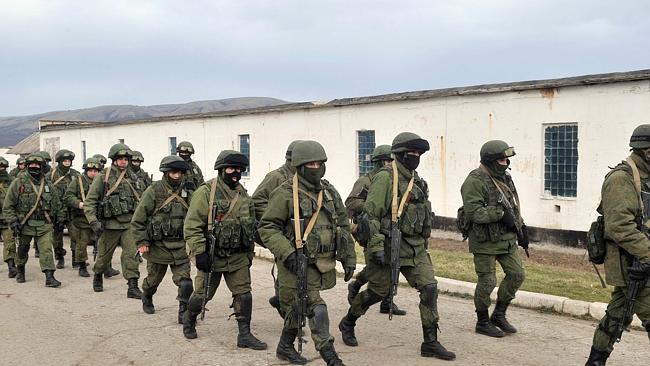
In the wider emerging market universe, discussions over emerging markets tend to be dominated by politics. There has been continued unrest in Ukraine this month, which has prompted the west to place further sanctions on Russia for its part in the violence.

The Indian elections, the world’s biggest democratic exercise, has entered into the fourth week of voting. Initial forecasts tip Narendra Modi, seen as investor-friendly, to be the next prime minister of India. Modi’s track record for economic and business reform could be key in helping the country revitalise its slowing economy.

Alternative investments such as commodities and real estate investment trusts (REITs) continued their strong start to the year as they grew by 2.4% and 3.2% respectively. Investors continue to seek alternative sources of returns away from poorer performing traditional asset classes that have struggled so far this year.

If you are looking for further information on this subject please drop me a message and I will get back to you as soon as possible.

I hope that you have enjoyed reading this post.

Stuart Yeomans 

CEO

Farringdon Group

Kuala Lumpur : Malaysia

Is Ukraine crisis affecting the Russian Economy?

stuart yeoman russia

The Economy Ministry of Russia has announced slow growth, rapid inflation and high capital outflows. This is an indicative sign that global strains across the Ukraine are now delivering serious economic costs.

There had been economic hopes of recovery, but growth in the economy last year demonstrated only 1.3 percent, which was far below initial forecasts. Russia’s economic performance is also in decline due to its activities in Crimea and across the Ukraine. The EU and US have provided a firm response and have placed restrictions on trade with Russia, which is resulting in capital and investment leaving Russia. Former Finance Minister Alexei Kudrin and other economists predicted capital flight at $50 billion in the first quarter compared to $63 billion in the entire of 2013.

While Russia’s economy is barely growing, inflation rate is increasing.  According to analysts inflation rate will rise up from 6.2 % in February up to 6.9-7.0% in March. As a result high inflation rate caused the depreciation of the Rouble. Despite the dramatic intervention of Russia’s Central bank the RTS Stock Market Index dropped by 12 % on March the 3rd and the Rouble lost 1.9% against dollar. Also, huge reliance of the Russian economy on imported products resulted in a huge drop of the Rouble’s value by 10% in two months.

stuart yeomans - russia cb

Above mentioned factors are clear signs of long and deep stagnation. The independent analysts claim that even with a climate-friendly investment and rapid development of small and medium sized businesses, Russian economy will not show growth faster than 2% per year until 2016.

However, despite pessimistic forecasts of analysts Russian Economic Development Ministry predicts 0.5 % growth of Russian GDP. On the other hand, Finance Ministry argues that this pattern does not take into account all potential risks for the Russian economy.

Although most economic predictions differ, most experts believe that the cost to Russia’s economy will increase the longer the crisis in Ukraine continues.

I hope that you have enjoyed reading this post.

Stuart Yeomans 

CEO

Farringdon Group

Kuala Lumpur : Malaysia

Market Outlook April 2014

Spring

The first quarter of 2014 has seen significant head winds in the world economy and investment markets. The end of the Federal Reserve’s QE program and the on-going concerns over the Chinese economy have all served to dampen investment sentiment.

While Growth in the USA and the UK continues to be robust, corporate earnings have disappointed. Most equity markets have been flat or slightly down since the start of the year. However while the first quarter has been disappointing there are marked improvements in the Eurozone economies. The threat of deflation may also spur the ECB to conduct its own QE program before the end of the year however these positive effects are unlikely to filter into investment returns until the 3rd and 4th quarter of 2014.

The Outlook for Bonds and Commodities still looks negative in the short to medium term however many markets may bottom out by the end of the year opening up some significant opportunities for investment returns in 2015.

Emerging market economies especially China still represent a significant risk and it may well be that Asia will now go on to suffer the third and final act of the shock from 2008. While we expect the impact on western equity markets to be limited it is probably prudent to trim any remaining emerging market exposure in portfolios. It is also a wise idea to minimise any exposure to Asian currencies you may have in your other investments.

Regional Breakdown
stuart yeomans usa

US

After multiple highs the S&P 500 ended the quarter with an increase of 1.8%. The Fed has continued with its plan of a reduction of USD10 billion per month on its bond buying programme which investors have begun to live with. Markets remained robust following the Congress approval to raise the government’s debt ceiling “with no restrictions” until March 2015, which will mean a shutdown that was experienced in October 2013 will not be repeated.

In the first testimony before Congress, Janet Yellen, the new head of Fed indicated that there will be no changes made on the reductions in its bond buying programme (QE) and that interest rate will remain low in the short term. The Fed had also made changes to its forward guidance, removing its 6.5% unemployment target and stating that they will be focusing on a broader perspective. Due to low temperatures in the US, macroeconomics data was mixed. Though housing date was poor, consumer confidence in the US is currently at a 6 year high.

Due to bad weather conditions, the unemployment rate in the US increased in February to 6.7% from 6.6% in January and was reported to be 6.7% in March missing its March estimate of 6.5%. The fourth quarter GDP in the US was revised down to an annualised rate of 2.6% from its initial estimate of 3.2%.

Eurozone

Though issues in Ukraine placed pressure on equities mainly Europe, Eurozone equities outperformed other developed markets delivering positive returns for the first quarter. The Eurozone grew by 0.3% in the fourth quarter of 2013 compared to 0.1% in the third quarter. The purchasing managers index (PMI) indicated that the Eurozone has had 9 consecutive months of expansion. In a latest staff forecast released by the ECB, GDP growth was put at 1.2% in 2014, 1.5% in 2015 and 1.8% in 2016.

Inflation in the Eurozone has continued to be below target with the preliminary reading for March being just 0.5%, prompting IMF chief Christine Lagarde to comment that the ECB needs to take action. The ECB kept monetary policies unchanged in the first quarter, but will most likely announce a QE programme of 1 trillion euros to assess the effect on inflation.

UK

In the UK, due to disappointing earnings results the FTSE All-Share index had a negative quarter falling by 0.6%. Larger companies bore responsibility for the FTSE All-Share’s decline (the FTSE 100 fell -1.3%) whilst mid – cap fared the best (the Mid 250 was up 2.6%). In terms of industry sector performances, healthcare, consumer goods and basic materials had the largest positive effect on overall index performance – the latter two having been negative contributors in the fourth quarter of 2013. Financials, led by banks, had the largest negative effect on returns in the first quarter.

In contrast to the fortunes of the FTSE All-Share index, UK economic data continued to improve. Stronger leading indicators, including the PMI report, spurred investors’ enthusiasm for the   economic recovery. The release of detailed UK GDP for the fourth quarter showed a more balanced picture of growth. As a result, the Bank of England upgraded its expectations for 2014 growth to 3.4%; however, subdued inflation suggests a rate hike is not an imminent prospect. Employment data continues to move in the right direction, and its faster-than-expected improvement prompted the Bank of England to expand the indicators it will consider with regard to raising interest rates (the original 7% unemployment threshold is likely to be crossed soon). Fears of a bubble in the UK housing market grew as the Halifax monthly house price index rose 2.4% in February versus a 0.7% consensus estimate.

stuart yeomans nice japan

Japan

The Japanese equity market weakened over the quarter and the Topix Index produced a total return of -5.4% in sterling terms, -6.9% in yen terms. Investor sentiment was dominated by external factors, including some weak economic data from China and the evolving crisis in Ukraine. Relative sector performance was broadly the opposite of 2013 with areas such as airlines and pharmaceuticals outperforming and reflation beneficiaries such as real estate underperforming.

At the start of the period, the macro environment was dominated by the impact of the decision in December by the Fed to begin its exit from quantitative easing. The sudden re-emergence of a potential currency crisis among weaker developing economies unnerved investors globally. The Japanese equity market continued to have a strong correlation with the yen. The rise in international tension saw investors seek perceived ‘safe havens’; this resulted in a rise in the yen which in turn negatively impacted Japanese equities. Economic data displayed further evidence of Japan’s improving economic trend. The core consumer price index (CPI) – a key gauge of the country’s inflationary success which includes energy but excludes food – was up 1.3% year-on-year in February. February core CPI – which excludes food and energy – also showed a 0.8% increase and grew at its fastest pace in a decade. However, April’s consumption tax increase came into force on the first of the month and this is expected to weigh on consumption growth going forward. Furthermore, public attention has recently been diverted by renewed debate on Japan’s energy policy, specifically the short- and long-term use of nuclear power. Mr Abe’s apparent willingness to find new ways to antagonise Japan’s neighbours in Asia is an increasing source of concern and an unwelcome distraction from economic progress.

Asia (ex Japan)

Asia ex Japan equities posted marginally negative returns in the first quarter of 2014 as strong gains for South Asian markets were contrasted against losses for North Asia. The former reacted to positive domestic developments while the latter fell on the back of further tapering of QE, a slowing Chinese economy and the Crimea crisis that unfolded in Ukraine. China and Hong Kong equities were both down with worries over the slowing Chinese economy, as deteriorating economic data culminated in February’s official manufacturing PMI coming in at an eight-month low of 50.2. The combined January and February export data – to take into account the annual Lunar New Year holidays – disappointed, falling 1.6% year-on-year. March welcomed the National People’s Congress in China, where reforms for the country’s longer-term development drawn up at last year’s Third Plenum, are thrashed out and approved by a parliamentary body. Market optimism surrounding detailed market-oriented policy initiatives was dampened by continuing concerns surrounding the massive shadow banking industry, as the market’s first corporate bond default came to the fore.

Meanwhile, Taiwan bucked the trend for North Asia as it saw its market gain on the back of optimism over a cross-strait trade agreement currently being negotiated with China. Korea was down as continued worries over tapering, following Fed Chair Janet Yellen’s first FOMC meeting, hit its market.  Meanwhile, in ASEAN, all major markets saw strong gains as domestic developments boosted investor sentiment. In Thailand, a bounce back was seen over the quarter as protests against the government of Prime Minister Yingluck Shinawatra eased with both government and opposition looking to ease tensions ahead of possible negotiations to resolve the impasse. The Philippines’ market continued on its strong run with positive economic data leading Moody’s to tip it to be the fastest-growing economy in Asia this year. However, the big winner was Indonesia, where the market was up by over a fifth, as central bank action to ease currency and current account deficit worries has continued to impress investors. News that popular Jakarta governor Joko Widodo, better-known as Jokowi, would be running in the presidential elections in July also boosted market Returns. In South Asia, India saw strong gains on similar developments as the local index hit an all-time high over the period. The rupee rallied to a three-month high while its current account deficit came down to a four-year low and further gains were cemented by the increasing likelihood that market favourite, Narendra Modi, will win the prime ministership in May’s general election.

Emerging markets

In the emerging markets, investor focus was largely on heightened geopolitical tension between Russia and the West concerning Crimea. Weaker-than-expected macroeconomic data and concerns about the systemic risk of increased debt levels in China further weighed on investor sentiment. The MSCI Emerging Markets (EM) index underperformed the MSCI World index over the quarter.  On the whole, the Latin American markets outperformed the EM index. Of these, Colombia was the strongest market, particularly towards the end of the quarter as data showed that the economy expanded by a faster-than-expected 4.9% year on year. In Brazil, returns were particularly strong towards the end of the period, largely due to increased optimism about a possible change in government following October’s presidential elections.

Emerging Asia performed broadly in line with the EM index with both Indonesia and India performing particularly well amid local currency strength and electoral optimism. China was the worst performing emerging Asian market as disappointing economic data releases, a sudden depreciation in the renminbi at the end of February and debt concerns following China’s first corporate debt default weighed on sentiment. The emerging EMEA markets lagged their wider emerging peers, led by poor returns in Russia. The Crimean peninsula of Ukraine was annexed by Russia in mid-March, following a referendum where it is alleged that over 97% of the turnout voted in favour of joining Russia. Ukraine’s new government state that the referendum has no legal basis and the European Union (EU) and the US have so far responded by implementing sanctions in the form of travel bans and asset freezes on a small but increasing number of government and other officials. The situation remains in a state of flux.

Global bonds

Fixed income markets defied end of 2013 predictions for a tough year ahead by broadly outperforming equity indices over the first quarter of 2014, despite mostly strong economic data from the US, UK and eurozone. Treasury yields fell sharply in late January, as volatility in emerging markets and weak economic data from the US sparked a glut of risk off trades. In February, emerging market debt recovered the losses sustained in January, and in March the BoA Merrill Lynch Emerging Market Sovereign Index posted further gains of 3.02% to reach an historic high. Similarly, robust economic updates from the US during February and March allayed fears of structural weakness in the US recovery. However, yields in Treasuries, gilts and bunds have remained depressed, latterly due to mounting concerns over the crisis in Ukraine and the cooling Chinese economy.

China’s March PMI manufacturing number came in at 48.1, falling from 48.5 in February to hit an eight month low. The world’s second largest economy also reported an 18% decline in exports in February, which forced China Premier Keqiang to assure markets that the government will support the economy if required.

The 10 year Treasury yield fell from 3.03% to 2.76% during the quarter. Gilts and bunds saw similar moves; the 10 year gilt yield fell from 3.02% to 2.76%, and the equivalent bund fell from 1.93% to 1.57%. In peripheral Europe, yields continued the longer term downward trend, buoyed by improving economic growth. In March both Italian and Spanish 10 year government debt yields dropped below 3.4% to reach their lowest point since 2005.


If you are looking for further information on this subject please drop me a message and I will get back to you as soon as possible.

I hope that you have enjoyed reading this post.

Stuart Yeomans 

CEO

Farringdon Group

Kuala Lumpur : Malaysia

Turkey’s face saving rate hike

stuart yeomans PM Turkey

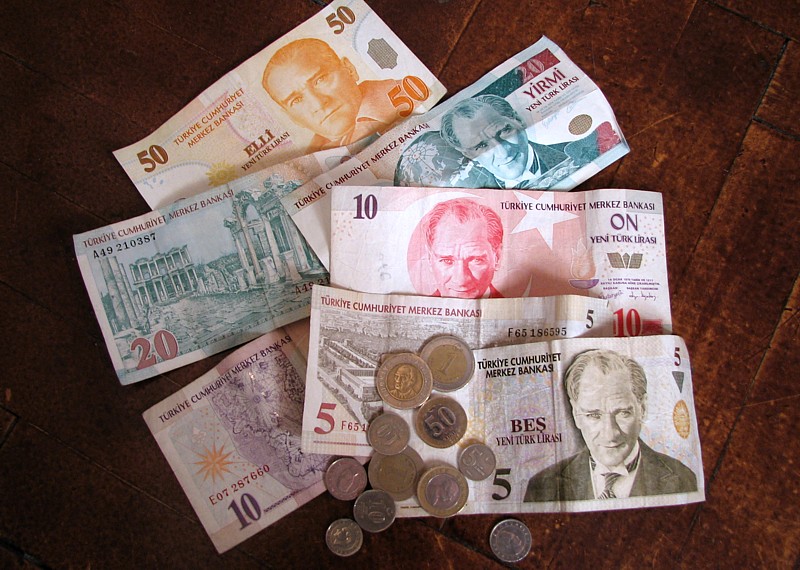
The Turkish Central Bank has announced a dramatic increase in the interest rates at its unscheduled policy meeting late Tuesday (28 January) in an attempt to bolster the sliding value of its currency amidst continuing turmoil in the emerging markets. The overnight lending rate was raised by more than half to 12% from 7.75% and the overnight borrowing rate along with one-week repo rate were more than doubled to 8% and 10% from 3.5% and 4.5% respectively. Such an aggressive move has enabled the lira to strengthen to 2.18 per dollar from 2.25 late on Tuesday and after hitting its lowest point of 2.39 earlier on Monday.

The Turkish lira has been among a number of emerging market currencies that have been tumbling against the US dollar mainly because of the global effect of a tapering in U.S. Federal Reserve’s monetary stimulus as well as concerns about slowdown in the growth in China’s economy. However, in the previous two months, Turkey’s currency had lost approximately 14% of its value as it has been hit stronger than most because of ongoing political issues, including a corruption scandal in the government which caused the resignation of three ministers and the detention of a few businessmen.
Stuart Yeomans Lira

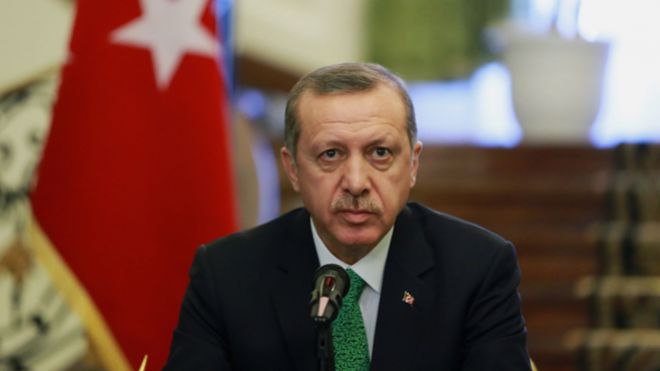
Analysts emphasize that the decision by the Turkish Central Bank was important as it demonstrated the bank’s willingness to solve domestic economic problems and stressed its independence from the government. Previously, the Central Bank was perceived as the organisation susceptible to pressure from the Turkish Prime Minister Recep Tayyip Erdogan who said right prior to the meeting that he was always opposed to any rate increase.

Some of other emerging-market currencies that investors have been anxiously focused on also strengthened subsequent to the interest-rate decision. The South African rand gained 0.8% versus the dollar right after the decision by Turkey’s Central Bank although only one day before it was hitting five-year lows. The Russian ruble also grew slightly.

I hope that you have enjoyed reading this post.

Stuart Yeomans 

CEO

Farringdon Group

Kuala Lumpur : Malaysia