Following comments on reduction in quantitative easing (QE) by the Federal Reserve Chairman Ben Bernanke, the second quarter was dominated by falls in both the equity and bond markets.
The Federal Open Markets Committee (FOMC) will be looking to reduce and then completely stop its bond buying programme in the next 18 months, which most economists believe will start to take place in September 2013. Markets reacted negatively to the comment; however investors accepted the fact that QE will have to eventually come to an end following progress in the economic growth and improving unemployment rate; and Bernanke also did come back again to comment that though QE will be tailed off there isn’t a specific mandate at what rate or when this will be done and he assured markets that there will be continuous bond buying if needed. Bernanke also vowed to keep rates low and keep monetary policies as accommodative as possible. In a report, Bernanke reiterated the Fed’s long-held position that interest rates won’t be raised from their historic lows until unemployment hits at least 6.5%. And Bernanke stressed once again that the 6.5% figure is “a threshold, not a trigger”.
In Europe, the outlook is not nearly so promising. Although financial markets were reassured by the statements of the European Central Bank (ECB) last July and September, economic activity has been constrained by continued austerity without monetary easing and without currency depreciation. Currently, it is hard to see any basis for a recovery, and inflation continues to fall. There is a real risk of deflation in the Eurozone.
The outlook for the UK economy is roughly midway between the prospects for the US and Eurozone. The Bank of England’s monetary stance remains very accommodative and we expect to see further easing with Mark Carney taking over as governor, but balance sheet repair, fiscal restraint, a weak sterling and above-target inflation have all contributed to holding back growth.

In Japan, two of the three arrows of Prime Minister Shinzo Abe’s economic revival programme have been implemented, but we await the third arrow, namely economic restructuring. The yen has depreciated enough to restore Japanese exporters’ competitiveness, but evidence of recovery in the domestic economy is still tentative.
In the largest emerging economies — China, India and Brazil — growth has slowed, and the leaders are struggling to ensure smooth transitions to domestic-led growth models. In many other emerging economies, growth remains very dependent on exports in a world where the main export markets are either in sub-par growth mode or suffering recession.
We continue to forecast that 2013 will be another year of slower-than-normal growth with low inflation as the dual problems of balance sheet repair in the developed economies and structural rebalancing in the emerging economies continue to restrain overall activity.
The early months of the year saw an increasingly buoyant mood in the US economy and financial markets. Between January and mid-May, this resulted in significant rises in the Michigan and Conference Board indexes of consumer confidence and powered the S&P 500 Index to rise by 17%.
However, since then markets have been dominated by the signal from Mr. Bernanke that the FOMC expects to reduce and then cease its provision of extraordinary liquidity to the markets sometime over the next 18 months. Although Mr. Bernanke was talking only about reducing the monthly rate of asset purchases, or QE, investors jumped to the conclusion that interest rate hikes were imminent, and asset prices responded abruptly. The response in financial markets was probably faster and more violent than Fed officials intended, as evidenced by the subsequent chorus of Fed governors and presidents echoing Mr. Bernanke’s view that a Fed funds rate hike will not happen any time soon.
This calls for two observations related to Fed policy:
- First, the Fed’s commitment to “forward guidance” implicitly provided a guarantee that market participants relied on to leverage up on longer-duration assets. Consequently, the Fed should not be surprised when early hints of a policy reversal lead to the sudden unwinding of those leveraged positions.
- Second, although market rates have risen, what really matters is whether the underlying progress of economic recovery is affected. The most sensitive arena will be mortgage interest rates and their impact on the housing recovery, a result we will not know for some weeks.
On the economic data front, the final release of real gross domestic product (GDP) data for the first quarter was revised down significantly. Initial and revised estimates of 2.5% and 2.4%, respectively, were lowered to just 1.8% annualized — a notable reduction by past standards. Key elements of the revision included lower consumer spending due to the impact of tax increases at the start of the year and declines in business investment and exports reflecting the weaker global economy. Since April, an array of data has suggested some further moderation in growth. In the background, fiscal tightening — due to tax increases in January and reduced federal spending under the sequester — and the continuing need for consumers and financial institutions to repair their balance sheets are acting as a drag on growth. We expect real GDP growth to reach only 1.7% for 2013 as a whole and inflation to remain around 1.6% — below the Fed’s unofficial target of 2% — due to sustained low money and credit growth interacting with the continued existence of spare capacity.
The key question is whether the unintended rate increases act to tighten monetary conditions, or whether continued Fed easing and asset purchases counteract the tightening. Although 30-year fixed-rate mortgages have risen by nearly 1.2%, from 3.4% to 4.5%, it seems unlikely that this will have any drastic slowing effect on the housing recovery. The rate increase is similar to the temporary jumps in rates seen in 2009 and 2010, both of which were ultimately overpowered by Fed easing actions.
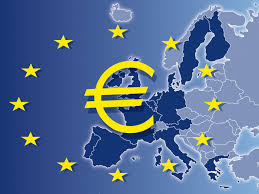
The Eurozone remains mired in continued economic recession, with GDP falling by 0.2% in the first quarter of the year, the sixth successive quarterly decline. Although financial markets have been reassured by the “whatever it takes” promises of the of ECB President Mario Draghi last July and September, economic activity has been constrained by continued fiscal austerity without monetary easing and without currency depreciation. Although the ECB cut its main refinancing rate from 0.75% to 0.5% in May, broad money growth (M3) remained sluggish at 2.9% in May, and bank lending across the Eurozone declined to –1.6% year-on-year. Discussion at the ECB governing council has included the question of whether the bank should impose negative rates on bankers’ deposits at the ECB in order to encourage banks to lend. However, in our view, these bankers’ deposits are a symptom of risk aversion, which will not be eliminated by such threats. Currently it is hard to see any basis for a recovery, and inflation continues to fall. It could soon fall short of the ECB’s target level of “below, but close to 2%,” posing a real risk of deflation in the Eurozone.
Meanwhile unemployment increased to a new record high of 12.2% in April, with youth unemployment reaching 24.4%. Unemployment rates are especially high in southern Europe, with France at 26.5%, Italy at 40.5% and Spain at 56.4%.
The refusal to engage in QE or other steps to boost liquidity during a period of widespread deleveraging has imposed serious disinflationary pressure on the Eurozone, with the annual Harmonised Index of Consumer Prices inflation rate falling to 1.2% in April and 1.4% in May.
At the political level, there has been much discussion and some progress toward the formation of a banking union with plans to allow the European Stability Mechanism — an organization created to provide financially distressed Eurozone members immediate access to assistance programmes — to use up to €60 billion to assist in the recapitalization of Eurozone banks. Another significant easing measure was in May when the European Commission (EC) eased its fiscal targets for Spain, Portugal, Slovenia and France, allowing them each two more years to correct their excessive fiscal deficits. On the other side, the EC was able to propose abandoning the Excessive Deficit Procedure (EDP) — which ensures that member states adopt appropriate measures to correct excessive deficits — for Italy, as the economy met its debt ceiling in 2012 and is expected to maintain budget deficits below 3% of GDP in 2013 and 2014. The number of economies in EDP will decline from 20 to 16 out of 27 European Union members.
Looking forward, the ECB revised down its GDP forecast for 2013 to –0.6%, and inflation to 1.4%. However, whereas the ECB is forecasting a recovery to 1.1% growth in 2014, on our assessment of current policies, it is hard to project any sound basis for a sustained recovery.

In the UK the third quarter started with the arrival of the new governor, Canadian Mark Carney, at the Bank of England. By mid-August, we should know if he has succeeded in persuading the other members of the Monetary Policy Committee either to adopt some form of conditional “forward guidance” to keep interest rates low or to engage in additional asset purchases.
Meanwhile, the economy should continue to reflect the broadening set of improvements that have started to be reflected in the data this year. In addition to the steady rise in employment — a trend that has been in place for two years now — the housing market has notably strengthened during the recent months. In part, this was due to the two official stimulus schemes — “Funding for Lending” and the initial phase of Chancellor George Osborne’s “Help to Buy” scheme. Consider these indicators:
- Gross mortgage lending in May was £14.7 billion, up 17% from a year earlier and the highest monthly total since October 2008.
- Housing starts in the first quarter were up 15% year-on-year and by 62% compared with the trough in 2009.
- According to the BBA, a trade association for banking and financial services, the 54,000 loan approvals in May represent the highest number in over a year, helping most house price indicators to show recoveries of 1% to 3% over the past year.
However, there is a long way to go before the market returns to annual net lending of £100 billion seen before the crisis. Nevertheless, it seems clear that an upturn in both activity and prices is underway.
More broadly, real GDP increased by 0.6% quarter-on-quarter for the second quarter and looks set to grow at stronger rates in the third and fourth quarters.
Moreover, based on more accurate corporate data, the Office of National Statistics has revised away the double-dip recession of late 2011 and early 2012, but it has also concluded the economy fell further and more steeply in 2008 and 2009 than previously believed. Neither the Chancellor’s spending review nor the arrival of Mr. Carney will immediately transform the outlook in our view, but with public spending set at £745 billion, or 43% of GDP in 2015 to 2016, it is now, in our opinion, going to take a decade to return to pre-crisis levels of real GDP.
Unfortunately, in our view, even the proposed partial welfare spending cap (which excludes most pensioner benefits) to be imposed from April 2015 and the elimination of automatic or “progression” pay hikes in the public sector will not ensure that the excessive growth of Britain’s public sector is properly curtailed. There are still too many areas of ring-fenced or protected government spending and too little commitment to long-term fiscal soundness.
For the year as a whole, we expect 1.2% real GDP growth and 2.7% inflation in the UK.
In Japan, since the start of the second quarter, “Abenomics” has made a further major step forward with the appointment of Haruhiko Kuroda as governor of the Bank of Japan (BOJ) and the first stages in implementing a more aggressive policy of QE. On April 4, the policy board set a new course of doubling the monetary base in two years, by December 2014, and raising the inflation target from price stability to 2%.
This is the second arrow of Prime Minister Shinzo Abe’s three-arrow strategy, following the adoption of a larger fiscal stimulus policy early in the year. After being elected in the Upper House by obtaining a healthy majority, we now wait to hear more details about the third arrow — structural reform and market deregulation.
Between Nov. 13th of last year and May 22nd, the Japanese yen fell from 79 yen per US dollar to about 103, a decline of 30%, representing a major boost to the competitiveness of Japanese firms. While this was reflected in a substantial stock market rally, lifting the Japanese Topix index of equities — which measures stock prices on the Tokyo Stock Exchange — by 75% in yen terms as of May 22nd 2013, there has as yet been comparatively little impact on the domestic economy. Real GDP increased at a very strong 4.1% annualized in the first quarter, but since this was before much of the new programme had been implemented — let alone spelled out — it would be rash to claim that this was entirely due to Abenomics. Nevertheless, a range of economic indicators such as bank loans, retail sales and the important “Tankan,” or short-term index of business confidence published by the BOJ, have shown significant improvements.
Expectations are undoubtedly high, but the big question is whether the BOJ can induce sufficient changes in behaviour among the commercial banks, whose lending has been static or falling for most of the past decade, or among the firms and households that have been unwilling to increase their indebtedness by borrowing more. So far the evidence is mixed. Loans have increased only marginally, and banks are still finding that they have more deposits than they can allocate to loans. A full assessment of Abenomics must await more evidence.

The gradual, structural slowdown of the Chinese economy has continued through the second quarter and appears likely to continue through the rest of the year based on the following;
- Cyclical measures of economic activity, such as the official Purchasing Managers Index (PMI), which covers 3000 large firms, and HSBC’s PMI, which relies on a sample of 430 small and medium enterprises, both slipped into contraction territory over the past few months and but has showed improvement in May and June and unexpectedly rose in July. Export growth is likely to remain in single digits, while domestic demand drivers, such as infrastructure and real estate investment, should exhibit continued stability but no acceleration.
- There have been numerous signs of excess capacity in some of China’s key industrial sectors, such as steel and solar energy panels. For example, Chinese firms have been selling off surplus steel on foreign markets and cutting orders for raw materials, contributing to a significant fall in world prices of iron ore and coking coal. In the solar energy space, the global over-supply has led to the bankruptcy of China’s largest firm and widespread publicity about the extent of subsidies and official support for local companies – problems associated with the inherent corruption in China’s system of provincial government. The response of the central authorities has been to target new areas of investment, such as infrastructure, public services and urbanization, and to encourage private sector investment alongside.
- The main source of the slowdown — tighter monetary policy — points to a broader set of problems that China needs to address if it is to achieve a steady growth trajectory over the next few years. The reason why the authorities have been compelled to squeeze the money markets over the past few weeks is that unofficial or shadow banking (non-bank entities that provide loans) sources of credit have continued to grow far too rapidly at 30% to 40% per year compared with regulated bank credit growth of 13% to 15% annually.
The underlying issue of the shadow banking problem is the failure to deregulate official bank interest rates and the continued use of administrative measures to manage the monetary system. To enforce some discipline, the People’s Bank of China (the central bank) allowed money market rates to rise sharply in June, coinciding with the selloff on Wall Street. However, unless such tightening moves are coupled with serious efforts to deregulate foreign exchange controls, the result is likely to be a surge of unofficial inflows from Chinese companies to funds abroad. The new premier, Li Keqiang, has announced that he intends to produce a programme for dismantling exchange controls by year end, but this is unlikely to be a big-bang, single event, but more likely a phased programme. Even so, Chinese leaders have often expressed such broad aspirations before without delivering concrete results.
We expect China’s real GDP to slow to 7.6% for the year as a whole and CPI inflation to remain subdued at 2.2%, held back by deflation at the producer price level and a firm currency.
The outlook for the rest of non-Japan Asia outside China is broadly similar to China’s on cyclical grounds — the slowdown of key export markets and the inability to pump-prime too much at home. Fortunately, most of non-Japan Asia lacks the structural distortions faced by China. In Indonesia, for example, the fuel price has recently been further deregulated to bring it closer into line with market forces. However, irrespective of their flexible currency arrangements, several economies may feel the need to tighten monetary policy in response to prospective tightening in the US and the shift of funds out of emerging markets, although only Indonesia has raised rates so far.

In the commodity sector, following the upswing in prices between June and September 2012, the direction of travel has been generally downward since then. This applies both to indexes like the unweighted Commodity Research Bureau Index (CRB), which excludes oil but emphasizes precious metals, and to the GDP-weighted S&P/Goldman Sachs Spot Index — a composite index of commodity sector returns — both of which are down close to 10% since early February
These trends reflect weak demand and excess supply stemming from the sub-par growth of GDP across the developed economies, as well as the slowing trend in emerging economies. In addition, they reflect the unwinding of financial and speculative positions taken in commodity funds, which were often based on the mistaken notion that the solution to the global financial crisis would be found in highly inflationary policies by central banks. Although there is still room for banks to promote faster credit and money growth, we believe that as long as balance sheet repair remains the order of the day, then rapid growth of bank balance sheets would not be possible, thus preventing the inflation that would justify heavy weightings in commodities.
As central bankers keep saying, inflation expectations are well-anchored. The fundamental driver behind this trend is that balance sheet repair is inherently disinflationary, or even deflationary. Consequently, as long as the major economies are in balance sheet repair mode, commodity price surges can only result from local or temporary supply disruptions such as we see from time to time in the agricultural complex.
In the first five months of the year to May 21st, the MSCI World Index increased by 13.6% in US dollar terms. Since then, and following Mr. Bernanke’s testimony to Congress on May 22nd, world equities fell nearly 8% before recovering and rising to records. This sharp correction and the abrupt increase in volatility is both a reminder of the sensitivity of all markets to central bank policies and a timely reminder that central banks cannot entirely control the impact of interest rate normalization that major economies must undertake over the next three or four years.
After a traumatic shakeout in 2008 and 2009:
- US households are at last seeing their wealth and incomes starting to recover.
- US non-financial companies are enjoying healthy profits and can raise funds cheaply on financial markets.
- Even the US financial sector is finally returning to growth and profitability, albeit at lower (and safer) levels of leverage.
The next stage will be for central banks to gradually reduce their injections of QE, and then to embark on a gradual and measured pace of interest rate increases — always assuming that the economies are strong enough to tolerate the rate hikes while continuing to grow.
In the past, these kinds of rate-normalizing episodes have had very mixed results, ranging from very painful in 1994 and 1995 to much less damaging in 2004 to 2006. This time much will depend on how far balance sheets have been repaired, how strong the underlying recovery is, and the extent to which leveraged positions have been built up in financial markets based on central bank commitments.
Because the entire spectrum of investable assets — from government bonds and equities to commodities and real estate in both developed and emerging markets — are all affected by the trend of US interest rates, no asset class is likely to be able to escape the forthcoming adjustment.
I hope that you have enjoyed reading this post.
CEO
Kuala Lumpur : Malaysia




 Stuart Yeomans